Progressive candidates draw back Michigan voters who left Democrats over Gaza
Some Michigan voters who left the Democrats over Gaza in 2024 are back for Abdul El-Sayed's Senate run after a 2.5 million-voter primary. Others remain unconvinced.
Updated October 9, 2026
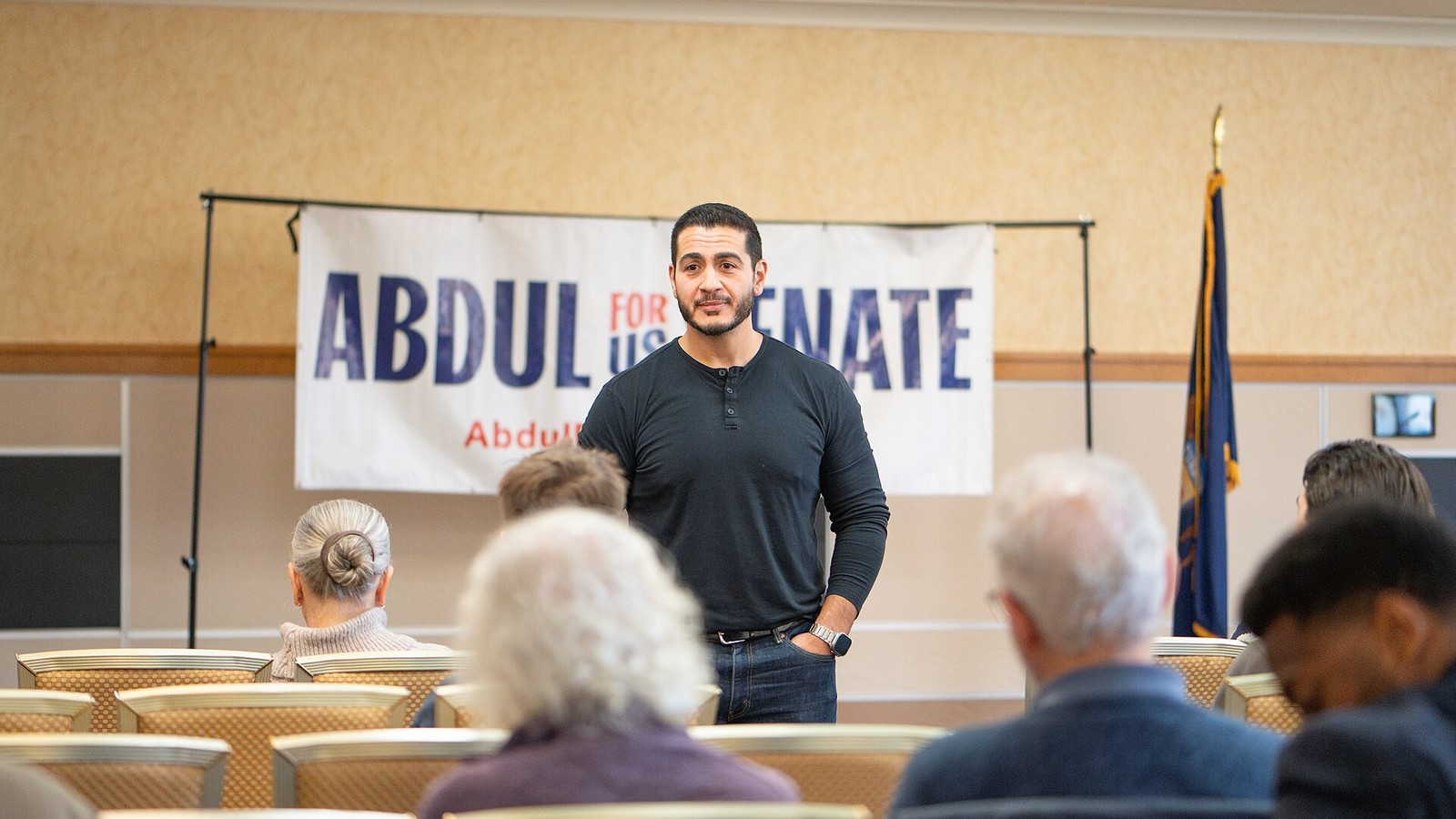
Zainab Bibi Ahmed, a Wayne State University staffer who lives in Troy, Michigan, was one of about 100,000 Michigan voters who marked "uncommitted" in the February 2024 Democratic presidential primary in protest at the Biden administration's support for Israel's war in Gaza. That November she voted for the Green Party's Jill Stein, and she did not expect to return to the Democrats. In August she was knocking on doors and making phone calls for Abdul El-Sayed, an epidemiologist and the party's nominee for U.S. Senate in Michigan, the Guardian reported. Ahmed said progressive candidates, El-Sayed and New York City Mayor Zohran Mamdani among them, changed her mind.
Her return mirrors a run of progressive wins since Donald Trump returned to the White House in January 2025. Mamdani won New York's mayoral race in an upset last year, and Peggy Flanagan won Minnesota's Democratic Senate primary on Aug. 11, beating Rep. Angie Craig despite being heavily outspent. In Michigan, El-Sayed heads a group of progressive nominees and candidates that includes attorney general hopeful Eli Savit, U.S. House nominees Will Lawrence and Donavan McKinney, state House nominee Chris Gilmer-Hill and Ann Arbor mayoral candidate Yousef Rabhi.
El-Sayed narrowly defeated Rep. Haley Stevens in the Aug. 4 primary. AIPAC and its affiliated groups had spent close to $30 million backing Stevens by mid-July, their largest investment ever in a single race, according to the Associated Press. About 2.5 million people voted in the primary, up from about 2 million in the 2024 state primary, and an analysis by the Michigan Advance found that the high turnout helped carry El-Sayed and Lawrence to victory.
The Guardian summed up the mood with one voter's line: "I hate Democrats, but I love Abdul." Waqas Sarwar, a Dearborn resident who also voted for Stein in 2024, backed Abdul El-Sayed and Rep. Rashida Tlaib in the primary. He described the Democratic Party as "totally lost right now."
Polling cited by the Guardian shows a majority of Democrats oppose military aid to Israel, and roughly three in four support Medicare for All and abolishing Immigration and Customs Enforcement, positions El-Sayed has campaigned on. Yet the Democratic Party's approval rating has sunk to historic lows, at times falling below President Trump's favorability.
Not every voter who left is coming back. Amin Hashmi, a 63-year-old engineer in Troy, called himself a solid Democrat until 2024, when he voted for Trump. In the August primary he voted for El-Sayed over Stevens, but he is undecided for November and is considering the Republican nominee, former Rep. Mike Rogers. Hashmi also voted for Aisha Farooqi, a progressive who lost the Democratic primary in the 11th Congressional District to Jeremy Moss, a pro-Israel candidate; he said he would have backed her in November.
Samraa Luqman, a Dearborn political activist, voted for Trump in 2024 and is now back with the Democrats to support El-Sayed. "The Democrats became the George Bush of Gaza," she said, a comparison with the Republican president whose wars in the 2000s pushed many Arab and Muslim American voters toward the Democrats.
The picture is of a tentative rebound of progressive energy among Michigan Democrats, driven by candidates who pair left-wing economic policies with a clear stance on Gaza. Whether it holds through November is uncertain: some returning voters are back for El-Sayed rather than for the party, and others are still weighing party loyalty, foreign policy and the cost of living.
This article was updated on Oct. 9, 2026, to correct Zohran Mamdani's title (mayor, not mayor-elect) and Donald Trump's (president, not former president), to clarify how Zainab Bibi Ahmed voted in 2024 and which remarks can be attributed to named voters, and to add the primary result and sources.
Sources

Editor & Founder
Peter OlaleruPeter is the founder of Measured Take and a cybersecurity professional. He covers breaches, vulnerabilities, threat intelligence, APTs, and compliance. His reporting draws on hands-on experience in the security industry to make complex threats understandable.
More from Politics



Conversation
Reader notes
Loading comments...