Why a Sharp Knife Cuts: Force vs Pressure, Explained by Neil deGrasse Tyson
Neil deGrasse Tyson explains why a sharp knife cuts: pressure is force divided by area. A worked example shows how a smaller edge multiplies the pressure.

Watch
Why a Sharp Knife Cuts: Force vs Pressure. Neil deGrasse Tyson
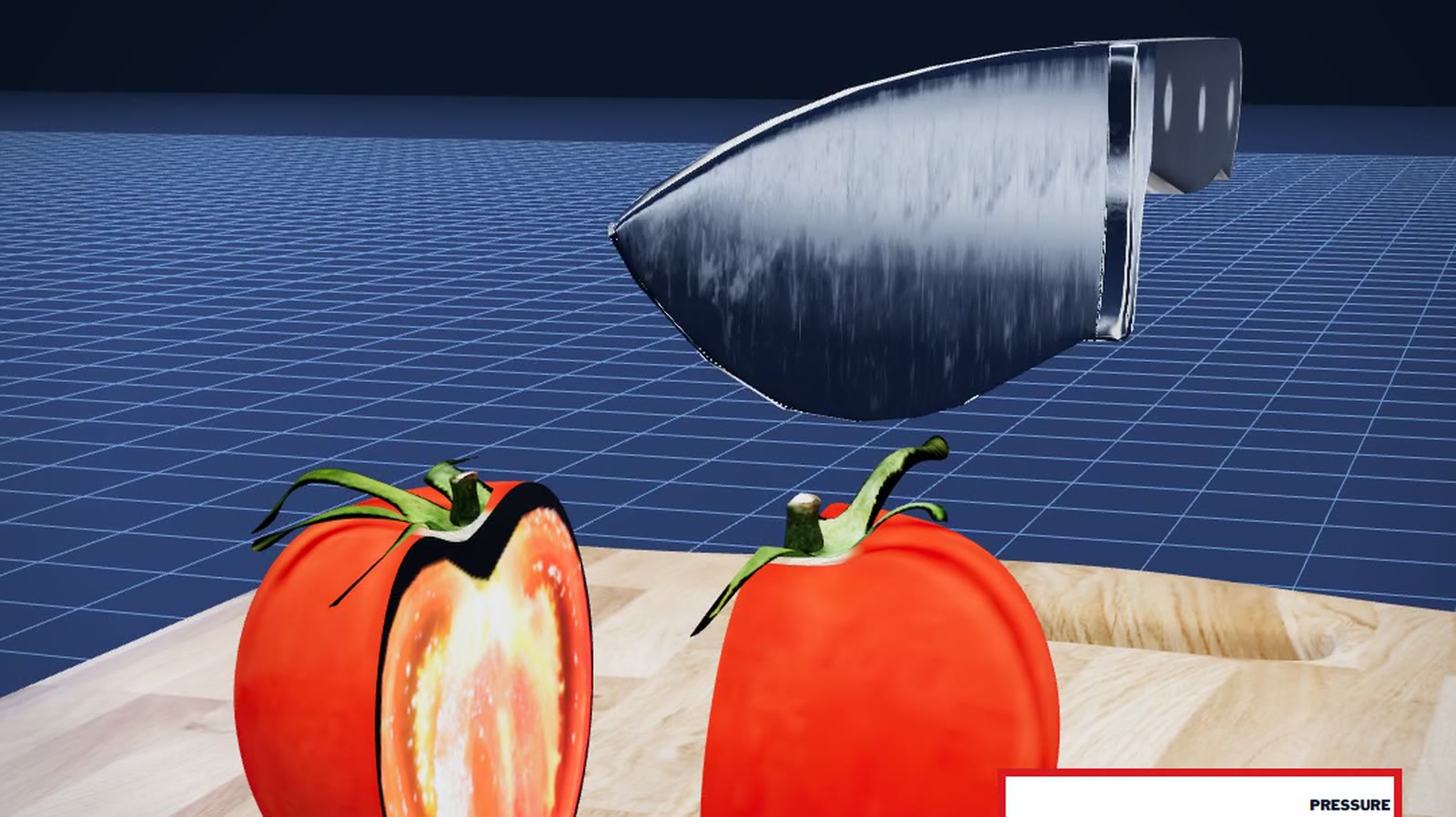
Subscribe on YouTubeA butter knife will not get through a tomato, but a sharp kitchen knife slides through with almost no effort, and the person holding it is not pushing any harder. The difference is pressure. Neil deGrasse Tyson explains it in a short StarTalk clip, and the idea is simple enough to work out on the back of an envelope.
What Tyson said
Tyson opens with the definition: "Pressure is force divided by area." He then asks how you make a given force "as effective as possible" at cutting. His answer is to use the lowest possible area to apply it, so that you get the highest possible pressure. With a small enough area, he says, even the mildest force on a knife will cut through food.
Force and pressure are different things
Force is the push, measured in newtons. Pressure is how concentrated that push is: the force divided by the area it acts over. The SI unit is the pascal, one newton per square metre. OpenStax's college physics text states it as P = F/A, with the force acting perpendicular to the surface.
The same force gives very different results depending on the area. That is why a needle goes through skin when a fingertip pressing with the same force does not.
A worked example
Take a push of 10 newtons, roughly the weight of a one-kilogram bag of sugar. These figures are an illustration, not measurements of a real knife.
- Spread over a blunt edge with a contact area of 1 square centimetre (0.0001 m²), the pressure is 10 ÷ 0.0001 = 100,000 pascals. Britannica gives atmospheric pressure as close to 100,000 pascals, so that is about the pressure the air already puts on everything around us. A tomato skin shrugs it off.
- Put the same 10 newtons through an edge with a contact area of 0.01 square millimetres (0.00000001 m²) and the pressure is 10 ÷ 0.00000001 = 1,000,000,000 pascals, ten thousand times higher.
Nothing about the person changed. Only the area did, and the pressure rose by the same factor that the area fell.
Why chefs keep sharpening
A blade stays sharp only while its edge is very narrow. Use wears the edge down and makes it broader, so the same push spreads over more area and the pressure falls. You then compensate by pushing harder, which is less controlled and less safe. Sharpening restores the narrow edge, so the force you already apply is enough. That is the point of Tyson's last line: with a small enough area, a mild force is all the food needs.
The videos
Watch
Why a Sharp Knife Cuts: Force vs Pressure. Neil deGrasse Tyson
Subscribe on YouTubeSources
More from Politics


Conversation
Reader notes
Loading comments...