What If the Earth Stopped Spinning for a Second? Neil deGrasse Tyson Explains
Neil deGrasse Tyson says a one-second stop would be disastrous: New York moves at about 800 mph with the Earth. The physics behind that speed, explained.

Watch
What If the Earth Stopped Spinning for a Second? Neil deGrasse Tyson
Subscribe on YouTubeIf the Earth stopped turning for a single second, nobody would feel the ground go quiet. They would feel it hit them. Asked on camera what would happen, astrophysicist Neil deGrasse Tyson gave a short answer: "That would be disastrous." The reason is that every one of us is already travelling at hundreds of kilometres an hour, and we only fail to notice because the ground, the air and everything around us is travelling at the same speed.
What Tyson said
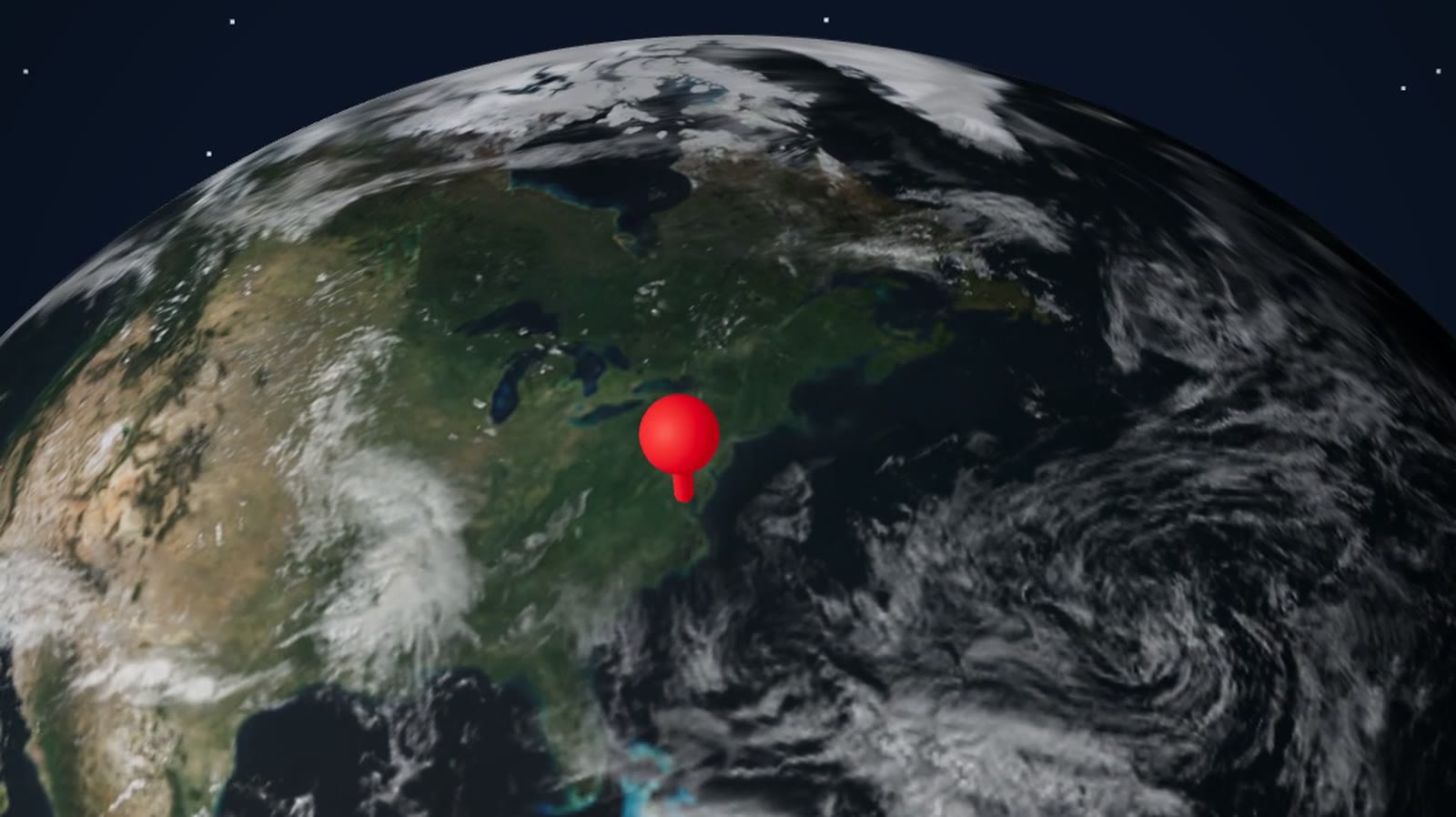
In a clip published by StarTalk, the interviewer asks what would happen if the Earth stopped rotating for a second. Tyson replies that, in New York, "we are all moving with the Earth at 800 miles an hour" (about 1,290 km/h). If the planet stopped and you were not "seat belt buckled to the Earth", he says, you would fall over and roll east at that speed. He adds that it would "kill everyone on Earth", with people flying out of windows, and compares it to a car hitting a brick wall: if you are not wearing a seat belt, "you keep going".
Where the 800 miles an hour comes from
The Earth turns once every 23 hours 56 minutes, measured against the stars. At the equator that spin carries the surface around a circle of roughly 40,000 km (25,000 miles). Divide that distance by the time and you get about 1,670 km/h, or 465 metres a second (around 1,040 mph).
Away from the equator the circles are smaller, so the speed drops. NASA notes that at 60 degrees latitude a point travels only half as far each day, and so half as fast. New York sits at about 40.7 degrees north. The speed there is the equatorial figure multiplied by the cosine of the latitude, about 0.76, which gives roughly 1,270 km/h, or 353 metres a second (about 790 mph). Tyson's 800 miles an hour is that number, rounded.
Why you would keep going
We do not feel this motion for the same reason you do not feel a train's speed once it is steady. Newton's first law says an object keeps moving in a straight line at constant speed unless a force acts on it. Your body, the pavement and the buildings share the same velocity, so nothing pushes you relative to them.
Stop the ground and that changes. The ground would be held back, but you would not be: nothing is acting on you except friction and, for people in buildings, the walls and floors. Whatever is not fixed to the Earth keeps its eastward velocity. That is the same physics as a car hitting a wall. The car stops, the unrestrained passenger does not, and the seat belt is the force that slows them with the car.
The ending Tyson gives
Tyson finishes on the gentler version. If we somehow slowed down together with the Earth, he says, "it's fine". The only consequence would be "really long days". Slowing everything gradually means no sudden difference between the ground and the people on it, so nobody is thrown. A stop is dangerous because it is abrupt, not because the planet is turning.
The videos
Watch
What If the Earth Stopped Spinning for a Second? Neil deGrasse Tyson
Subscribe on YouTubeSources
More from Politics



Conversation
Reader notes
Loading comments...