AO3 Is Back After a 17-Day Security Shutdown. Change Your Password and Save Your Drafts
AO3 is back online after 17 days. What OTW says about the security incident, why to change your password, and the Nov. 29 draft deadline.
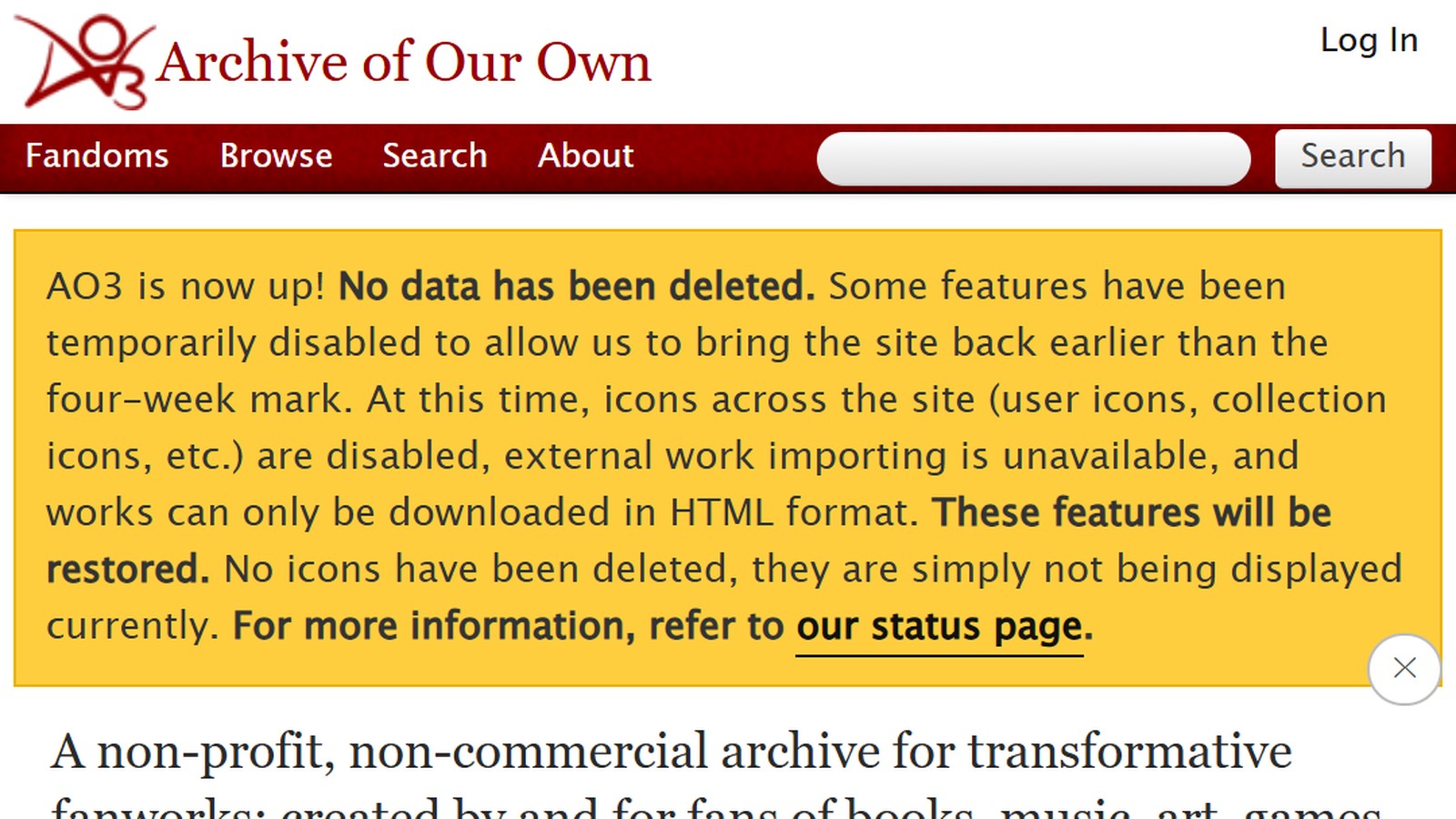
Archive of Our Own, the fan fiction site known as AO3, came back online on Nov. 15 after 17 days offline. The Organization for Transformative Works, the nonprofit that runs it, says the shutdown followed a security incident, and that no data was deleted.
It also says it cannot be sure the user database is safe. "We have no reason to believe that the user database was compromised, though we cannot rule out that possibility," the organization wrote on its status page. It recommends that users change their AO3 password, check that their email address is up to date, and change their password on any other site where they reused it.
What happened
AO3 went down for what was first called maintenance at 07:13 UTC on Oct. 29. That evening, the organization said restoring the site would take around two weeks and could take up to four.
Early on Oct. 30 it said it had "detected evidence of a security incident." It said then that it did not believe the user database had been stolen but could not rule it out. That database may hold usernames, email addresses, IP addresses and hashed passwords. AO3 does not collect real names, and donor details are kept in a separate system that the organization says was not exposed.
On Nov. 6 it said its original estimate still held, and that queued notification emails about subscriptions and kudos being sent out were genuine. The site returned at 08:00 UTC on Nov. 15, inside the four-week estimate.
The organization says it has partnered with a security firm to review the incident. It will not share details of the changes it has made, because this is a security incident. It has not said who was behind it, and we found no confirmed attribution.
What still does not work
To bring the site back early, some features are switched off for now:
- Icons across the site, including user and collection icons. The organization says none have been deleted.
- Importing works from other sites.
- Downloads in any format except HTML.
The organization says these will return. Heavy traffic may also delay pages from loading, which it calls an intentional measure; on Nov. 16, one of our page loads returned an "Error 503" page saying the site was responding too slowly. New account invitations are paused.
Drafts: the Nov. 29 deadline
AO3 normally deletes drafts 30 days after they are created. That deletion was paused while the site was down, and the organization says no drafts were lost.
It will stay paused for two weeks. "Beginning November 29, draft deletion will return to normal and all drafts which are 30 days old will be deleted," the organization says. The deletion date printed at the top of each draft will not show this new deadline, so it recommends saving a copy of any draft or posting it as soon as possible.
Scams to avoid
During the outage, the organization warned that any site or app claiming to offer access to AO3 was lying: there are no mirrors of its servers, and AO3 has no app. Bleeding Cool also reported that nobody was collecting donations specifically for the outage, and that anyone claiming to was lying.
What we don't know
We don't know what the security incident involved, whether any account data was taken, or who was responsible. The organization says it will post further updates on its status page.
Sources
- [1]Organization for Transformative Works status page, "AO3 Down for Maintenance"
- [2]Archive of Our Own home page
- [3]Engadget, "AO3 Is Back Online But With Limited Features"
- [4]Beinsure, "AO3 returns online after 17-day security incident outage"
- [5]Bleeding Cool, "The OTW Has Shared A Brief Update On The Archive of Our Own Outage"

Editor
Peter OlaleruPeter is the editor of Measured Take and a cybersecurity professional. He leads our news, fact checks and sport from around the world, with a particular eye on cyber attacks, data breaches, scams, AI and misinformation.
More from Tech



Conversation
Reader notes
Loading comments...