US Prosecutors Charge Imprisoned Gang Leader in Canadian Activist’s Murder
US prosecutors have charged 37 people, including an imprisoned gang leader, for their roles in a global criminal network linked to a 2023 assassination.
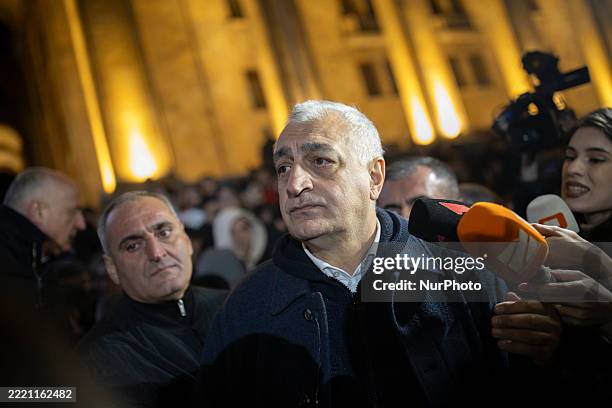
United States federal prosecutors have charged 37 individuals as part of a multiyear investigation into a sprawling criminal network, including the imprisoned leader of an Indian gang accused of orchestrating the 2023 assassination of a Canadian Sikh activist. The indictment marks a significant development in the case of Hardeep Singh Nijjar, who was fatally shot outside a temple in British Columbia where he served as president.
Lawrence Bishnoi, the head of an Indian criminal gang, faces charges for allegedly directing the murder from a prison cell in Delhi. According to the indictment, Bishnoi utilized smuggled mobile phones to coordinate the operation, providing co-conspirators with photographs of Nijjar and his known addresses to facilitate the killing. The charges were announced following Operation Hard Ball, a joint federal investigation involving the FBI and Canada’s Royal Canadian Mounted Police (RCMP) that targeted murder-for-hire plots, extortion, and drug trafficking.
Authorities also charged Satinderjeet Singh, a childhood friend of Bishnoi who is also known as Goldy Brar, for his role in the assassination. Singh is currently a fugitive in the United States. While the 37 individuals charged include those already in custody, law enforcement officials are actively searching for ten additional fugitives: seven in the United States, two in India, and one in Europe.
RCMP Commissioner Michael Duheme described the operation as a critical step in dismantling the leadership structures of criminal groups that have engaged in murder, kidnapping, and arson. During the investigation, police seized approximately 1,000 kilograms of cocaine and 12 firearms. The indictment further alleges that the Bishnoi gang was responsible for a separate shooting at the Vancouver home of a prominent Indian actor.
The murder of Nijjar, a Canadian citizen and a leading figure in the movement for an independent Sikh homeland known as Khalistan, has remained a central point of diplomatic friction between Canada and India. Indian authorities had previously labeled Nijjar a terrorist and offered a reward for his arrest, while Canada has designated the Bishnoi gang as a terrorist entity. The 2023 shooting prompted then-Prime Minister Justin Trudeau to state that there were credible allegations of Indian government involvement in the killing, a claim that led to the expulsion of diplomats from both nations.
In May 2025, four other Indian nationals were charged with murder and conspiracy in relation to the Nijjar case, with proceedings currently before the British Columbia Supreme Court. Reports have previously suggested that a consular employee in Vancouver, whom Canadian police believe to be an intelligence officer with India’s external intelligence agency, may have provided information regarding Nijjar’s movements. India’s envoy to Ottawa, Dinesh Patnaik, has denied that India conducted foreign interference in Canada.
For those within the Sikh diaspora, the charges represent a complex intersection of public safety and geopolitical tension. Moninder Singh, an activist and friend of the deceased, stated that the indictment sends a message regarding the necessity of protecting citizens from transnational repression. However, he expressed concern that the focus on criminal gangs may obscure the role of state-level actors. He argued that the omission of direct state involvement in the broader investigation could embolden further efforts to suppress dissent against the Indian government abroad.
As the legal process moves forward, the case highlights the challenges of addressing transnational crime that operates across borders and through digital communication. The coordination between US and Canadian law enforcement agencies reflects an attempt to address the reach of criminal organizations that utilize global networks to carry out targeted violence. The investigation remains ongoing as authorities continue their search for the remaining fugitives linked to the network’s operations.
Sources
Editor & Founder
Peter OlaleruPeter is the founder and editor of Measured Take and a cybersecurity professional. He leads our news, fact checks, sport and guides from around the world, with a particular eye on cyber attacks, data breaches, scams, AI and misinformation.
More from Politics


Conversation
Reader notes
Loading comments...