Marco Rubio: 'Super Intelligence Diplomat' Is a Columnist's Label, Not a Title
An Economic Times opinion piece brands Marco Rubio 'Trump's Super Intelligence Diplomat.' No formal title or directive backs the framing.
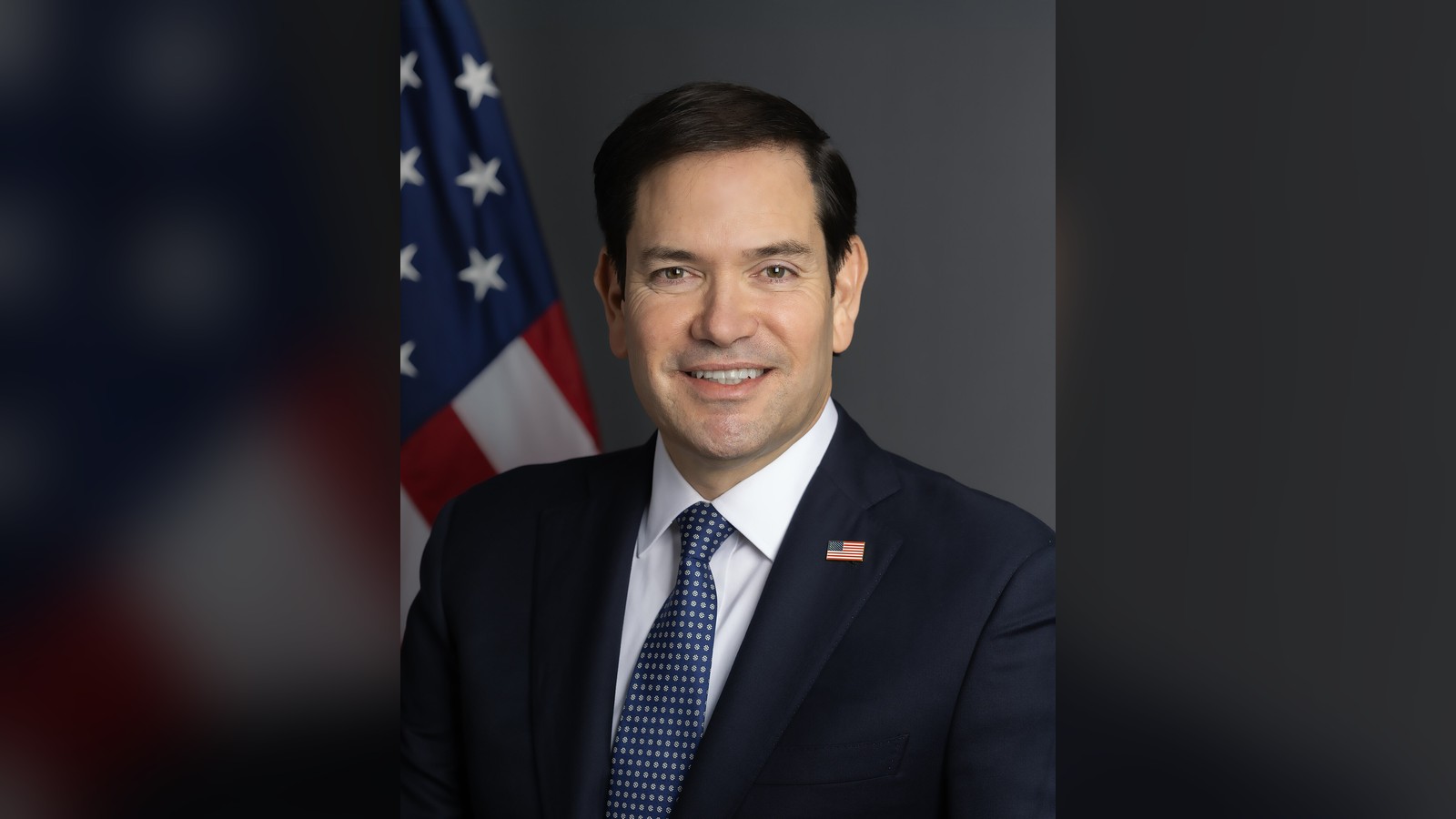
An opinion commentary published by the Economic Times calls U.S. Secretary of State Marco Rubio "Trump's Super Intelligence Diplomat," applying to diplomacy the same branding President Trump directed his administration to use for artificial intelligence. No other outlet has confirmed the commentary's account, and the label is the columnist's framing, not a formal title, office, or directive.
The piece says that on September 29, Trump directed his administration to replace the term Artificial Intelligence with Super Intelligence in official communications, on the argument that the technology had advanced beyond the old description. It then applies that test to Rubio, describing his strength as the ability to see several chessboards at once. The boards it lists — China, Russia, Ukraine, Iran, the Middle East, NATO, Latin America, the Indo-Pacific, India, and Central Asia — are, in the commentary's account, no longer separate files.
The commentary points to specific linkages: energy connecting Russia to India, the Middle East affecting India's energy security, Central Asia sitting between Russia and China, and critical minerals and semiconductors tying manufacturing to national security and technology to geopolitics. Those are the columnist's examples, not a published State Department doctrine.
If Rubio is in fact running a portfolio in which energy, critical minerals, semiconductors, and regional rivalries are treated as one connected system, then U.S. foreign policy decisions in one theater — Ukraine, Iran, the Indo-Pacific — carry immediate consequences for the others, including for India's energy security and for the Russia-China-India triangle. That is the analytical claim the framing invites. Whether the State Department actually operates that way is not established by the commentary.
A separate Politico report dated October 17, 2026 adds a domestic counterweight. It says GOP candidates are avoiding talking about Trump in their ads, including in deep-red districts where they used to feature him, and that some do not want to join him at events. Democratic House and Senate candidates and outside groups spent $145 million on general election ads mentioning Trump, while Republicans spent $8 million, compared with $62 million by GOP candidates in 2024.
The two data points do not establish a causal link. They do show an administration projecting a globally integrated posture while its own party's candidates keep the president at arm's length in their advertising. The 'Super Intelligence Diplomat' label remains a lens, not a title.
Sources

Editor & Founder
Peter OlaleruPeter is the founder and editor of Measured Take and a cybersecurity professional. He leads our news, fact checks, sport and guides from around the world, with a particular eye on cyber attacks, data breaches, scams, AI and misinformation.
More from Politics


Conversation
Reader notes
Loading comments...