Malinin's 114.81: a world record in a season the rules were rewritten
Ilia Malinin's 114.81 in Tokyo is a genuine milestone, but the ISU's offseason changes make it the first great score of a new era rather than a like-for-li
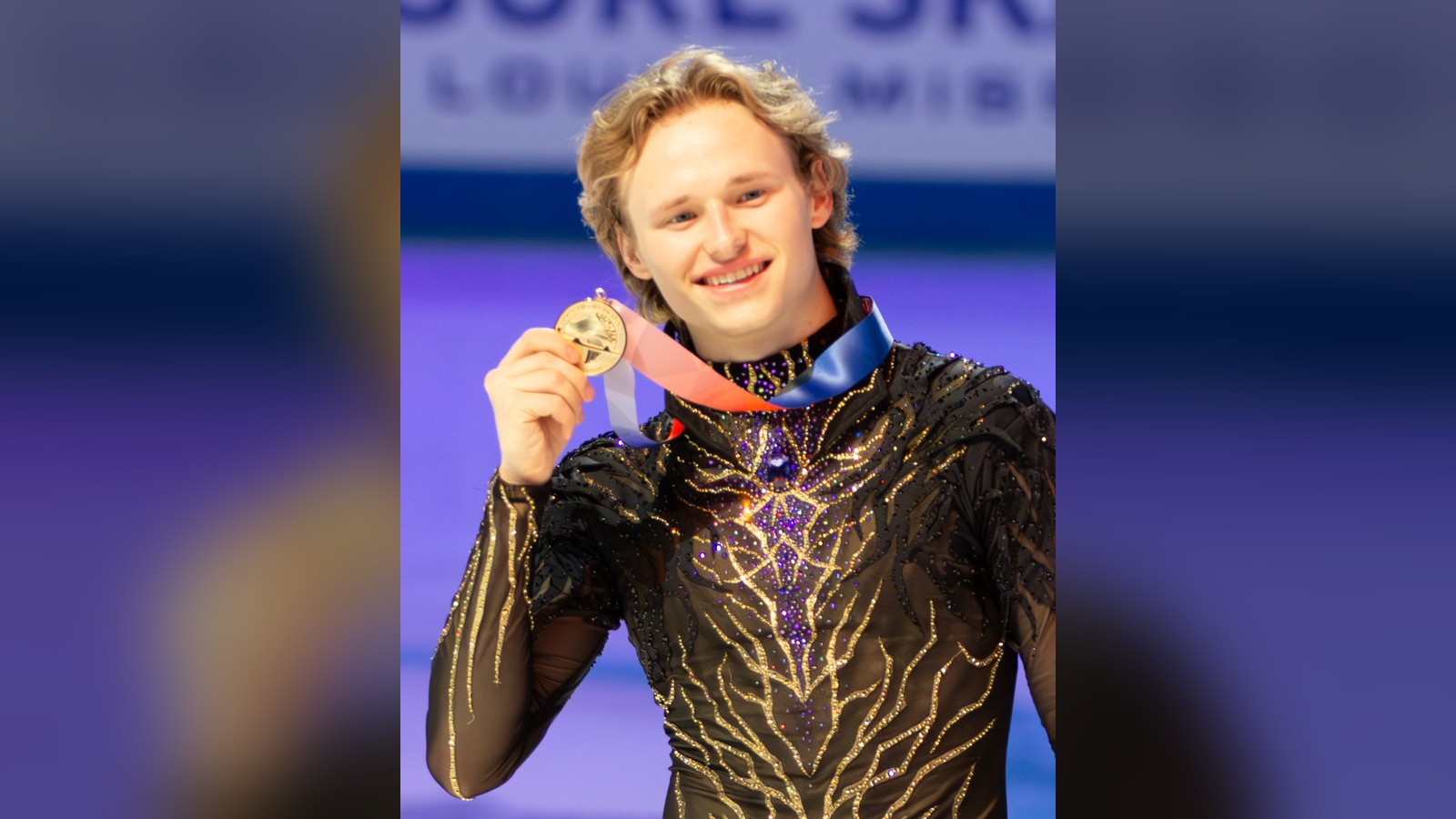
Ilia Malinin's 114.81 in the men's short program at the NHK Trophy in Tokyo is the highest score the event has ever seen, and it arrived in a season the International Skating Union rewrote the rules to make such numbers harder to produce. That is the tension worth holding on to. The record is real. So is the fact that it was set under a different scoring environment from the one Nathan Chen's 113.97 came from at the 2022 Beijing Olympics, and the part of the competition most affected by the changes, Saturday's free skate, has not yet happened.
Start with what Malinin actually did. He landed a quad flip worth over 15 points, a triple axel, and a quad lutz-triple toe loop combination that scored 20.88, the highest-scoring element of the competition. He earned Level 4 marks on all three spins and his step sequence. He skated to 'Cantata Memoria,' a piece chosen in part to honour the 28 members of the figure skating community who died in January 2025 when an American Airlines passenger jet collided with a military helicopter near Washington, D.C. He finished nearly 20 points clear of Japan's Shun Sato, second on 96.78, with France's Kevin Aymoz third on 94.15. His own previous best was 111.29. He said afterwards that he felt really good, that he was surprised by the score, and that being in Japan and having the crowd ignite the fire in him helped him deliver it. He also acknowledged the rule tweaks and score changes directly: 'I mean, I didn't expect to get such a high score, but you know, they did a lot of tweaks to the rules and a little bit of the score changes.'
That last remark is the hinge. This offseason, the ISU removed some emphasis from the ambitious jumps that gave Malinin his nickname and added some to other choreographic elements. The changes will have a bigger impact on the free skate, where the number of jumping elements has been reduced. The short program, in other words, is the more durable of the two records available this week. The free skate is where the new arithmetic bites hardest, and it is also where Malinin's biggest advantage has historically lived.
The strongest case against treating this as a new-era mark rather than a straight-line improvement is straightforward, and it deserves to be stated without caricature. Malinin still had to land a quad flip, a triple axel and a quad lutz-triple toe loop. He still had to earn Level 4s on three spins and a step sequence. No rule change handed him those elements, and no scoring tweak landed the jumps for him. A skater who cannot execute that content does not score 114.81 under any system. The record required the same technical arsenal that made him a two-year unbeaten streak arriving at the Milan Cortina Olympics as an overwhelming gold medal favourite, and the same arsenal that won him gold at the world championships a month after those Games. On that reading, the rule changes are context, not cause.
That is fair, and it is why the record should not be dismissed as an artefact. But it does not settle the comparison with Chen's 113.97, because the comparison is not between two skaters in identical conditions. It is between two skaters in different conditions, and the ISU has said as much by changing the conditions. The scoring system itself replaced the old 6.0 system, phased out after a judging scandal in the pairs competition at the 2002 Olympics, precisely because the sport accepts that how it counts determines what counts. When the counting changes, the numbers change with it. Malinin's 114.81 is the first great number of the new era, not a like-for-like leap past the last great number of the old one. Both things can be true, and the honest reading holds both.
What makes the Tokyo short program more than a scoring curiosity is the season it sits inside. Malinin led after the short program at the Milan Cortina Olympics before a fall-filled free skate dropped him to eighth. That memory is not erased by a November record, and it is not meant to be. The immediate next measuring stick is Saturday's free skate, where the reduced number of jumping elements will test whether his advantage survives the new math. A nearly 20-point cushion gives him room, but the free skate is where the rule changes were designed to matter most, and it is where his own history is most complicated.
Malinin has now set two world records in his second competition of the season, having previously set the men's free skate world record at the 2025 Grand Prix Final. That is a remarkable run by any measure. The question the sport will keep asking is not whether 114.81 is a great score, it plainly is, but what it is a great score under. The answer is a rewritten system that de-emphasised the jumps he performs better than anyone, which makes the mark more interesting, not less. It is a milestone and a moving target at once. Saturday will show how far the target has moved.
Sources
More from Sports



Conversation
Reader notes
Loading comments...