Belgium's 53-goal hole: what Lukaku leaves behind
Romelu Lukaku retires as Belgium's all-time top scorer with 94 goals, more than double Kevin De Bruyne's 41. The gap is a structural problem, not just a fa
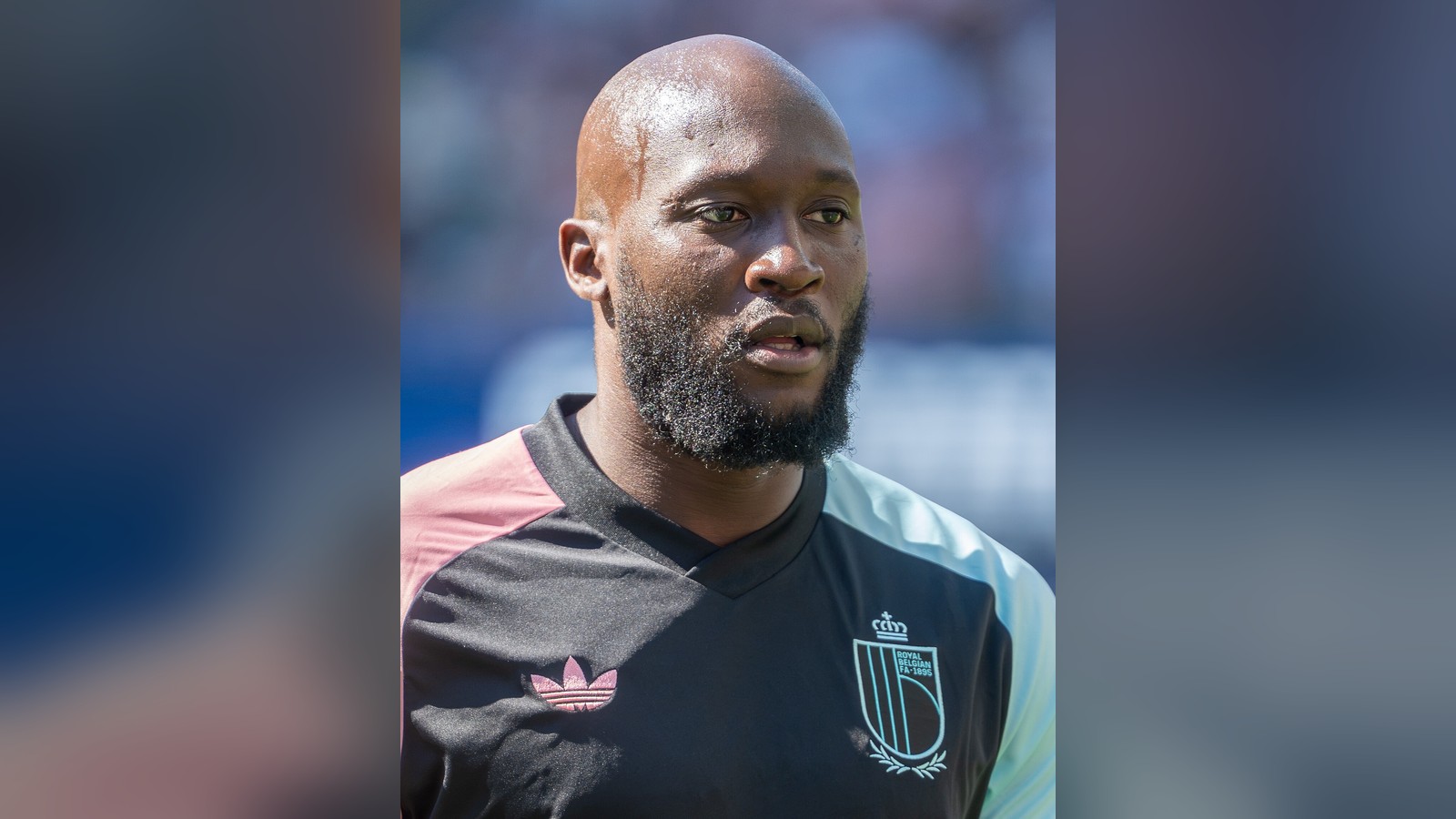
Romelu Lukaku retires from international football with 94 goals in 135 appearances for Belgium, a record that stands more than twice as high as that of any other Belgian. The next-highest active scorer, Kevin De Bruyne, has 41. That 53-goal chasm is not merely a statistic to admire. It is a warning about what happens next.
Lukaku announced his retirement on 16 November 2026, aged 33, one day after sitting unused on the bench during Belgium's 4-1 Nations League win over Italy. He said he was 'at peace' with the decision and had 'enjoyed every single moment.' There is no controversy here, no forced exit, no sense of a player pushed aside. He leaves on his own terms, as Belgium's captain and record scorer, fifth on the all-time men's international scoring list behind Sunil Chhetri, Ali Daei, Lionel Messi and Cristiano Ronaldo. He scored eight World Cup goals and six at the European Championships across four World Cups and three Euros, including the run to third place in 2018 and this year's quarter-final. His international career began on 3 March 2010 against Croatia, when he was 16 years and nine months old. He broke the Belgian scoring record in November 2017, at 24. For sixteen years, he was the fixed point of the attack.
Now consider the vacuum. Among Belgium's top ten international scorers, no active player comes within 53 goals of Lukaku. De Bruyne, at 41, is the closest, and he is not a striker. The next generation of Belgian forwards has not produced anyone close to Lukaku's output. This is not a normal transition. When a national team loses its record scorer, it usually has a successor already in the squad, a younger player who has been learning the role. Belgium does not. The country that produced Lukaku, Eden Hazard, De Bruyne and a host of others in a golden generation now faces the end of that cycle with no obvious heir to its most prolific finisher.
Compare Belgium with other top international scoring nations. No other country in the top ten of all-time men's international scorers faces a comparable gap between its leading active scorer and its next. Portugal has Cristiano Ronaldo on 146, but it also has a pipeline of forwards. Argentina has Lionel Messi on 126, but it has produced Julián Álvarez and Lautaro Martínez. Iran and India have their own records, but their next scorers are not separated by half a century of goals. Belgium's situation is unique among the elite. The 53-goal gap is not just a number; it is a measure of how much of Belgium's attacking identity was invested in one player.
The strongest case against this argument is that national teams routinely transition between generations. Belgium's coaching staff may have younger strikers ready to step up who simply have not had the chance yet. It is true that international football often sees a new scorer emerge once the old one steps aside. Opportunities create players. A 22-year-old who has been third choice behind Lukaku might flourish with regular starts. The coaching staff will have watched these players in training and in youth teams. They may have a plan that is not visible from the outside. Transitions can look bleak in the moment and prove smooth in hindsight.
That case deserves a fair hearing, but it does not answer the statistical problem. The gap between Lukaku and De Bruyne is not a matter of opportunity; it is a matter of goals scored at international level. No Belgian forward under 30 has shown the consistent scoring rate that would suggest they can fill a 94-goal hole. The coaching staff may have a plan, but plans are not goals. Belgium's next competitive cycle will require someone to score regularly against top opposition. The evidence of the past decade suggests that player does not yet exist. The transition may be smooth in terms of team performance, but the scoring burden will have to be shared in a way it has not been for sixteen years.
Lukaku's retirement also raises immediate questions. He missed Belgium's Nations League win over Turkey with a hip injury, and he was an unused substitute against Italy. Whether that injury influenced the timing is not known; he has not said so. What is known is that he was still in the coach's plans, according to sources, and that he chose to leave. His club future at Fenerbahçe continues, but his international chapter is closed. Belgium's coaching staff have not said how they plan to replace 94 international goals. That question will hang over the team until a new scorer emerges.
For now, Belgium must confront a simple fact: the Golden Generation's most reliable finisher has walked away, and the next name on the list is a midfielder with less than half his tally. The 53-goal gap is not just a record of what Lukaku achieved. It is a measure of what Belgium has not yet built. The next competitive cycle will show whether the coaching staff's faith in younger players is justified, or whether the vacuum is as deep as the numbers suggest.
Sources
- [1]bbc.com
- [2]aa.com.tr
- [3]t2online.in
- [4]beinsports.com
- [5]thedailystar.net
More from Sports

Conversation
Reader notes
Loading comments...