The Most Divisive Midterm in US History? How America Voted in 2026
Democrats will take the House and Senate, networks project. The 2026 midterm results, the Senate flips, and the evidence on whether it was the most divisive ever.

Watch
Trump vs Talarico: "Crush Him" and the Texas Results
Subscribe on YouTubeTL;DR
Democrats will control both the House and the Senate in January, NBC News and CBS News project, with votes still being counted. Whether this was the most divisive midterm in US history is a claim nobody has measured: we found no poll, study or historian ranking it that way, and the midterms of 1862 and 1874 make a strong counter-case. We will update this page as results firm up and add our videos as they are published.
What happened on election night
Democrats will take control of the House and the Senate in January, NBC News projects. CBS News projected the House at about 10:15 p.m. Eastern on Nov. 3 and the Senate shortly after 11:30 p.m.
Republicans went in holding the Senate 53-47, so Democrats needed a net gain of four seats. NBC News reports seven Republican-held seats flipped. It projected at 3:56 a.m. on Nov. 4 that Democrats would win 258 House seats, while CBS News counted about 75 House races still undecided at 4:19 a.m.
The Senate seats that flipped
| State | Winner | Defeated |
|---|---|---|
| Texas | James Talarico | Ken Paxton |
| Kansas | Adam Hamilton | Roger Marshall |
| Ohio | Sherrod Brown | Jon Husted |
| Iowa | Josh Turek | Ashley Hinson |
| North Carolina | Roy Cooper | Michael Whatley |
| South Carolina | Annie Andrews | Darline Graham |
| Maine | Troy Jackson | Susan Collins |
Texas will send a Democrat to the Senate for the first time since 1988, and Kansas for the first time since 1932. In South Carolina, Graham had been appointed in July after her brother, Sen. Lindsey Graham, died.
Democrats also held seats in Michigan, Georgia, Minnesota, New Hampshire and Virginia. In Nebraska, Republican Pete Ricketts beat independent Dan Osborn.
The governors
Democrats won five governorships from Republicans:
- Texas: Gina Hinojosa over Greg Abbott
- Georgia: Keisha Lance Bottoms over Rick Jackson
- Ohio: Amy Acton over Vivek Ramaswamy
- Iowa: Rob Sand over Zach Lahn
- Nevada: Aaron Ford over Joe Lombardo
Republicans kept Florida, where Byron Donalds beat David Jolly. Josh Shapiro was reelected in Pennsylvania.
Is it the most divisive midterm in US history?
Nobody can say for certain, because nobody has measured it. We looked for a poll, a study or a historian ranking 2026 as the most divisive or most polarized midterm, and found none. The closest is the University of California, Davis, whose magazine called it "among the most contentious elections ever without a candidate running for president."
There is real evidence for the argument:
- Trust: Gallup found 51% of Americans did not trust the honesty of elections, the Council on Foreign Relations reported.
- Mood: Pew Research Center found 22% of Americans satisfied with the way things are going and 77% dissatisfied in October.
- Threats: A Brennan Center survey found 32% of local and state election officials had experienced threats, harassment or abuse, and 23% were concerned about being assaulted at home or at work.
- Maps: Texas redrew its House map to favor Republicans in up to five seats, and California voters approved one to favor Democrats in up to five. Sen. Rand Paul called mid-decade redistricting a "mistake" that could lead to more political violence.
- Language: On Oct. 7 in San Antonio, President Donald Trump said of Talarico, "We're going to crush him at the ballot box." In Dalton, Georgia, on Oct. 16, he said he calls Sen. Jon Ossoff "Pee-wee Herman" and called him "highly overrated."
There is also real evidence against it:
- Perception: Aliza Luft, a UCLA sociologist, says "Much of today's polarization is perceived rather than real." Asked whether there is more hate than ever, she answered, "I don't think so."
- Common ground: A University of Massachusetts poll in March found 74% of Americans said fellow citizens have more in common than what divides them, Brookings reported.
- 1862: That midterm was held during the Civil War, with most of the states that had seceded not voting at all. Lincoln had issued the preliminary Emancipation Proclamation weeks before key races.
- 1874: That midterm came amid the depression that followed the Panic of 1873 and as Reconstruction was ending. President Ulysses S. Grant's Republicans lost more than 90 House seats.
Our reading: 2026 was bitter and its election officials were under real pressure, but a country at war with itself sets a high bar for "most divisive in US history." We would need evidence that does not yet exist to say it cleared that bar.
What voters told pollsters
NBC News' exit poll found 38% of voters approved of Trump and 62% disapproved. His approval was 45% in the 2018 exit poll. Some 43% said they voted partly to oppose him.
The economy was the top issue at 39%, followed by democracy at 32%. Three in four voters said the economy was in rough shape, and 65% said Trump's policies had made it worse. Neither party was popular: Democrats were viewed favorably by 47% and Republicans by 41%.
Since 1946, the president's party has lost House seats in 18 of 20 midterms, by an average of 26. The largest loss was 64, in 2010.
What the leaders said
Trump told NBC News he was "a little bit surprised" and "thought we'd do better," and said "Fox News bears responsibility for these losses." He later posted, "I wasn't on the Ballot and if I was, we would have won IN A LANDSLIDE!" He also said, "My message is congratulations to the Democrats, and I look forward to working with you for the good of our country."
Senate Democratic leader Chuck Schumer said, "against all odds, we Democrats have won the Senate." House Democratic leader Hakeem Jeffries said, "America is back." Senate Republican leader John Thune said, "Thankfully, we still have President Trump in the White House."
The exit poll cannot tell us what effect, if any, Trump's rally lines had on any race. In his Texas victory speech in Austin, Talarico said, "We just took back Texas." That line was not a reply to Trump.
The money
OpenSecrets projects nearly $12 billion in spending, which would make this the most expensive midterm on record. That figure is a projection, not a final count.
More than half a billion dollars of it went to the Texas Senate race alone, OpenSecrets says. Talarico raised $145 million from individuals against Paxton's $22 million, while Elon Musk's PACs put more than $150 million into groups backing Paxton.
What we don't know yet
- Alaska: Sen. Dan Sullivan led Mary Peltola 48.5% to 47.7% with about 72% of the expected vote in, and NBC News called it too early to call at 8:33 a.m. on Nov. 4. Mailed ballots are accepted for up to 15 days, and any ranked-choice count is scheduled for Nov. 18.
- Mississippi: Scott Colom led Sen. Cindy Hyde-Smith 462,821 to 462,778, a gap of 43 votes, with 95.6% counted. NBC News still called it too close to call at 8:34 a.m.
- The Senate total: It depends on those two races, so we are not stating one yet.
- The margins: Talarico led Paxton 55.21% to 42.87% with 96.22% counted, and Ossoff led Mike Collins 59.0% to 41.0% with 98.68% counted, in the counts we last read on the morning of Nov. 4. Those numbers may move.
Sources
- [1]NBC News live results
- [2]NBC News exit poll
- [3]CBS News live results
- [4]Fox News and AP, Texas results
- [5]Fox News and AP, Georgia results
- [6]NBC News, Alaska Senate results
- [7]Alaska Public Media, Alaska count
- [8]NBC News, Mississippi Senate results
- [9]KBTX, Mississippi count
- [10]UC Davis
- [11]UCLA
- [12]Brookings
- [13]Pew Research Center
- [14]Council on Foreign Relations
- [15]NBC News on Rand Paul
- [16]PBS NewsHour on redistricting
- [17]Spectrum News on spending
- [18]Al Jazeera on midterm history
- [19]Wikipedia, 1862-63 House elections
- [20]Wikipedia, 1874-75 House elections
- [21]Factba.se, Trump in San Antonio
- [22]Rough Draft Atlanta, Trump in Dalton
- [23]South Carolina governor's office
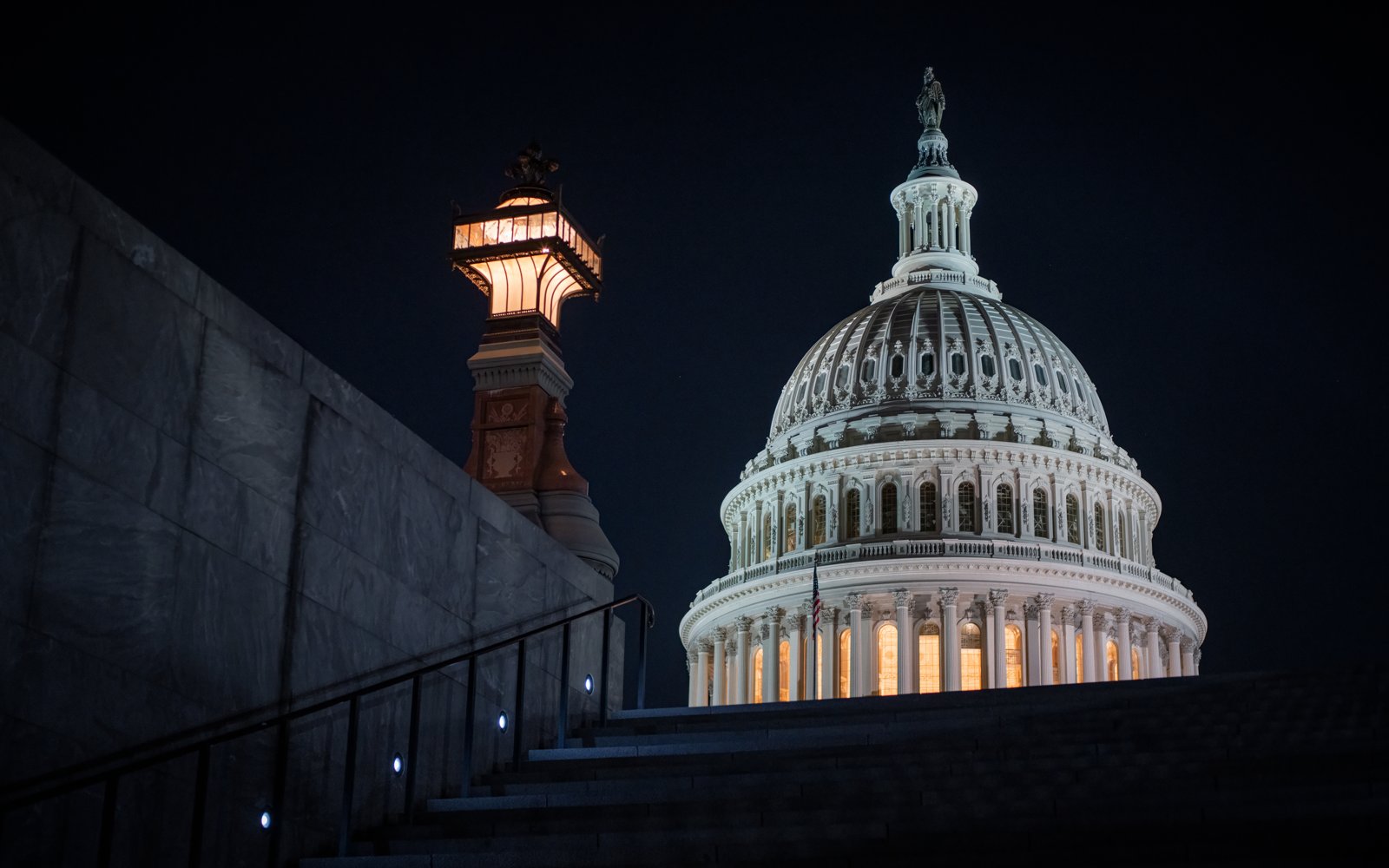
- [24]Photo: John Brighenti, CC BY 2.0

Editor
Peter OlaleruPeter is the editor of Measured Take and a cybersecurity professional. He leads our news, fact checks, sport and guides from around the world, with a particular eye on cyber attacks, data breaches, scams, AI and misinformation.
More from Politics



Conversation
Reader notes
Loading comments...