Hütter's Frankfurt: goals are flowing, points are not
Eintracht Frankfurt's 3-1 win over Hamburg showed an attack finding its range, but the gap to Hütter's first spell remains the season's central question.
- Match
- Eintracht Frankfurt vs Hamburger SV
- Competition
- Bundesliga
- Kick-off
- November 1, 2026
- Status
- FULL TIME
- Score
- 3-1
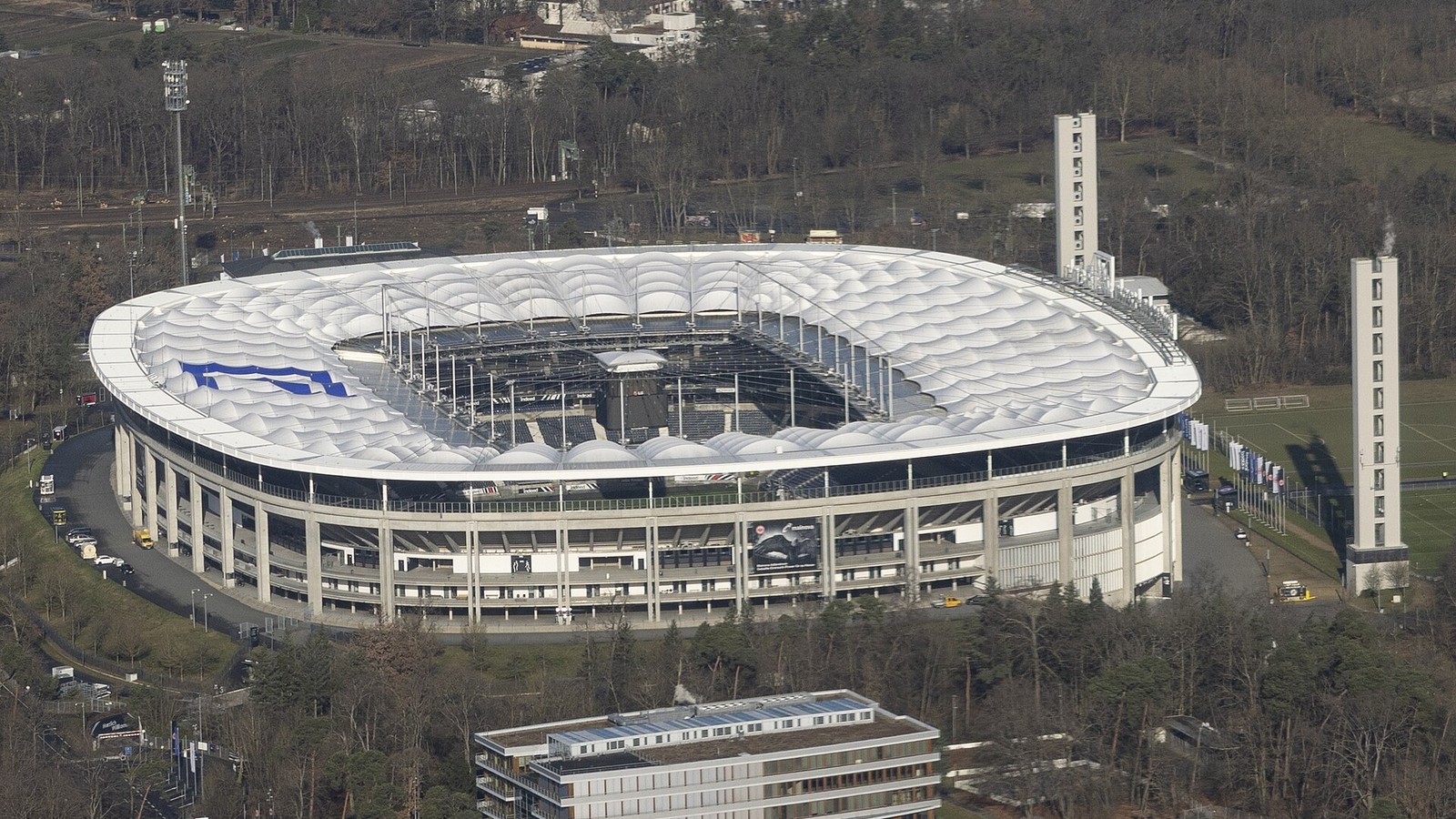
Eintracht Frankfurt beat Hamburger SV 3-1 at Deutsche Bank Park on 1 November 2026, five days after winning by the same scoreline against the same opponent in the DFB-Pokal. Warmed Omari's own goal put Frankfurt ahead on 10 minutes, Terem Moffi equalised for Hamburg four minutes later, and second-half goals from Raphael Onyedika and Younes Ebnoutalib settled it. The win lifted Frankfurt to eighth and was their third Bundesliga victory of the season.
It was also, in miniature, the story of Adi Hütter's second spell so far: enough attacking output to win comfortably, not yet enough of it converted into the points return his first Frankfurt side produced.
The numbers behind the scoreline
Frankfurt's 1.95 expected goals against Hamburg's 1.05, and their 10 shots on target against three, describe a side that created clearly the better chances. The reports agree on the result and the flow of the game; where they differ from the raw numbers is in emphasis. A 52–48 possession split and six corners each suggest an even contest, yet Frankfurt's 31 touches in the opposition box — against an average of 22.8 across their earlier matches this season — point to a team spending far more time in the areas that matter. Their set-play expected goals of 0.73, against an earlier average of 0.18, is the clearest single shift: the dead-ball work that had been marginal became a genuine source of threat.
That is the encouraging part. The cautionary part is that this is one match, not a trend. Frankfurt's goals minus expected goals in this game was 1.05, against an average of 0.0 earlier in the season — a reminder that finishing above expectation is not a sustainable plan.
The gap to 2020/21
Hütter's first spell, from July 2018 to June 2021, produced a Europa League semi-final in his first season, a DFB Cup semi-final a year later, and a return to the Europa League in 2020/21. In his final full league campaign, Frankfurt took 1.76 points per game across 34 matches. This season, over seven league games, the figure is 1.14 from two wins, two draws and three defeats.
The sample is too small to call that a trend, and the fixture list has not been kind: a 6-0 defeat at RB Leipzig on 10 October left Frankfurt with one win from five league matches, and the response since — a 1-0 win over Köln, a narrow defeat at Dortmund, and two wins over Hamburg in different competitions — is mixed rather than damning.
He was appointed on a three-year contract running to 30 June 2029, which implies patience, but patience is easier to hold when the table looks kinder than eighth.
Turnover and the missing balance
The summer brought Raphael Onyedika, Lilian Brassier, Otávio, Noah Atubolu, Noel Futkeu and Malik Pimpong, while Hugo Larsson, Ellyes Skhiri, Arthur Theate, Aurèle Amenda, Michael Zetterer and Elye Wahi left. That is a significant rebuild of a squad, and it is reasonable to ask how much of the inconsistency belongs to that churn rather than to Hütter's methods. The honest answer is that the two cannot be separated yet.
There was a glimpse of the future on Sunday: Niko Iličević came on late at 16 years and one day old, equalling Youssoufa Moukoko's record as the youngest player in Bundesliga history. It was a small moment in a comfortable win, but a reminder that this Frankfurt is being built as much as it is being managed.
The next matches will answer whether the attacking volume shown against Hamburg — the touches in the box, the set-play threat, the ten shots on target — can be repeated against better opposition. Until then, the win is evidence of progress, not proof of it.
Sources

Editor
Peter OlaleruPeter is the editor of Measured Take and a cybersecurity professional. He leads our news, fact checks, sport and guides from around the world, with a particular eye on cyber attacks, data breaches, scams, AI and misinformation.
More from Sports


Conversation
Reader notes
Loading comments...