UK Biobank Health Data of 500,000 People Found on Alibaba, Government Confirms No Purchases
Health data from 500,000 UK Biobank participants appeared for sale on Alibaba, but the government confirms no purchases. This contract breach involved de-identified data.
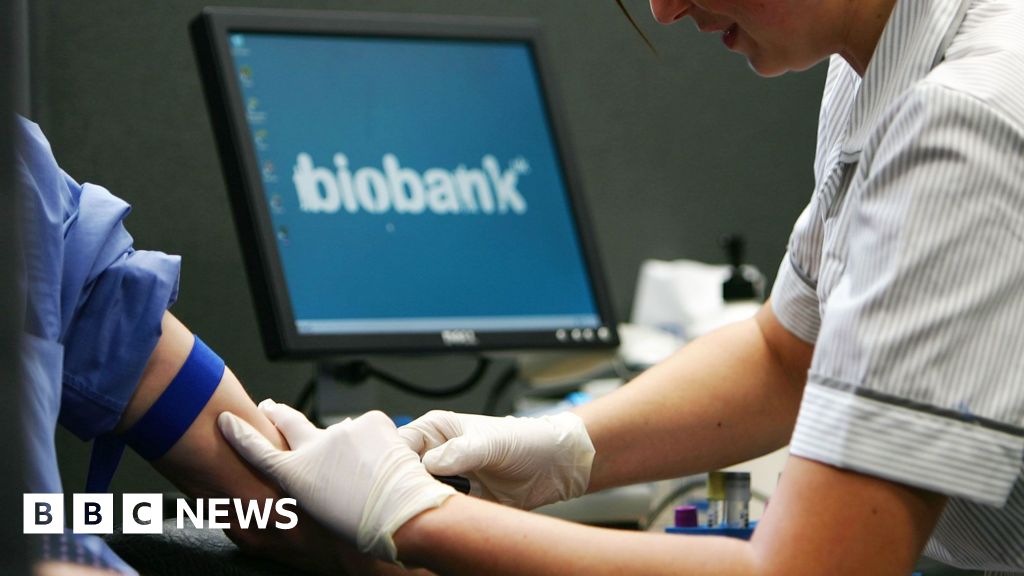
Nurse taking blood from person as biobank logo appears on screen in background.
TL;DR
Health data from 500,000 UK Biobank participants was listed for sale on a Chinese e-commerce platform, Alibaba, though the government stated no purchases occurred. This incident involved de-identified data and stemmed from a contract breach by an accredited research organization.
Context The UK Biobank operates as a large-scale prospective cohort study, a research design that follows a group of individuals over time to observe disease development and health outcomes. It collects extensive health data from 500,000 volunteers, recruited between 2006 and 2010 when participants were aged 40 to 69. This data resource supports advancements in detecting and treating diseases like dementia, various cancers, and Parkinson's.
Key Facts Data pertaining to all 500,000 UK Biobank participants appeared for sale across three separate listings on the Chinese e-commerce website Alibaba. Technology minister Ian Murray confirmed these listings. The information available was de-identified, meaning it contained no personally identifying details such as names, addresses, or NHS numbers. It did, however, include gender, age, month and year of birth, socioeconomic status, lifestyle habits, and measures derived from biological samples. The government reported that no purchases were made from any of the three listings before their removal. This incident did not involve a leak or cyber-attack; instead, it resulted from a legitimate download of data by an accredited research organization, constituting a clear breach of its contractual agreement with UK Biobank.
Access for the involved academic institutions and individuals has been suspended. UK Biobank has responded by temporarily suspending access to its research platform, imposing strict limits on file export sizes, and implementing daily monitoring for suspicious activity. A comprehensive board-led investigation is underway. Both the UK and Chinese governments, alongside Alibaba, cooperated in addressing the issue. The Information Commissioner's Office has also launched enquiries.
What It Means This incident underscores critical challenges in maintaining data integrity and trust within large-scale health research projects. While the data was de-identified and no purchases were reported, the presence of such listings can undermine public confidence in data sharing for scientific advancement. For individuals, the practical takeaway involves understanding that even de-identified data carries implications regarding privacy and proper handling. Researchers rely on robust frameworks to ensure ethical data use, and breaches of contract highlight vulnerabilities in these systems. The incident necessitates rigorous review of data governance protocols to prevent similar occurrences. What to watch next are the outcomes of UK Biobank's internal investigation and the enhanced security measures, which will inform future data access policies and researcher accountability standards.
Continue reading
More in this thread
Conversation
Reader notes
Loading comments...