Trump‑Xi Beijing Summit Highlights Trade Gap and Military Spending Divide
Trump meets Xi in Beijing as China’s $3.6 trillion export lead dwarfs US trade, while US defense spending remains three times higher.
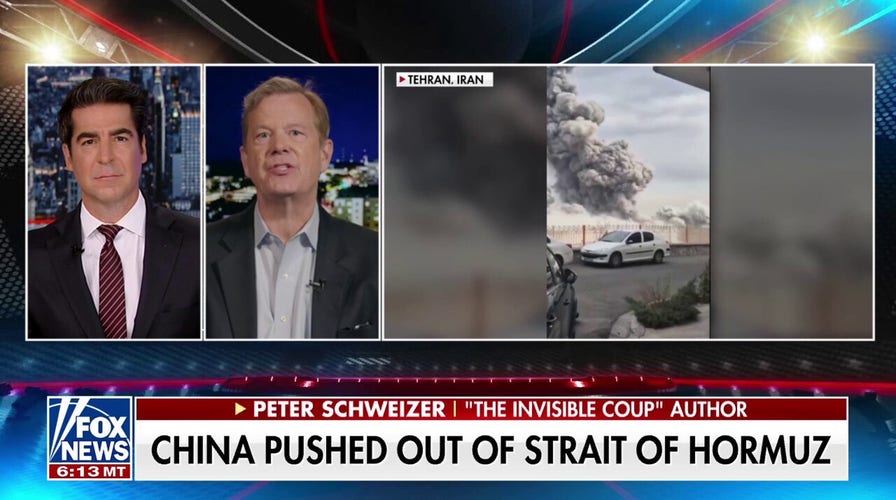
Trump shifted the equation with China, Government Accountability Institute president says
TL;DR: Trump’s May 14‑15 summit with Xi spotlights China’s $3.59 trillion export advantage and a US military budget nearly three times higher.
The United States and China have converged into the world’s two dominant powers, but their strengths now sit on opposite ends of the economic‑military spectrum. President Donald Trump will travel to Beijing for a two‑day meeting, the first US presidential visit to China in almost ten years, after weeks of postponement linked to the US‑Israel conflict over Iran.
China’s export bill reached $3.59 trillion in 2024, almost double the United States’ $1.9 trillion. Machinery and electrical equipment alone accounted for $1.68 trillion of Chinese shipments, cementing Beijing’s role as the global factory. The United States, by contrast, exported $447 billion of similar goods and ran a trade deficit of more than $1 trillion, buying $3.12 trillion worth of foreign products.
On the defense side, the fiscal gap is stark. The United States allocated $954 billion to its military in 2025, roughly three times China’s $336 billion spend. This disparity underscores America’s continued dominance in defense spending despite Beijing’s economic surge.
The upcoming talks are expected to focus on trade imbalances, tariffs, and broader economic cooperation. With 145 economies now trading more with China than with the US, Washington faces pressure to address a widening export gap while leveraging its superior defense budget as diplomatic leverage.
What it means: The summit will test whether economic clout can offset military might in shaping the bilateral relationship. Observers will watch for any shift in tariff policy, supply‑chain adjustments, or security commitments that could redefine the rivalry.
What to watch next: Post‑summit statements and any concrete agreements on trade rules or defense coordination will signal the direction of US‑China competition in the coming year.
Continue reading
More in this thread
Conversation
Reader notes
Loading comments...