Musk Claims OpenAI Misappropriated Charity in $38 Million Lawsuit
Elon Musk alleges OpenAI stole a charitable foundation, citing his $38 million donation in a lawsuit seeking billions in damages and governance changes.
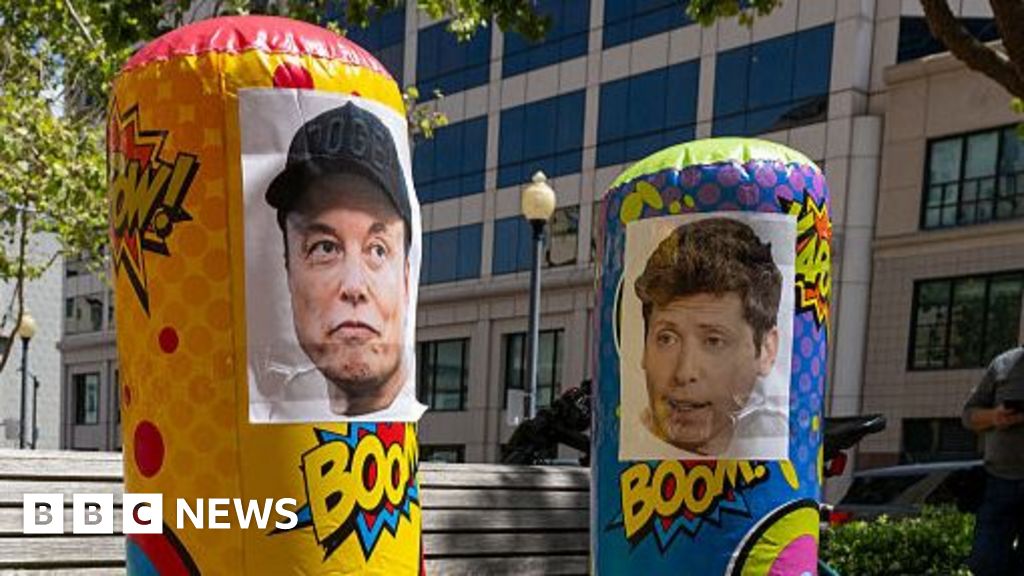
Punching bags with the faces of Musk and Altman seen outside of court
*TL;DR Elon Musk accuses OpenAI of stealing a charitable foundation, using his $38 million contribution as the basis for a lawsuit that could reshape the company’s governance.*
Context A California trial has begun pitting OpenAI co‑founders Sam Altman and Elon Musk against each other. The case centers on whether OpenAI’s shift to a commercial arm in 2018 violated the charitable intent behind its early funding. Both parties have been warned by the judge not to use their public platforms to influence jurors.
Key Facts Musk testified that “stealing a charity” would erode the entire foundation of charitable giving. He highlighted his $38 million (£28 million) donation made while OpenAI operated as a non‑profit. Musk’s lawyer, Steven Molo, argued that without Musk’s involvement, OpenAI would not exist, stating plainly, “Without Elon Musk, there would be no OpenAI. Pure and simple.”
OpenAI’s counsel, William Savitt, framed the lawsuit as a competitive attack, saying Musk is trying to “kneecap a competitor.” The company points to Musk’s departure after the 2018 commercial pivot and his later focus on his own AI venture, xAI, which launched the Grok chatbot in 2023.
Molo described Musk’s growing concern over AI regulation, citing a 2015 meeting with President Barack Obama as a turning point. He said Musk believed AI should not be a vehicle for personal profit. The lawsuit seeks billions in “wrongful gains” to fund a revived non‑profit arm and calls for the removal of Altman as CEO.
OpenAI counters that Musk understood the commercial decision and left only after failing to secure the CEO role. The company also alleges Musk used his investment to pressure other founders and attempted to merge OpenAI with Tesla, a claim Musk’s team denies.
What It Means If the jury sides with Musk, OpenAI could be forced to restructure, potentially reinstating a non‑profit component and altering its profit‑driven trajectory. The case also raises broader questions about the enforceability of charitable intent in tech startups. A verdict is expected in late May, and the outcome will likely influence how future AI ventures balance philanthropy with commercial ambition.
Continue reading
More in this thread
Arizona Man Arrested for 1991 Murder of Cindy Wanner After DNA Match and Cash Seizure
Alex Mercer
Microsoft and OpenAI End Exclusivity, Opening AI Models to AWS and Other Clouds
Alex Mercer
Microsoft Ends OpenAI Exclusivity, Secures Revenue Share Through 2030
Alex Mercer
Conversation
Reader notes
Loading comments...