Microsoft Ends OpenAI Exclusivity, Secures Revenue Share Through 2030
Microsoft drops exclusive rights to sell OpenAI models, opens market to rivals, and locks in revenue share through 2030 amid Elon Musk's $134 billion lawsuit.
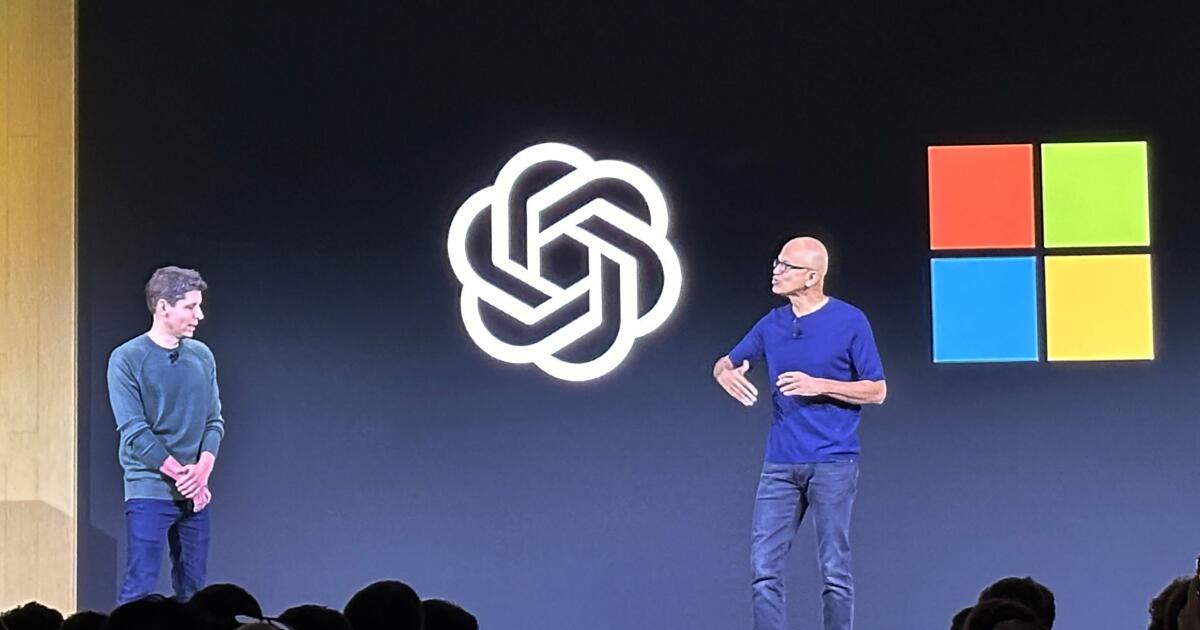
TL;DR: Microsoft has ended its exclusive right to sell OpenAI’s AI models, allowing the startup to partner with other cloud providers while keeping a revenue share through 2030, even as Elon Musk pursues a $134 billion claim.
Context Microsoft and OpenAI announced on Monday that the exclusive clause that gave Microsoft sole resale rights to OpenAI’s models is now void. The change lets OpenAI place its models on rival clouds such as Amazon Web Services (AWS). The move follows years of close collaboration that helped Microsoft boost its Azure cloud sales during the early AI boom.
Key Facts - The revised agreement removes Microsoft’s exclusive resale right, enabling OpenAI to strike deals with other providers while still launching new products first on Azure. - Microsoft will continue to receive a share of OpenAI’s product revenue until 2030, regardless of whether OpenAI reaches artificial general intelligence—a system that matches human capability across tasks. - Under the prior contract, revenue payments would have stopped if OpenAI achieved that milestone; the new terms cap the share but keep payments flowing until the 2030 cut‑off. - Elon Musk is suing both companies, seeking up to $134 billion in damages, alleging that OpenAI abandoned its founding principles by becoming a for‑profit entity backed by Microsoft. - Shares reacted modestly: Microsoft fell about 1% and Amazon slipped less than 1% after the announcement.
What It Means The termination of exclusivity broadens OpenAI’s distribution network, potentially accelerating the rollout of its models across more cloud environments. For Microsoft, the guaranteed revenue stream through 2030 provides financial predictability even as the AI market diversifies. Analysts note that the shift aligns with Microsoft’s stated interest in a multi‑model strategy, while OpenAI gains flexibility to meet growing compute demands.
The lawsuit filed by Musk adds a legal dimension that could influence future partnership structures. Stakeholders will watch how the revenue‑share model performs and whether OpenAI’s expansion onto AWS and other platforms reshapes the competitive dynamics of cloud‑based AI services.
Looking ahead, monitor the court proceedings for any impact on the partnership and watch for early signs of OpenAI’s model deployments on non‑Microsoft clouds.
Continue reading
More in this thread
Arizona Man Arrested for 1991 Murder of Cindy Wanner After DNA Match and Cash Seizure
Alex Mercer
Microsoft and OpenAI End Exclusivity, Opening AI Models to AWS and Other Clouds
Alex Mercer
Musk Claims OpenAI Misappropriated Charity in $38 Million Lawsuit
Alex Mercer
Conversation
Reader notes
Loading comments...