Iowa and South Dakota Top Nation in Wind‑Solar Share as U.S. Renewables Hit Record 17%
Iowa and South Dakota each sourced over half of their electricity from wind and solar last year, pushing the U.S. renewable share to a record 17%.
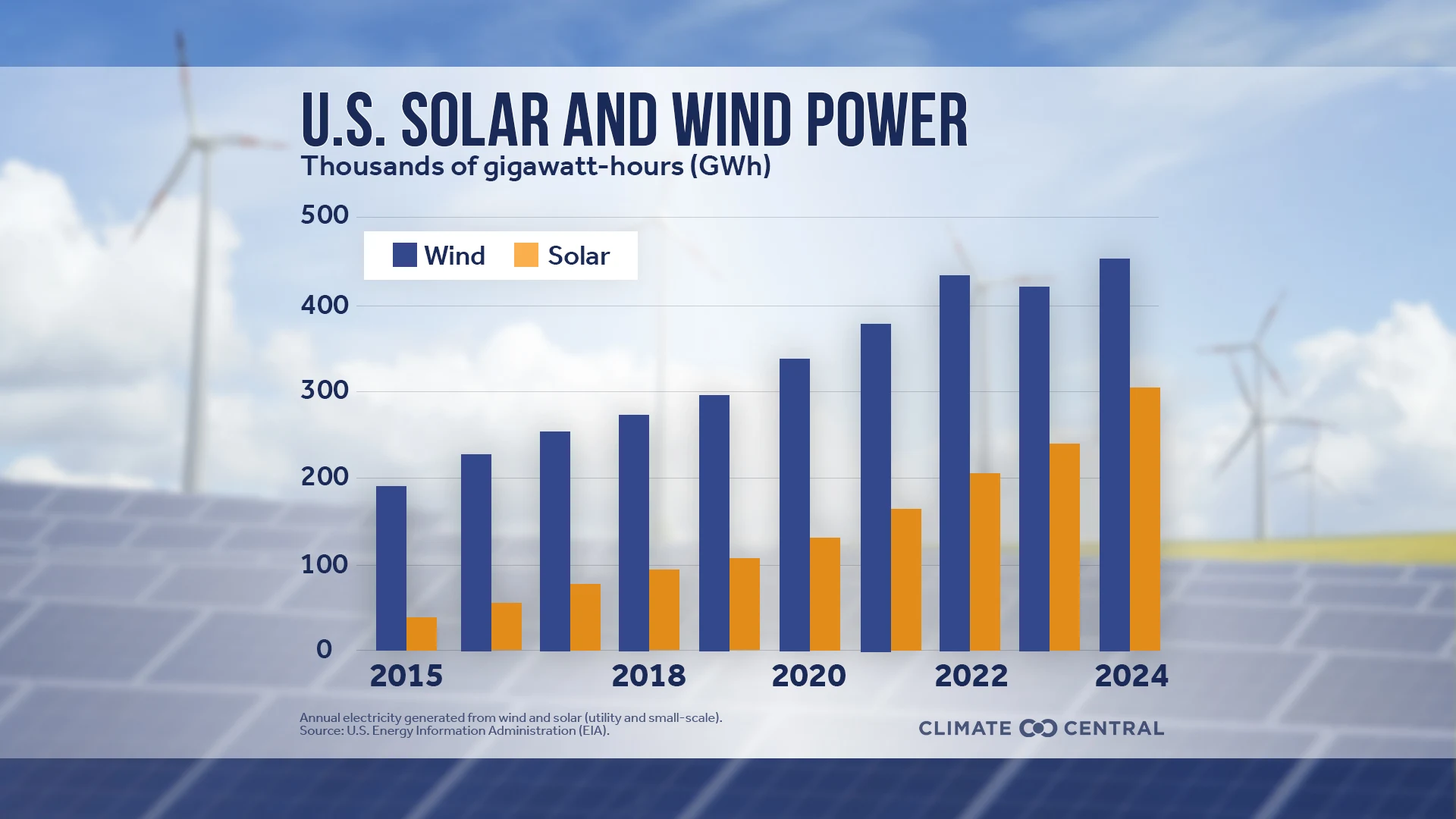
Click the downloadable graphic: National Solar and Wind Generation 2015 to 2024
TL;DR: Iowa and South Dakota each drew more than half of their electricity from wind and solar last year, helping push the national share of those renewables to a record 17% of U.S. grid power.
Last year, wind and solar farms supplied more than half of Iowa’s electricity, a share unmatched by any other state. According to the American Clean Power Association’s annual state‑level analysis, which aggregates utility generation reports and U.S. Energy Information Administration data, researchers calculated each state’s wind and solar share of total electricity production for the 2023 calendar year.
The same methodology showed South Dakota at 59% wind and solar, with wind providing virtually all of that generation. Thirteen states exceeded the 30% threshold for combined wind and solar output, and wind and solar together accounted for 17% of the nation’s grid‑scale electricity, marking the highest level ever recorded.
In Iowa and South Dakota, wind contributed roughly 95% of the renewable share, while solar remained minimal. States such as New Mexico and California displayed a more balanced mix, with solar supplying a larger fraction of their renewable output. The national 17% figure reflects growth across the Midwest, Southwest, and West Coast despite recent policy headwinds.
These results indicate that wind and solar are becoming cost‑competitive sources of new electricity, even as federal tax credits face uncertainty and local opposition slows some projects. The trend underscores the increasing role of renewables in meeting rising electricity demand and highlights the importance of storage and transmission upgrades to manage variable output.
Watch for upcoming state clean‑energy targets and federal tax‑credit debates that could shape the next year’s wind and solar build‑out.
Continue reading
More in this thread
Conversation
Reader notes
Loading comments...