IMO Revives Global Shipping Emissions Talks, Sets Dates for 2025 Negotiations
The IMO has restarted negotiations on a global shipping emissions framework, scheduling MEPC 85 for Nov 30–Dec 3 and an extraordinary session on Dec 4, with intersessional working groups meeting in September to resolve differences.
TL;DR
The International Maritime Organization has revived talks on a global shipping emissions framework, scheduling key meetings for September and a decisive extraordinary session in early December 2025.
Context The IMO’s Marine Environment Protection Committee (MEPC) oversees environmental rules for ships. After its 84th session ended on 1 May, members agreed to continue work on the proposed Net‑Zero Framework (NZF), which aims to cut greenhouse gas emissions from shipping to net zero by mid‑century. Trust among delegations had weakened after the previous extraordinary session was postponed to 2026. The process relies on technical working groups that draft proposals, which are then reviewed and negotiated by member states during MEPC sessions. Consensus is required for adoption, making trust and clear communication essential steps.
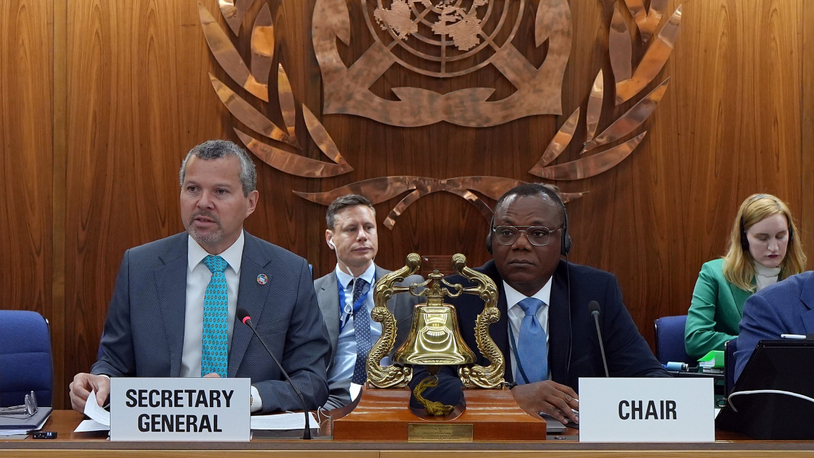
Key Facts IMO Secretary‑General Arsenio Dominguez said the negotiations are “back on track” but stressed that trust must be rebuilt. He noted wider agreement on the terms of reference for upcoming working groups, while disagreement remains over the framework’s structure. The committee set MEPC 85 for 30 November–3 December 2025, with an extraordinary session on 4 December to decide the NZF’s future. Two intersessional working groups on GHG emissions from ships (ISWG‑GHG) will meet in September (session 22) and the week preceding MEPC 85 (session 23) to resolve outstanding issues and submit reports. International Chamber of Shipping Secretary‑General Thomas Kazakos urged governments to adopt a comprehensive global framework quickly so the industry can shift to alternative energy sources. He called the recent discussions constructive but said many states still need adjustments before accepting a worldwide rule. Observers such as Intertanko agree that a single global framework is the only way to avoid fragmented regulations, yet they warn that divergence on its exact form persists.
What It Means A clear, globally accepted emissions framework would give shipowners certainty to invest in low‑carbon fuels and technologies, potentially accelerating the sector’s transition. Without agreement, the industry risks a patchwork of regional rules that could raise compliance costs and hinder coordinated climate action. The upcoming sessions will test whether member states can bridge structural differences and produce a text ready for adoption. Watch for the outcome of the 4 December extraordinary session, which will determine whether the NZF moves forward to formal adoption or faces further delay.
Continue reading
More in this thread
German rescuers release beached humpback calf despite experts warning of low survival odds
Dr. Leo Tanaka
May Heat Spike in Southeast Australia Set to End as Cold Front Brings Rain and Cooler Temperatures
Dr. Leo Tanaka
Rising CO₂ Lowers Protein in Wheat and Rice by Up to 17%, Threatening Global Nutrition
Dr. Leo Tanaka
Conversation
Reader notes
Loading comments...