Uttarakhand Leads Himalayan Council on Climate and Water
Uttarakhand CM Pushkar Singh Dhami chaired the inaugural Himalayan States Council meeting to align climate, water and biodiversity policies, proposing a joint task force and citing recent temperature rise data.
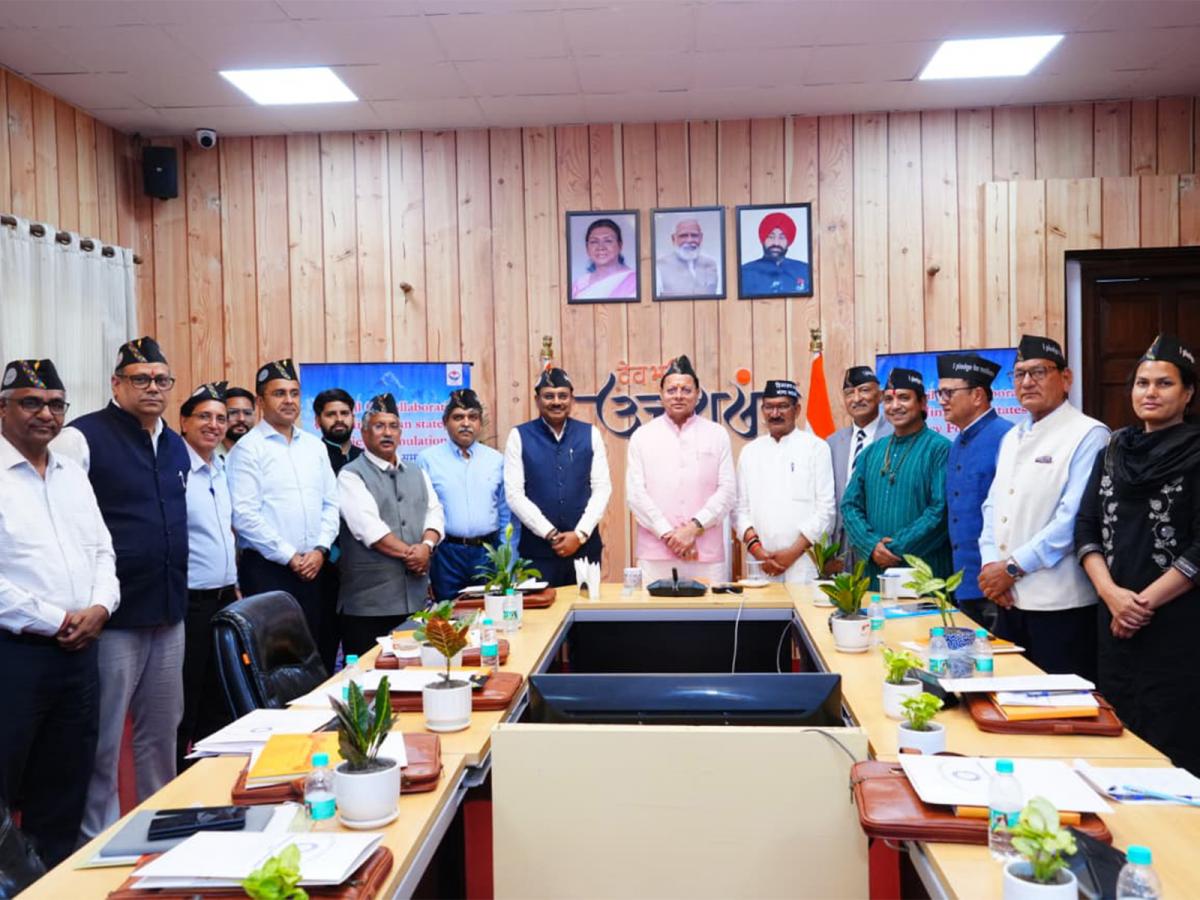
Uttarakhand CM Dhami chairs meeting to 'strengthen mutual coordination' among Himalayan states - www.lokmattimes.com
Uttarakhand Chief Minister Pushkar Singh Dhami inaugurated the Himalayan States Coordination and Policy Planning Council on Friday. The meeting aimed to align climate, water and biodiversity policies across the region’s mountain states.
The Himalayan belt includes Uttarakhand, Himachal Pradesh, Sikkim, Arunachal Pradesh and parts of West Bengal and Assam. These states share steep terrain, reliance on snow‑melt for rivers, and rich biodiversity that supports agriculture, tourism and hydropower. Recent observations show glaciers retreating at rates of 0.5 to 1 meter per year, altering water availability downstream. The region also faces heightened risks from glacial lake outburst floods, which have increased in frequency over the past two decades.
Chief Minister Dhami chaired the inaugural meeting at his residence in Dehradun on Friday. He said the Himalayan states have comparable geographical, environmental and social conditions, stressing that similar challenges need similar solutions. Experts proposed creating a joint task force to assess river flow, monitor water levels and protect alpine grasslands known locally as bugyals. They also urged the promotion of medicinal plant cultivation and the conservation of cultural heritage sites across the states. A 2023 analysis in Nature Climate Change, which combined satellite data from NASA’s MODIS instrument with ground observations from 60 weather stations, found that average temperatures across the Himalayas have risen 0.18 °C per decade since 1990.
Coordinated early‑warning systems for floods and landslides could reduce disaster losses by sharing real‑time data across state borders. Joint research may identify effective practices for rejuvenating natural springs, which currently supply drinking water to over 10 million people in the region. Protecting bugyals and promoting medicinal plants could sustain livelihoods for thousands of hill‑community households while preserving biodiversity. Aligning tourism policies could extend the visitor season and increase revenue for local guides and hotels.
Officials will next draft a memorandum of understanding to formalize the task force and set timelines for pilot projects on water rejuvenation and biodiversity monitoring.
Continue reading
More in this thread
UK AI datacentre emissions revised up to 123 million tonnes – over 100× earlier estimate
Dr. Leo Tanaka
Spain Must Fast-Track Pumped Storage to Avert 3 TWh Renewable Waste by 2026, IHA Warns
Dr. Leo Tanaka
India’s Binding Carbon Credit Scheme Drives Demand for CSE’s Carbon Accounting Training
Dr. Leo Tanaka
Conversation
Reader notes
Loading comments...