India’s Binding Carbon Credit Scheme Drives Demand for CSE’s Carbon Accounting Training
India implements its first legally binding Carbon Credit Trading Scheme, establishing GHG emission targets for nine sectors. This mandates increased capacity in carbon accounting and reporting.
TL;DR
India’s new legally binding Carbon Credit Trading Scheme establishes specific greenhouse gas emission targets for nine industrial sectors. This regulatory shift is creating immediate demand for specialized training in carbon accounting and reporting.
India has initiated its first legally binding Carbon Credit Trading Scheme, impacting nine industrial sectors. This national policy aims to meet the country's 2030 Nationally Determined Contribution (NDC) goals by setting specific greenhouse gas (GHG) emission intensity targets. The NDC outlines a nation's commitments under the Paris Agreement to reduce national emissions and adapt to climate change impacts.
This move shifts climate action from voluntary efforts to mandatory compliance for a significant portion of India's industrial economy. Such a scheme requires precise measurement and verification.
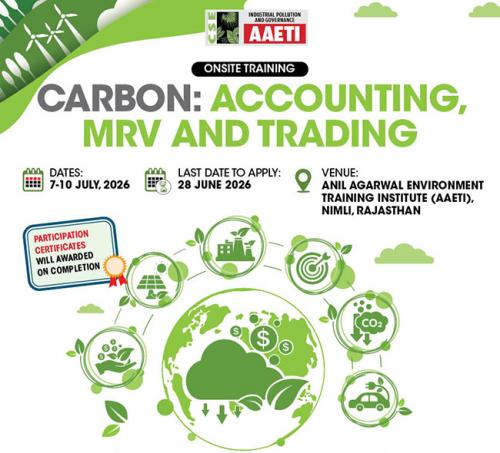
The Centre for Science and Environment (CSE) developed a three-and-a-half day training program to address the regulatory capacity needs arising from this scheme. The program focuses on carbon accounting, Monitoring, Reporting, and Verification (MRV) processes, carbon trading, and decarbonisation strategies. MRV involves measuring, reporting, and independently verifying greenhouse gas emissions to ensure accuracy and transparency.
This initiative directly responds to the binding nature of the new scheme, which mandates compliance from affected industries. Participants gain knowledge to manage GHG inventories across all three scopes and develop robust MRV systems. They also learn to navigate both compliance and voluntary carbon markets effectively.
The course fee for this specialized program is Rs. 30,000. This investment offers a path to meeting new compliance standards.
The introduction of India’s Carbon Credit Trading Scheme signals a definitive shift towards legally enforceable mandates for emission reduction. Companies in specified sectors must now actively measure, report, and verify their carbon footprints to meet set targets, moving beyond previous voluntary disclosures.
This regulatory framework extends its relevance beyond national borders. Global mechanisms like the Carbon Border Adjustment Mechanism (CBAM) impose carbon pricing on imports from countries without equivalent carbon pricing mechanisms.
The demand for comprehensive training in carbon management is therefore critical for industrial compliance, avoiding penalties, and maintaining competitiveness in a carbon-constrained global economy. Businesses must now invest in expert knowledge and internal capacity to navigate this evolving market effectively.
Future developments will likely include the expansion of this scheme to additional industrial sectors and increased international scrutiny on corporate emission data, making ongoing capacity building and strategic carbon management essential for economic sustainability.
Continue reading
More in this thread
UK to Include International Aviation and Shipping Emissions in Carbon Budgets Starting 2033
Dr. Leo Tanaka
UK to Count International Aviation and Shipping Emissions in Carbon Budgets Starting 2033
Dr. Leo Tanaka
Colombia‑Hosted ‘Coalition of the Willing’ Brings 54 Nations Together to Map Fossil‑Fuel Exit While Top Emitters Stay Away
Dr. Leo Tanaka
Conversation
Reader notes
Loading comments...