UK inflation hits 3.3% as Iran war spikes fuel prices
UK inflation rises to 3.3% in March amid an 8.7% monthly jump in motor fuel prices driven by Middle East supply disruptions. BoE rate decision next week in focus.
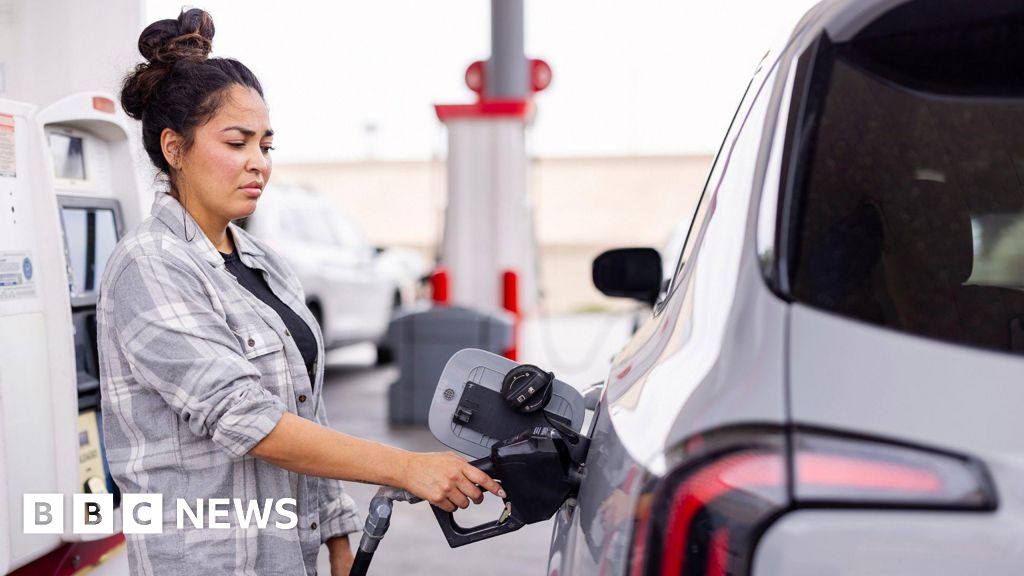
A woman in a grey checked shirt fills up a car at a petrol station.
TL;DR: UK inflation rose to 3.3% in March, driven by an 8.7% monthly jump in motor fuel prices as the Iran conflict disrupts Middle East oil supplies. The Bank of England’s rate decision next week will test whether policymakers can contain the spill‑over without stifling growth.
Context: The Office for National Statistics reported that the year‑on‑year consumer price index climbed from 3.0% in February to 3.3% in March. Analysts attribute the acceleration primarily to higher energy costs, with petrol and diesel posting their largest monthly increase since June 2022. The Iran‑Israel conflict, which began in late February, has curtailed crude output and tanker movements across the Gulf, pushing Brent crude (ticker: BZ=F) up roughly 12% over the past month and lifting wholesale energy prices.
Key Facts: Motor fuel prices rose 8.7% month‑on‑month, the biggest jump in over two years, contributing to a 4.9% yearly increase in fuel costs. Chancellor Rachel Reeves said, "This is not our war, but it is raising costs for families and businesses, making cost reduction her top priority." Market reaction saw BP (BP.L) slip 1.4% and Shell (SHEL.L) down 1.1%, while the FTSE 100 index fell 0.8% to around 7,850 points. BP’s market cap stands at about £80 billion, Shell’s at roughly £190 billion.
What It Means: Higher fuel costs feed through to transportation, manufacturing, and retail, squeezing household budgets and raising input costs for firms. The Bank of England’s Monetary Policy Committee, set to meet next week, currently holds the benchmark rate at 3.75%; persistent inflation may prompt a hold or even a hike, despite slowing growth. Economists warn that if energy prices remain elevated, inflation could peak between 3.5% and 4.0% this year, above the 2% target but far below the double‑digit spikes seen after Russia’s 2022 invasion.
Watch next: The BoE’s rate announcement, any fiscal measures from the Treasury to curb fuel price pass‑through, and the trajectory of Brent crude as the Middle East conflict evolves.
Continue reading
More in this thread
Invesco (IVZ) Poised to Beat Estimates: 34.1% EPS Growth Forecast, +0.09% ESP Signals Likely Surprise
David Amara
UK Inflation Jumps to 3.3% Amid Iran War's Fuel Price Surge
David Amara
CVS Health's Strong Earnings Track Record and Positive ESP Suggest Another Beat Ahead of May 6 Report
David Amara
Conversation
Reader notes
Loading comments...