UAE Leaves OPEC, Sets Sights on 5 Million Barrels Per Day Output
UAE exits OPEC, aims for 5 million bpd output as cartel’s global share falls to 50%.
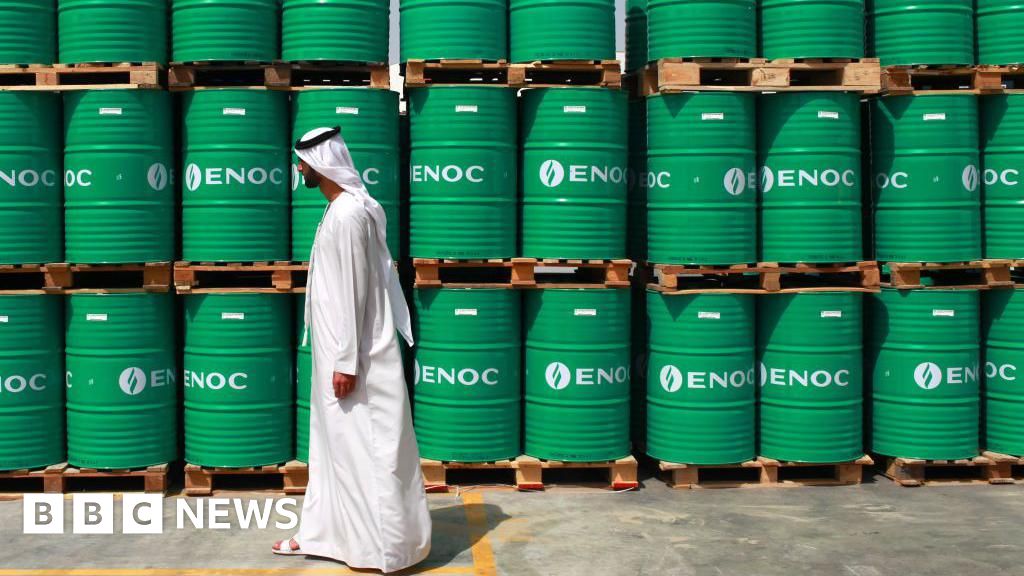
A man wearing a long, white dishdasha walks past stacks of bright green barrels bearing "ENOC" branding,
TL;DR
The United Arab Emirates announced its sudden withdrawal from OPEC and plans to raise output to 5 million barrels per day. OPEC’s share of internationally traded oil has dropped from 85% in the 1970s to roughly 50% today.
Context The UAE has been a member of OPEC since before its formal founding in 1971 and held the second‑largest spare capacity in the cartel. Its production was capped by OPEC quotas at 3‑3.5 million barrels per day, limiting potential revenue. Recent Gulf tensions, including the Iran conflict, have strained UAE relations with both Iran and Saudi Arabia, prompting a reassessment of its oil strategy.
Key Facts The UAE declared an abrupt exit from OPEC. It now targets 5 million barrels per day of oil production after leaving the group. OPEC’s share of globally traded oil has fallen from 85% in the 1970s to about 50% today.
What It Means Freed from OPEC quotas, the UAE can increase output and potentially influence market prices, especially if new pipelines bypass the Strait of Hormuz. Saudi Arabia may respond with its own production moves, testing the cohesion of the remaining cartel. Observers will watch for any shift in Gulf oil flows and the impact on global benchmark prices.
Watch next: Saudi Arabia’s production response and any further OPEC member reactions to the UAE’s move.
Continue reading
More in this thread
Conversation
Reader notes
Loading comments...