Renewable Energy Market Projected to Reach $2.87 Trillion by 2033
Global renewable energy market projected to grow 8.4% CAGR, hitting $2.87 trillion by 2033 amid policy support and technology advances.
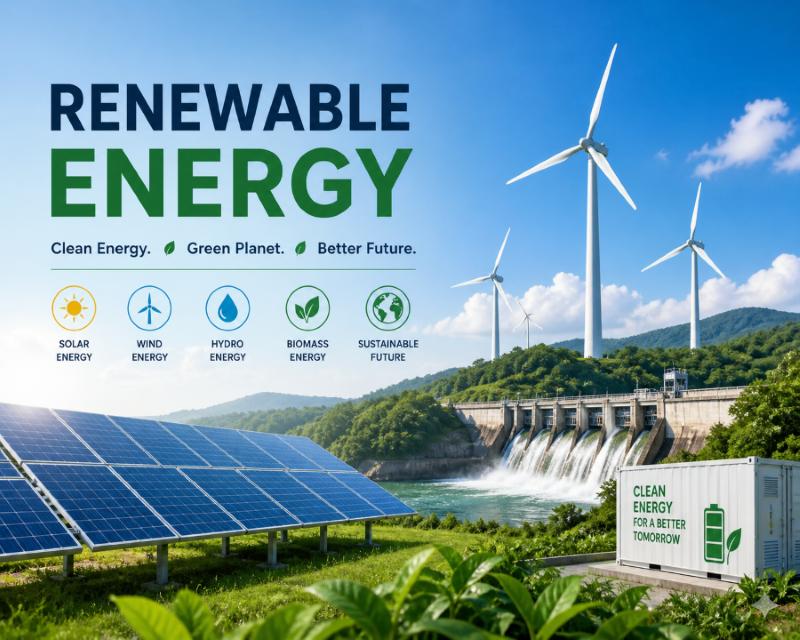
TL;DR: The renewable energy market will climb from $1.51 trillion in 2025 to $2.87 trillion by 2033, expanding at an 8.4% compound annual growth rate.
The surge reflects worldwide decarbonization targets, falling costs for solar and wind, and robust policy support. Governments across Europe, Asia and the United States are tightening emissions standards and subsidizing clean‑energy projects, creating a favorable investment climate.
Key figures show the market valued at $1.512 trillion in 2025 and projected to reach $2.874 trillion by 2033. The 8.4% CAGR from 2026 through 2033 translates into roughly $300 billion of new market value each year. Growth drivers include expanding solar photovoltaic capacity, larger offshore wind turbines, and accelerating deployment of battery storage and grid‑modernization technologies.
Industry leaders such as NextEra Energy, Iberdrola, Ørsted, Vestas and First Solar are scaling projects and rolling out next‑generation equipment. Vestas’ higher‑capacity turbines and First Solar’s advanced PV modules improve output while lowering operational costs. Ørsted’s offshore wind R&D and NextEra’s focus on energy‑storage integration further reduce intermittency, making renewables more reliable for utilities.
The expanding market also spurs strategic activity. Iberdrola and TotalEnergies are deepening investments in wind and solar assets, while mergers and partnerships accelerate technology transfer and project financing. Continuous cost reductions and the rise of hybrid systems that blend solar, wind and storage are expected to broaden adoption in both developed and emerging economies.
What it means: Investors and policymakers can expect sustained capital flows into clean‑energy infrastructure, with the sector delivering a sizable share of global power generation by the early 2030s. The next phase will likely focus on scaling storage solutions and grid upgrades to accommodate higher renewable penetration.
Watch next: How emerging battery technologies and regulatory reforms will shape renewable integration beyond 2033.
Continue reading
More in this thread
Conversation
Reader notes
Loading comments...