RAF Jet Carrying Defence Secretary Jams GPS Near Russian Border After Su‑27 Fly‑bys
Defence Secretary John Healey's RAF flight faced GPS jamming and six close passes by a Russian Su-27 near the border, prompting NATO scrutiny.
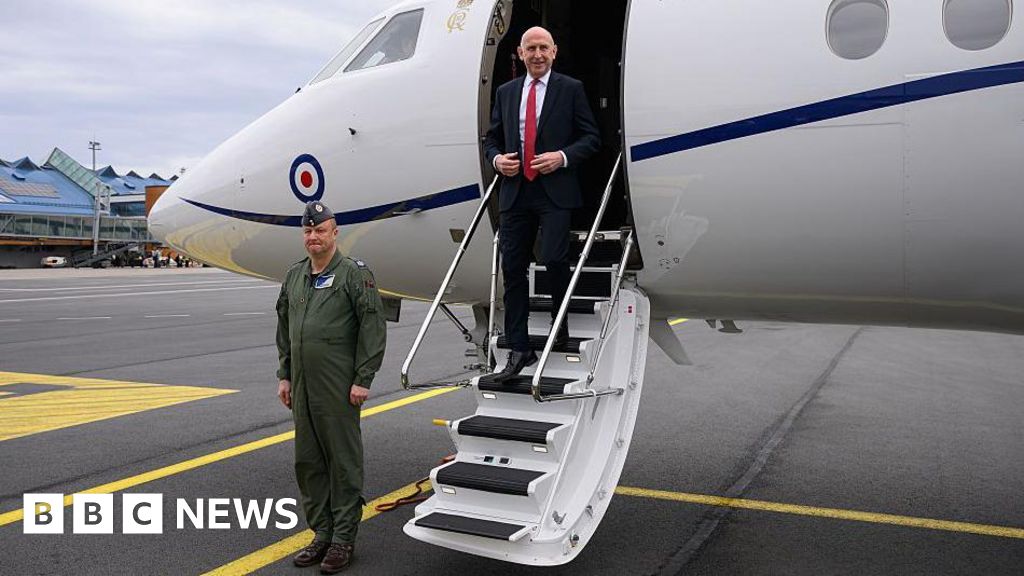
John Healey in a white shirt, black suit and red tie, seen exiting an RAF plane at an airport as a soldier stands to attention nearby
TL;DR
A RAF aircraft with Defence Secretary John Healey on board had its GPS jammed and endured six near‑misses by a Russian Su‑27 while flying close to the Russian border.
Context Healey was returning from a NATO exercise in Estonia when the incident occurred on Thursday. The flight lasted three hours and crossed airspace monitored by civilian tracking sites. Earlier this month, Russian warplanes had repeatedly intercepted a RAF surveillance aircraft over the Black Sea, raising tensions in the region.
Key Facts - The RAF jet’s GPS signal was disabled, likely by Russian electronic interference, forcing pilots to rely on alternative navigation methods. - A Russian Su‑27 fighter executed six close passes, coming within six metres (19 feet) of the RAF aircraft’s nose. - Healey praised the crew’s “outstanding professionalism” amid what he called “unacceptable” Russian fly‑bys. - The Ministry of Defence described the manoeuvres as the most dangerous Russian action since a 2022 missile launch at a NATO surveillance plane. - This is the second recorded GPS‑jamming incident involving a UK defence minister’s aircraft in 2024; a similar event affected then‑Defence Secretary Grant Shapps earlier in the year.
What It Means The jamming and aggressive intercepts signal a heightened willingness by Russia to challenge NATO air operations near its borders. Repeated electronic attacks could compel the UK and allies to invest in hardened navigation systems and revise flight routes over contested airspace. Monitoring of Russian fighter activity will likely intensify as NATO assesses the risk of further escalations.
*Watch for official responses from the Ministry of Defence and any changes to NATO air‑patrol protocols in the coming weeks.*
Continue reading
More in this thread
Conversation
Reader notes
Loading comments...