UK Defence Secretary’s RAF Jet Loses GPS Signal Near Russian Border Amid Russian Jet Passes
An RAF jet carrying UK Defence Secretary John Healey experienced GPS jamming near the Russian border as a Russian Su‑27 made six close passes within six metres of a surveillance aircraft.
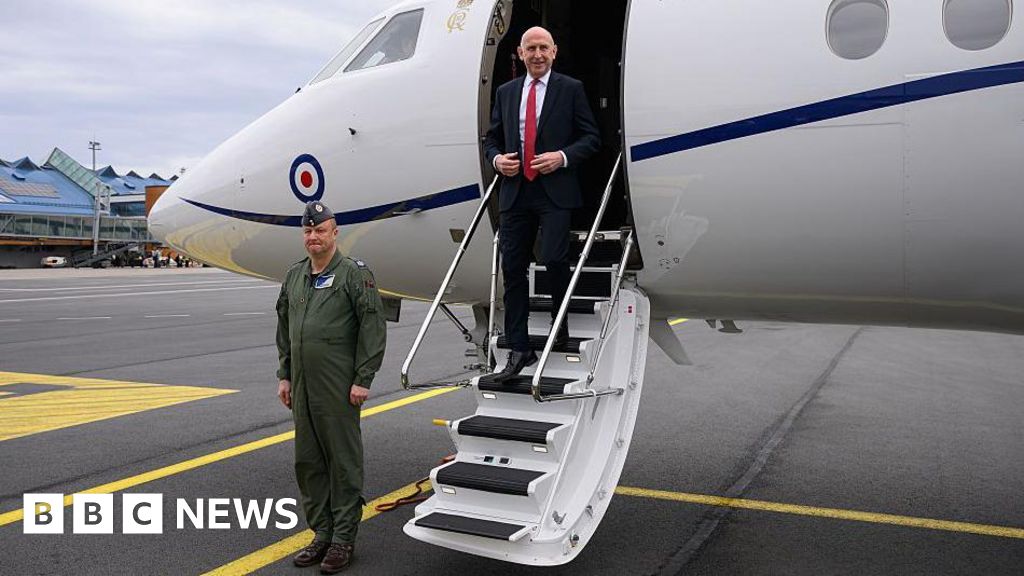
John Healey in a white shirt, black suit and red tie, seen exiting an RAF plane at an airport as a soldier stands to attention nearby
TL;DR
An RAF jet carrying UK Defence Secretary John Healey lost GPS signal near the Russian border while a Russian Su‑27 flew six close passes within six metres of a surveillance aircraft. Healey praised the crew’s professionalism as Moscow’s intercepts rise.
Context: Healey was returning to the UK on Thursday after visiting British soldiers stationed in Estonia for a NATO exercise. During the three‑hour flight back, the aircraft’s GPS signal was jammed, forcing pilots to rely on an alternative navigation system. The Ministry of Defence said the interference appeared to come from Russian sources, though it is not clear if the jet was deliberately targeted.
Key Facts: The GPS disruption occurred near the Russian border earlier this week. A Russian Su‑27 jet made six passes, coming as close as six metres (about nineteen feet) to the nose of an RAF surveillance aircraft. In a separate incident last month, a Russian Su‑35 approached another RAF Rivet Joint spy plane closely enough to trigger its emergency systems and disable its autopilot. Healey told reporters that the RAF crew showed “outstanding professionalism” during what he called “unacceptable” Russian flybys. The MoD described those actions as the most dangerous Russian behaviour since 2022, when a rogue pilot fired a missile at a Rivet Joint over the Black Sea. In 2024, a similar GPS jam affected an RAF jet carrying then‑Defence Secretary Grant Shapps while flying near Russian territory.
What It Means: The repeated jamming and close intercepts signal a pattern of heightened Russian air activity near NATO borders. Such incidents test the resilience of allied navigation and communication systems and may prompt NATO to review electronic‑countermeasure protocols. They also raise the risk of miscalculation if a pilot misjudges distance during a close pass.
What to watch next: Observers will monitor whether NATO increases electronic‑warfare training, if the UK requests further diplomatic explanations from Moscow, and how future flights adjust flight paths or navigation backups near contested airspace.
Continue reading
More in this thread
Conversation
Reader notes
Loading comments...