Prodigy Research Introduces a Foundation Model Aimed at Quantitative Finance
Prodigy Research announced a foundation model for quantitative finance on 21 August 2026, offering few technical details and an unverified performance claim, highlighting both potential and uncertainty in AI‑driven finance.
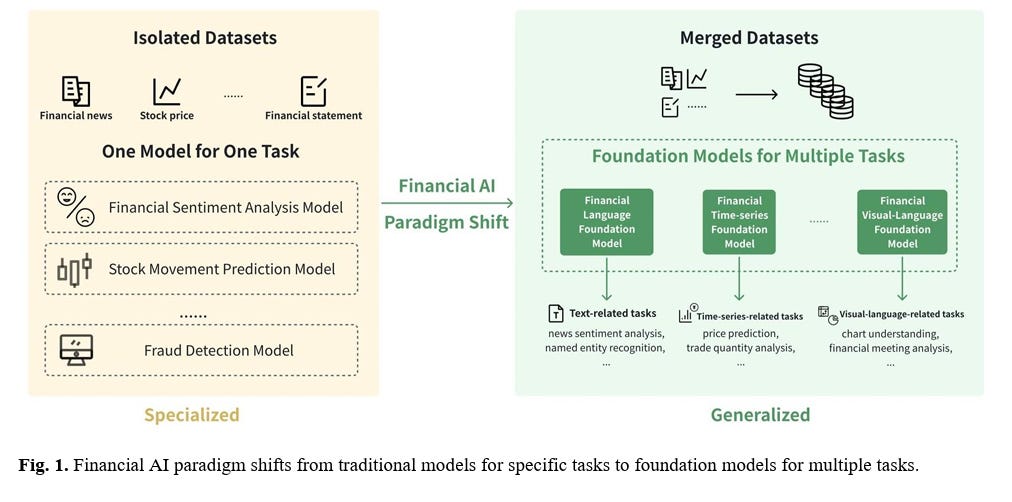
On 21 August 2026, Prodigy Research announced the launch of a foundation model designed for quantitative finance. The company described itself as a frontier AI trading research lab and said it is training a model to apply modern machine‑learning methods to market research and trading. Prodigy emphasized that its work focuses on model development for financial markets rather than on selling a conventional trading‑strategy product. The launch communication framed the effort around a specialised foundation model, highlighting intentions to train, evaluate and deploy the system for quantitative‑finance use cases.
The announcement did not disclose the model’s architecture, the size or sources of its training data, the risk‑control mechanisms it employs, the range of asset classes it will cover, or how customers will access the technology commercially. Prodigy also shared an early performance claim, stating that the model generated 140% returns in live trading during its YC batch while major market indices were flat or down. The company noted that this figure comes from its own internal tracking and that the launch material does not specify the measurement period, starting capital, leverage, fees, risk‑adjusted performance, benchmark construction or any independent verification. Consequently, the 140% return should be treated as an announced claim rather than a verified financial track record.
Foundation models that aim to serve financial markets sit at the intersection of artificial intelligence and critical infrastructure. In this domain, model quality must be judged not only by predictive accuracy but also by robustness, explainability, potential data leakage, execution fidelity and compliance with regulatory expectations. Prodigy’s entry signals an emerging attempt to build a general‑purpose model for quantitative finance, a step that could influence how firms approach research, strategy development and risk management if the technology proves reliable.
However, publicly available information about Prodigy remains limited. The company has not revealed its funding structure, the composition of its team, any existing customer partnerships or a clear route to market. Without details on training data provenance, validation procedures or external audits, stakeholders cannot yet assess whether the model meets the stringent standards required for deployment in live trading environments. The announcement therefore serves as an early signal rather than a conclusive assessment of the model’s capabilities or its likely impact on the finance industry.
The emergence of foundation models tailored to quantitative finance reflects a broader trend of applying large‑scale AI techniques to domains where data are noisy, non‑stationary and highly regulated. Experts in financial technology caution that the performance of such models can be sensitive to shifts in market structure, liquidity conditions and regulatory regimes, which may not be fully captured in historical training sets. They also point out that the opacity of large neural networks can hinder efforts to trace the source of unexpected losses or to satisfy audit requirements. Consequently, market participants and supervisors are likely to demand detailed documentation of data sources, model architecture, validation procedures and ongoing monitoring before allowing any such system to influence live trading decisions.
Until then, the announcement remains a signal to watch.
Continue reading
More in this thread
Progressive candidates draw back Michigan voters who left Democrats over Gaza
Nadia Okafor
Kazakhstan links constitutional reform to stability ahead of parliamentary vote
Nadia Okafor
Ex‑Imo Governor Seeks Court Order to Replace APC Senatorial Nominee
Nadia Okafor
Conversation
Reader notes
Loading comments...