Penn State’s Zero‑Gap Reactor Converts CO₂ and Renewable Power into Methane with 95% Coulombic Efficiency
Researchers report a zero‑gap microbial electrosynthesis reactor that converts CO₂ and renewable electricity into methane with >95 % coulombic efficiency and ~45 % overall energy efficiency.
TL;DR
Penn State researchers report a zero‑gap microbial electrosynthesis reactor that turns CO₂ and renewable electricity into methane with over 95 % coulombic efficiency and about 45 % overall energy efficiency, yielding roughly 7 L of methane per liter of reactor volume each day.
Context
Microbial electrosynthesis uses electricity to drive microbes that convert carbon dioxide into fuels. Early systems suffered from high internal resistance and low output because electrodes were spaced far apart.
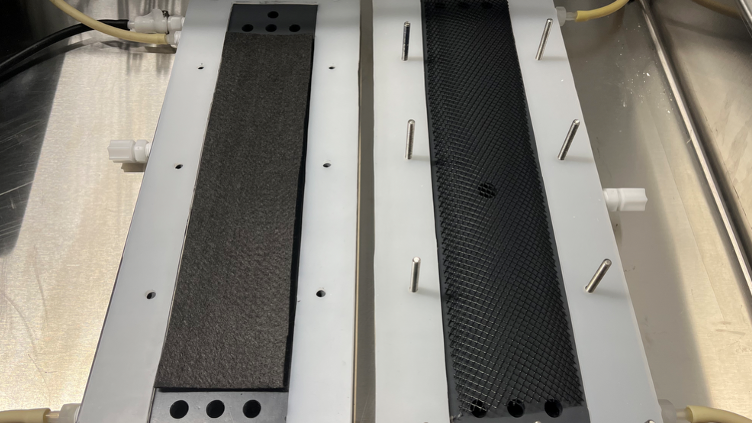
The Penn State team redesigned the cell as a zero‑gap system, placing the electrodes on opposite sides of a thin membrane. This configuration cuts resistance, boosts electron transfer, and enlarges the active surface area by about ten times.
In the reactor, renewable power first splits water into hydrogen and oxygen. The hydrogen is immediately consumed by methanogenic archaea that reduce CO₂ to CH₄. The process runs at about 30 °C, a temperature that keeps the microbes active while minimizing energy loss.
Key Facts
The reactor achieves a coulombic efficiency greater than 95 %, meaning almost all supplied electrons end up in methane rather than side reactions. Its overall energy efficiency is approximately 45 %, which compares favorably to other bioelectrochemical systems reported under similar test conditions.
In continuous operation it produces about 7 liters of methane for each liter of reactor volume every day, a rate sustained over multiple days in laboratory tests. These metrics were measured in a study published in *Nature Energy* by the Penn State Institute of Energy and the Environment team led by Bruce Logan.
What It Means
These numbers suggest the device could store excess renewable power as pipeline‑ready methane, using existing gas infrastructure for long‑duration, large‑scale energy buffering.
By locating units near solar or wind farms, operators might avoid grid congestion and transmission losses while recycling CO₂ from industrial sources or the atmosphere.
The approach still depends on cheap renewable electricity and further advances in catalyst materials to lower costs and improve durability. Scaling up will require engineering of larger zero‑gap stacks, integration with electrolyzers, and lifecycle assessments to confirm net carbon benefits.
What to watch next: pilot‑scale demonstrations and techno‑economic analyses that will determine whether the zero‑gap design can be manufactured at commercial scale and compete with conventional storage options.
Continue reading
More in this thread
California’s $100 Million Satellite Program Stops 20+ Methane Leaks, Boosts Credit Value 40%
Dr. Leo Tanaka
Large Hydropower Dams Threaten Communities Without Inclusive Planning
Dr. Leo Tanaka
EU Plan to Tax International Flights Could Add €45 to Ticket Prices by 2030
Dr. Leo Tanaka
Conversation
Reader notes
Loading comments...