PA Supreme Court Mandates Release of Detailed Vote Logs, Counties Face Tech Hurdles
The Pennsylvania Supreme Court’s unanimous ruling requires counties to release detailed cast‑vote records, but many lack the technology to do so without compromising ballot secrecy.
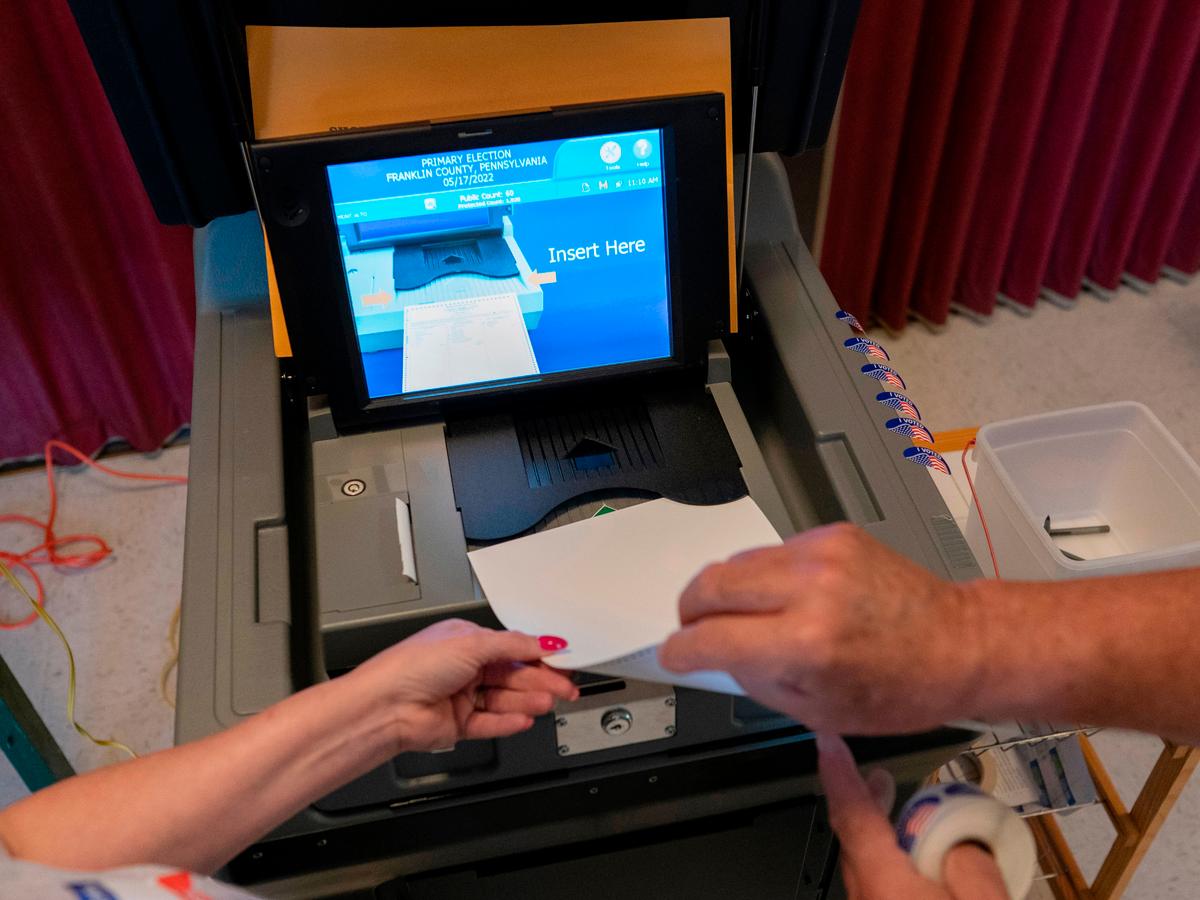
A polling judge helps guide a voter's ballot into a voting machine during the May 2022 Pennsylvania primary election.
TL;DR: The Pennsylvania Supreme Court ruled that detailed cast‑vote records must be public, but many counties lack the technology to release them without risking voter secrecy.
Context
The unanimous decision, issued last month, requires election officials to share a spreadsheet‑like log that shows how each ballot was marked, without revealing voter names. This log, known as a cast vote record (CVR), lists each ballot’s selections and the precinct where it was cast. Supporters say CVRs let anyone check that the reported totals match the actual ballots scanned. The ruling stems from a lawsuit brought by a conservative activist who sought Lycoming County’s 2020 CVR after an initial denial.
Key Facts
The court’s ruling was unanimous, with Justice Daniel McCaffery writing that releasing CVRs lets the public 'check the math' of local election offices to ensure reported votes match recorded votes. He emphasized that transparency promotes fair and honest elections, aligning with the principle of 'trust but verify'. Only seven other Pennsylvania counties use the Clear Ballot tabulation machines that randomize the order of CVR data to protect ballot secrecy; the majority of counties rely on vendors that do not apply this randomization. The court noted that while randomization helps, it is not foolproof, and any potential secrecy breach must be evaluated case by case.
What It Means
Counties that do not use Clear Ballot must now decide how to produce CVRs that both satisfy the public‑record order and keep individual votes confidential. Some officials worry that releasing raw data could allow sophisticated analysis to reveal how individuals voted, especially in small, homogeneous precincts where everyone votes the same way. Others see the order as a chance to improve trust by enabling independent audits of election results and detecting potential tabulation errors. The state may need to issue guidance or fund upgrades for counties lacking the necessary software to generate redacted CVRs. Legal experts suggest that future disputes will likely focus on balancing the public’s right to inspect election data with the constitutional right to a secret ballot.
What to watch next: whether the Pennsylvania Department of State issues compliance guidelines, how quickly counties adapt their systems, and whether any legal challenges arise over ballot‑secrecy concerns.
Continue reading
More in this thread
Conversation
Reader notes
Loading comments...