Oscars Restrict Awards to Human Acting and Writing, Leave AI Use Unpenalized
The Academy bans AI-generated performances and scripts from Oscar eligibility but says AI tools elsewhere won’t affect nominations.
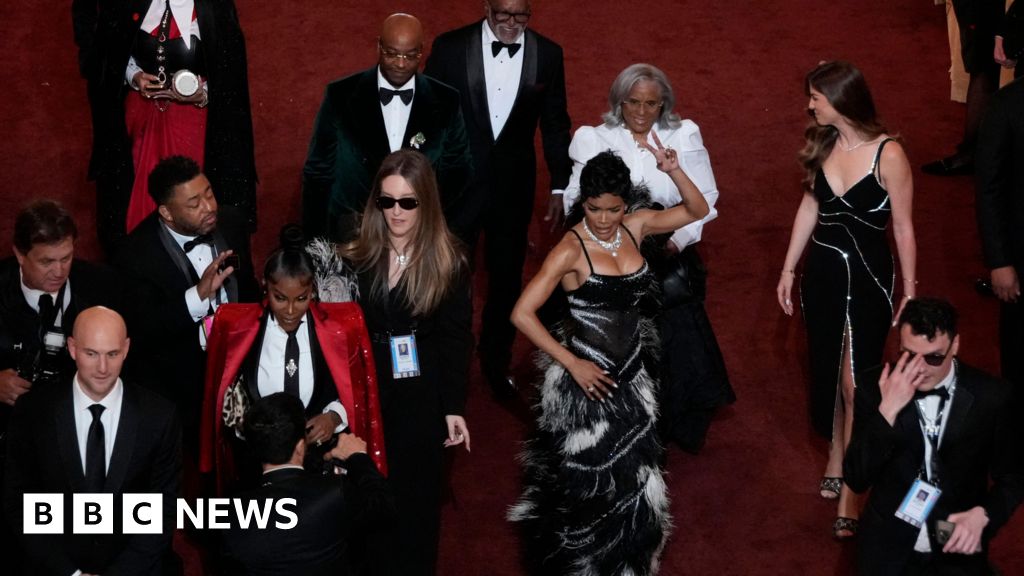
Actor and singer Teyana Taylor wearing a fitted gown of black and white feathers as she shimmies down the red carpet of the Acadamy Awards surrounded by other attendees.
TL;DR
The Oscars will only consider acting performed by humans and scripts written by humans for awards, while AI tools used in other aspects of filmmaking will not influence nomination prospects.
The Academy of Motion Picture Arts and Sciences released updated eligibility rules as artificial‑intelligence (AI) technology becomes more prevalent in film production. The changes target two core creative categories: acting and writing.
Key facts - Only performances that can be proven to be delivered by a human being will qualify for acting awards. The rule explicitly excludes any AI‑generated or synthetic performances. - Scripts and other written material must be authored by a human. AI‑generated text, even if polished by a writer, will not meet the eligibility criteria. - The Academy describes this restriction as a “substantive change” to the Oscar rules, underscoring its significance for future nominations. - For all other production elements—visual effects, editing, sound design, and similar—using AI tools will neither help nor hurt a film’s chances of earning a nomination. The Academy will assess each entry on the degree of human involvement in the creative process. - The organization reserves the right to request additional information if the use of generative AI raises questions about authorship.
What it means The new policy draws a clear line between human creativity and machine assistance in the most visible award categories. By limiting eligibility to human‑performed acting and human‑written scripts, the Academy aims to preserve the traditional notion of artistic authorship while acknowledging that AI can still serve as a production aid.
Studios that have experimented with AI‑generated actors or fully synthetic scripts will need to adjust their workflows if they seek Oscar recognition. However, the lack of a blanket ban means that AI‑enhanced visual effects, color grading, or post‑production processes can continue without penalty, provided a human remains central to the creative decisions.
The rule change arrives amid high‑profile cases such as the planned AI recreation of the late actor Val Kilmer and the emergence of self‑made AI actors claiming celebrity status. Those examples highlight the growing tension between technological innovation and industry standards for credit and compensation.
Going forward, the Academy’s stance suggests that future disputes will focus on the extent of human contribution rather than the mere presence of AI tools. Filmmakers should prepare documentation of their creative processes, as the Academy may request proof of human authorship when eligibility is unclear.
What to watch next: how studios adapt their production pipelines and whether legal challenges arise over the definition of “human‑authored” content in upcoming Oscar seasons.
Continue reading
More in this thread
Conversation
Reader notes
Loading comments...