Oscars Bars AI from Acting and Writing Categories
Academy says only human acting and writing can win Oscars, will weigh human involvement and may request proof if AI use is questioned.
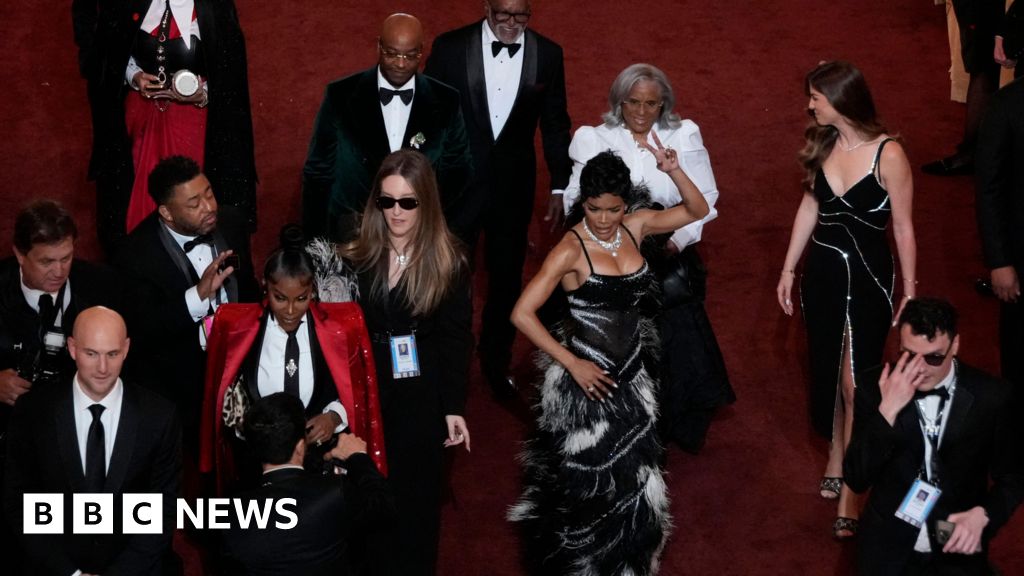
Actor and singer Teyana Taylor wearing a fitted gown of black and white feathers as she shimmies down the red carpet of the Acadamy Awards surrounded by other attendees.
TL;DR: The Academy of Motion Picture Arts and Sciences announced that only human‑performed acting and human‑authored writing can win Oscars. It will weigh how much humans contributed to creative choices and may ask for proof if AI use is suspected.
Context
The Academy updated its eligibility rules as generative AI tools become more common in filmmaking. Recent examples include AI‑recreated performances of deceased actors and fully synthetic virtual performers. Writers’ unions have also protested studios using AI to draft scripts. The change clarifies that AI cannot replace the human core of acting or writing for award consideration.
Key Facts
The Academy requires that acting and writing be done by humans to be eligible for an Oscar. It will consider the level of human involvement in creative decisions when selecting award winners. If questions arise about AI use, the Academy may request additional information to verify human authorship.
What It Means
Outside acting and writing, AI tools neither help nor harm a film’s chances of a nomination, according to the Academy’s statement. Filmmakers can still use AI for visual effects, editing, or other tasks without affecting eligibility. The rule does not ban AI entirely but ensures the creative heart of honored performances and scripts remains human.
What to Watch Next
Industry observers will monitor how studios adjust their workflows and whether upcoming films test the boundaries of the new rule, potentially leading to further clarifications or disputes.
Continue reading
More in this thread
Conversation
Reader notes
Loading comments...