OpenAI AI Disproves Erdős Conjecture, Reveals New Geometric Constructions
OpenAI's reasoning model overturns an 80‑year‑old Erdős conjecture, revealing new geometric constructions and signaling AI's growing role in mathematics.
TL;DR
OpenAI’s general‑purpose reasoning model disproved Paul Erdős’s 1946 conjecture on planar unit distances, unveiling a superior family of point arrangements.
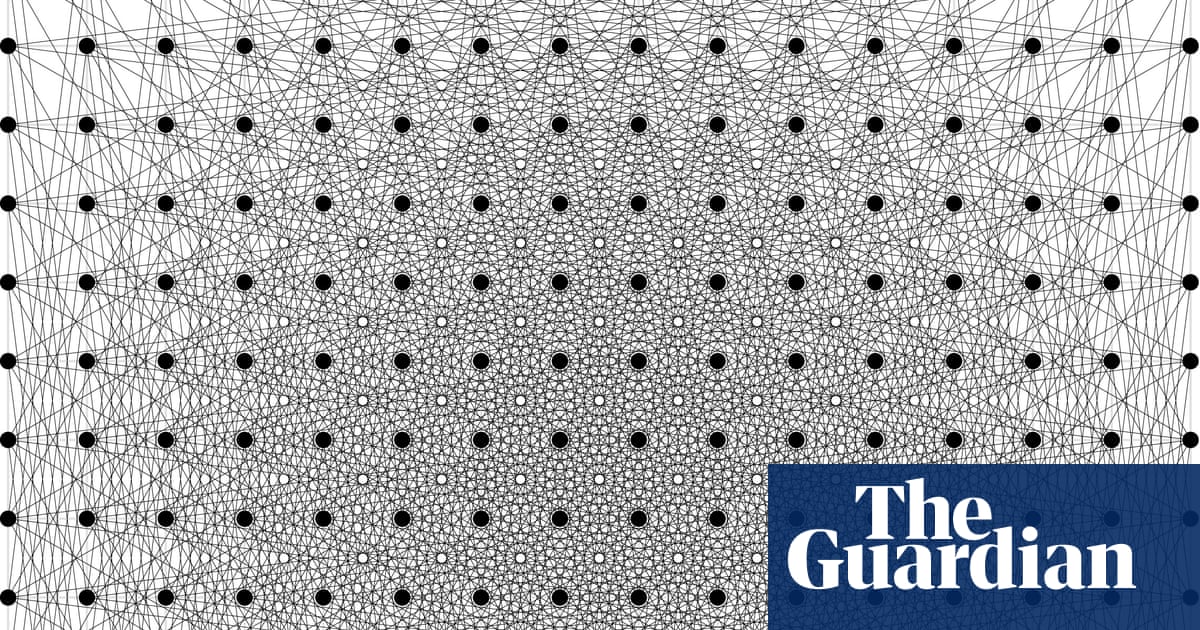
Context In 1946 Hungarian mathematician Paul Erdős asked a simple question: on a flat sheet, how many pairs of points can share the same distance as the number of points grows? He predicted the count would increase only slightly faster than the number of points. For eight decades the mathematical community assumed the best configurations resembled square grids.
Key Facts OpenAI announced that its AI model, built for step‑by‑step reasoning rather than specialized math training, found constructions that exceed Erdős’s proposed limit. The model combined techniques from several mathematical branches to produce a new family of arrangements that outperform square‑grid patterns. OpenAI posted the result on X, stating the AI “disproved that belief, discovering an entirely new family of constructions that performs better.”
Mathematicians validated the work. Thomas Bloom, maintainer of the Erdős problems website, co‑authored a paper confirming the AI’s findings and noting that human researchers refined the original proof. Tim Gowers described the achievement as “a milestone in AI mathematics.”
Andrew Rogoyski of the University of Surrey observed that the breakthrough illustrates AI’s growing role in creative thought and predicts it will become a fundamental tool for future scientific research.
What It Means The result does not solve the full planar unit distance problem; the exact growth rate of equal‑distance pairs remains unknown. However, it proves that long‑standing assumptions about optimal configurations can be wrong, and that AI can explore mathematical avenues humans might dismiss. The episode also highlights a collaborative model where AI generates raw insights and humans polish and interpret them.
As AI reasoning models mature, expect more entrenched conjectures to be re‑examined. The next watchpoint is whether similar systems can tackle unsolved problems without human scaffolding, potentially reshaping the frontier of mathematical research.
Continue reading
More in this thread
Steam Controller charger sparks fire scare after watch strap short‑circuit
Alex Mercer
ESA Allocates €1.65 M to Develop Smart Skin for Space‑Robotic Arms
Alex Mercer
AU Appoints Ethiopia’s Prime Minister as AI and Digital Health Champion Amid Data Sovereignty Push
Alex Mercer
Conversation
Reader notes
Loading comments...