North Carolina Democrats File 'No Budget No Pay' Bill to Withhold Legislator Pay
Senate Bill 806 would withhold lawmakers’ pay until a North Carolina budget is passed, following a 295‑day delay. The bill’s prospects hinge on Republican support in the Senate.
TL;DR
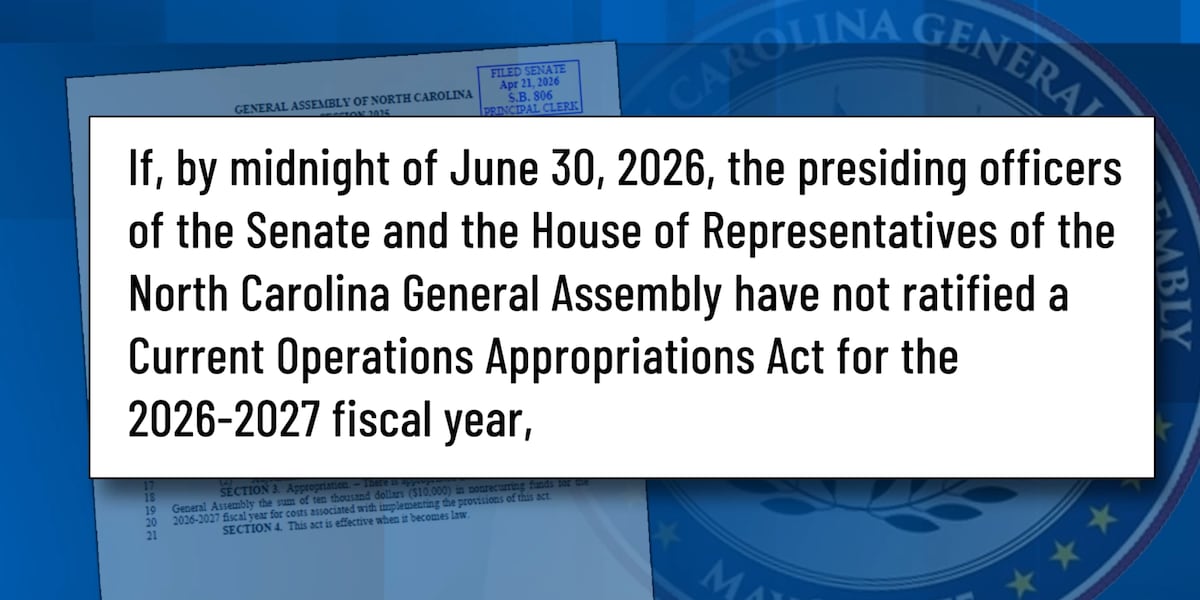
North Carolina Senate Democrats have filed Senate Bill 806, which would withhold lawmakers’ $13,800 annual salary until a state budget is passed. The bill follows a 295‑day period in which legislators left the capital without approving a budget.
Context North Carolina remains the only state that has not enacted a new budget for the 2026‑2027 fiscal year. After the regular session ended, lawmakers adjourned without passing the required appropriations act, forcing the state to rely on temporary funding measures. The short session began on May 1, giving legislators roughly two months to produce a budget before the June 30 deadline. Historically, the state has passed its budget well before the end of June, making the current delay unusual.
Key Facts Senate Bill 806 was introduced by Senators Woodson Bradley (Mecklenburg County), Lisa Gafstein (Wake County), and Terence Everitt (Wake County). The bill’s language directs the legislative services officer to place all lawmaker pay and allowances into an escrow account if the Senate president and House speaker fail to ratify a current operations appropriations act by midnight June 30, 2026. Bradley stated that passing the budget is legislators’ primary responsibility and that they should not collect their $13,800 yearly salary if they neglect that duty. He added that the bill was filed exactly 295 days after the last time legislators departed the capital without a budget, highlighting the length of the impasse. Bradley also said he reached out to Republican colleagues for bipartisan support but received no response.
What It Means If the bill becomes law, it would create a direct financial consequence for lawmakers who fail to meet the budget deadline, potentially accelerating negotiations. The measure would affect all members of the General Assembly, including those in the House, whose pay would also be held in escrow until a budget is approved. Because Republicans hold a majority in the Senate, the bill’s advancement depends on whether Senate Leader Phil Berger or other GOP leaders choose to bring it to a vote. Without Republican backing, the legislation is likely to stall in committee, leaving the current pay structure unchanged.
What to watch next Watch for any public statements from Senate Republican leadership regarding the bill’s fate. Also monitor whether the House considers a companion measure, as bicameral approval would be required for the escrow provision to take effect. The upcoming weeks will reveal whether the budget impasse resolves through negotiation or through procedural pressure like the proposed No Budget No Pay rule.
Continue reading
More in this thread
Trump Extends Iran Ceasefire Amid Port Blockade as Lebanon Death Toll Tops 2,450
Nadia Okafor
Virginia Voters Approve Redistricting Measure Giving Democrats 10‑1 Advantage, Prompting GOP Legal Challenge
Nadia Okafor
NSW Court Strikes Down Anti‑Protest Firearms Law, SIFA Demands Full Public Inquiry
Nadia Okafor
Conversation
Reader notes
Loading comments...