Nigerian Judge Bars Journalists from Coup Plot Trial as Six Defendants Face Treason Charges
A Nigerian Federal High Court judge barred journalists from a high-profile treason trial involving six alleged coup plotters, raising concerns about transparency.
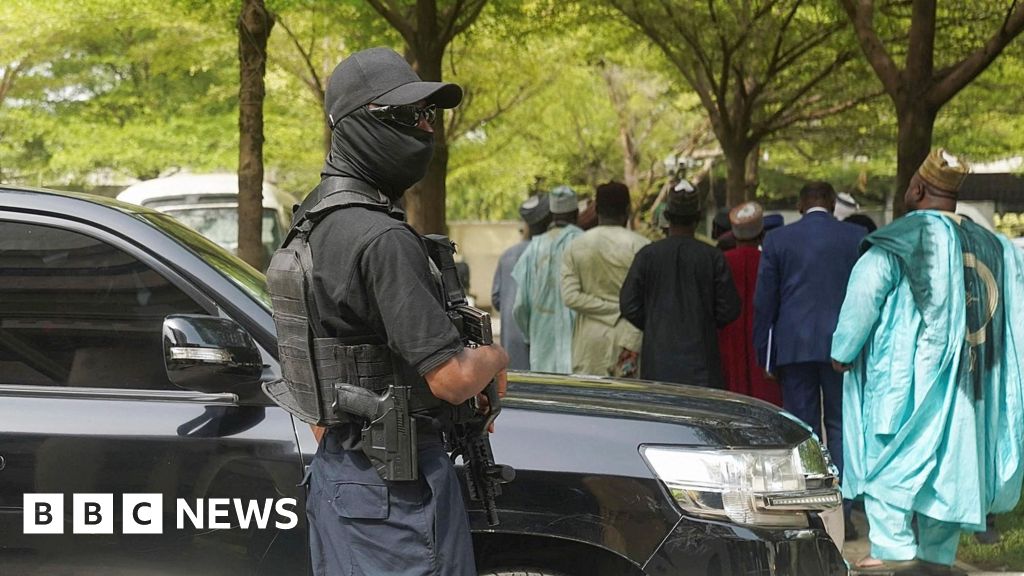
An armed officer in black with shades, cap and facemask stands guard outside the Federal High Court in Abuja on Wednesday 22 April 2026.
TL;DR
Nigerian journalists faced exclusion from a Federal High Court in Abuja this week, preventing public reporting on a high-profile treason trial. Six defendants stand accused on a 13-count charge related to an alleged plot to overthrow President Bola Tinubu's government.
Context A Nigerian Federal High Court judge barred journalists from a significant trial this week, closing proceedings to public observation. Justice Joyce Abdulmalik presided over the case involving six individuals accused of plotting a coup. Security officers removed reporters from the courtroom before the trial began, stating they acted under direct orders from Justice Abdulmalik. This action occurred despite the prosecution making no formal application for a secret trial.
Key Facts The six alleged coup plotters were arraigned on April 22 under a comprehensive 13-count charge, specifically marked FHC/ABJ/CR/206/2026. The charges include serious offenses such as treason, defined as conspiring to levy war against the state with the intent to overthrow the President. Other accusations detail involvement in terrorism, failing to disclose critical security intelligence, and engaging in money laundering activities designed to support terrorist acts. The Federal Government alleges these defendants conspired in September 2025 to take action against President Bola Tinubu's administration. The accused include a retired Major General, a retired Naval Captain, a serving Police Inspector, and three other individuals. Charges also mention a former governor, currently at large, who allegedly fled the country before the plot's exposure. The government further claims the defendants knew of a planned treasonable act involving Colonel Mohammed Alhassan Ma’aji and others, failing to alert authorities or take preventive steps.
What It Means The judge's order restricts the public's direct access to information regarding a trial centered on grave national security allegations. Transparency in judicial processes, particularly those involving accusations of treason and terrorism, typically allows for rigorous public and media scrutiny. The exclusion of journalists means no direct, independent reporting on witness testimonies or evidence presented will emerge from the courtroom, limiting public understanding of the proceedings. This move raises questions about the balance between safeguarding national security information and upholding the principles of open justice and accountability in a democratic system.
Attention will now focus on the duration of this media blackout and any subsequent legal challenges to the decision to exclude journalists from the proceedings, as well as the progress of the trial itself.
Continue reading
More in this thread
Romanian AI and Crypto Regulations Lag Behind Tech Deployment, Leaving Companies Liable
Nadia Okafor
Pirates Seize Cement Carrier Sward Off Somalia, Crew of Two Indians and Thirteen Syrians Held
Nadia Okafor
Trumps Demand ABC Fire Jimmy Kimmel Over 'Expectant Widow' Joke After White House Shooting
Nadia Okafor
Conversation
Reader notes
Loading comments...