New Research Shows Football Design Can Slash Heading-Related Brain Pressure Waves by Up to 55 Times
New research shows football design can reduce heading-related brain pressure wave energy transfer by up to 55 times, potentially enhancing player safety.
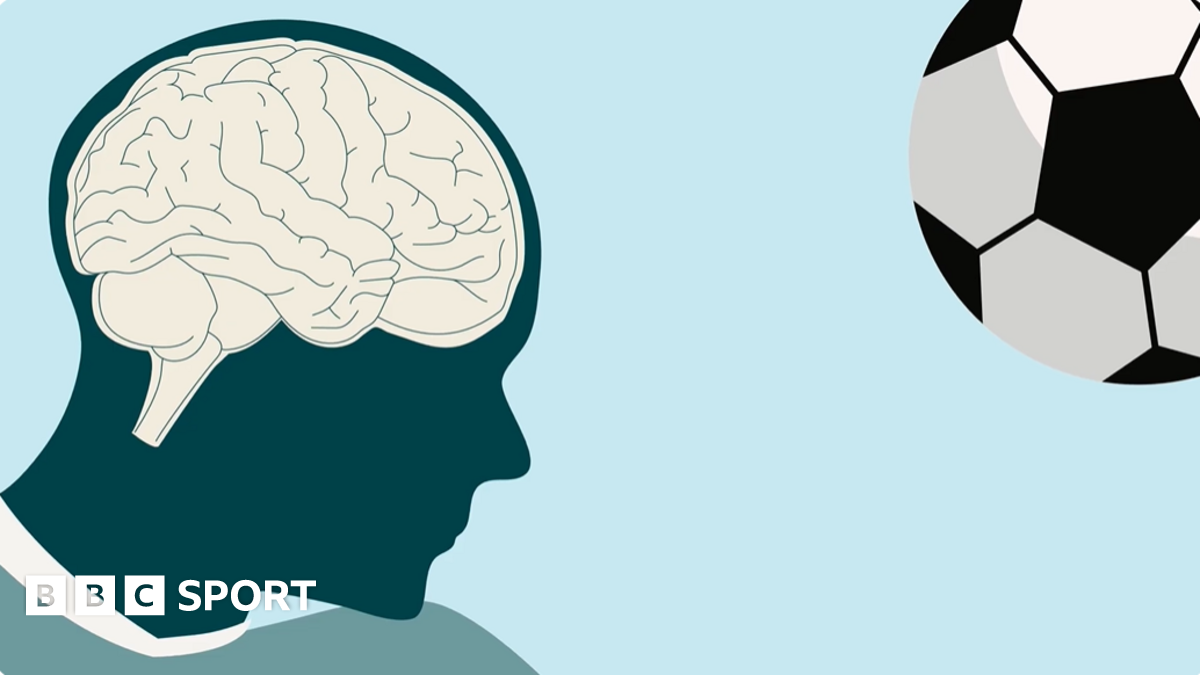
Graphic of a white brain inside the dark blue silhouette of a human head, with a black and white football in the top right corner
New research reveals football design influences brain pressure wave energy transfer during heading by up to 55 times. This finding could lead to new ball designs that reduce the risk of head injuries.
Footballers face a 3.5 times greater risk of neurodegenerative disorders, severe brain conditions affecting memory and function, compared to the general population. This statistic highlights ongoing concerns about player welfare, intensified by high-profile cases linking heading to conditions like chronic traumatic encephalopathy.
A recent study from Loughborough University, supported by the Football Association, focused on understanding how heading the ball impacts brain health. Researchers used an advanced surrogate head model, equipped with specialist pressure sensors, to simulate heading impacts at typical match speeds with various football designs.
This methodology allowed for the detection of a previously unobserved pressure wave that transfers distinct energy into the brain's frontal region. The study found that the magnitude of this pressure wave's energy transfer can be up to 55 times higher, directly dependent on the specific design characteristics of the football.
The research also clarified that the ball's age or material, such as traditional leather versus modern synthetic designs, did not solely dictate higher energy transfer. Instead, specific design features across different eras exhibited varied impacts on the brain. This suggests that the issue of high energy transfer is not limited to older equipment.
These findings present a tangible pathway for mitigating brain impact risks. Researchers state these results open the way to develop new ball designs and testing protocols that actively reduce brain-impact energy transfer during play. This offers a new direction beyond current mitigation strategies.
Currently, football associations are implementing measures to address heading risks. The Football Association has introduced phased heading bans for younger players and guidelines for limiting high-force headers in training. The Scottish FA has also banned heading the day before and after professional adult matches.
What to watch next: Future development will focus on how these insights translate into new ball specifications and updated player safety guidelines, potentially influencing global football bodies like FIFA and UEFA.
Continue reading
More in this thread
F1 Cuts Energy Recharge Limit to 7MJ and Boosts Superclip Power to 350kW for 2026 Season
Marcus Cole
Football Design Can Alter Header Impact Energy by Up to 55 Times
Marcus Cole
Hooper urges Jorgensen to mirror Dupont’s Olympic sevens route for Brisbane 2032 gold
Marcus Cole
Conversation
Reader notes
Loading comments...