Mae Jemison Challenges Howard Students to Leap Beyond Safe Steps for Interstellar Travel
Mae Jemison urged Howard students to embrace bold leaps for interstellar travel, noting the $90 million RITA autonomy center.
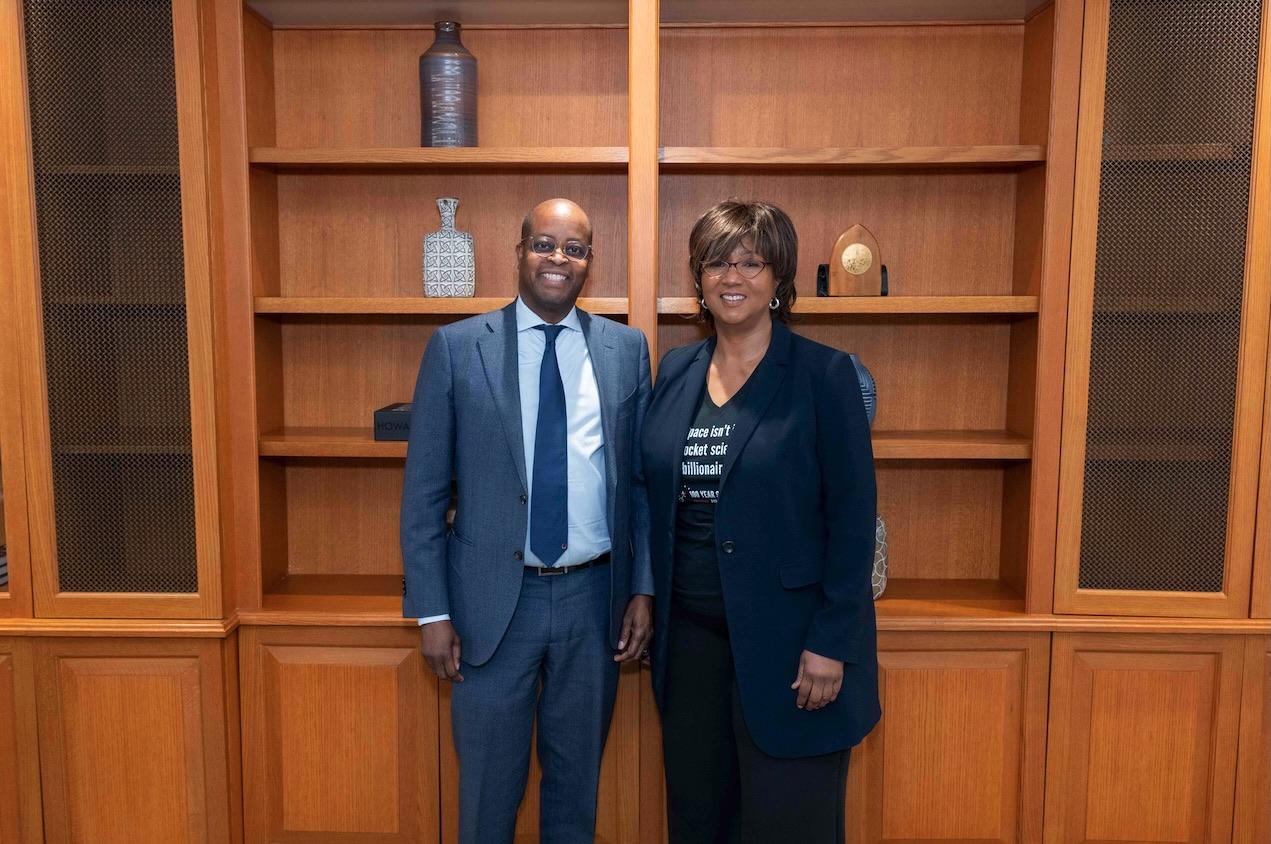
TL;DR: Mae Jemison urged Howard University students to abandon cautious, incremental approaches and embrace bold, interdisciplinary leaps to achieve human interstellar travel within a century.
At Howard University’s Research Month in late April, the first woman of color in space told students that confidence grows when they tackle tasks they don’t yet know how to do.
Over two days, Jemison led workshops that blended physics, engineering, life sciences and ethics, pushing participants to design missions that could reach another star.
The setting underscored Howard’s status as the nation’s only historically Black university with R1 research classification and the first HBCU to head a University Affiliated Research Center.
Jemison’s central message was a direct quote: “We have to push ourselves to think bigger,” she said. “The best way to learn is to try things you don’t know how to do. That’s where you develop confidence.” She argued that safe, stepwise progress has stalled exploration, noting that it took 50 years to return to the Moon after the first landing, yet the initial leap succeeded in just a decade when teams embraced uncertainty. To reach another star within a hundred years, she said, researchers must accept imperfect knowledge and act before all answers are known.
Howard’s Research Institute for Tactical Autonomy (RITA) provided the technical backdrop for the exercises. Funded by the Air Force at $90 million, RITA develops autonomous systems for missions where human intervention is impossible—technology that could one day guide interstellar craft. During the sessions, students worked in groups to sketch power sources, navigation methods and life‑support concepts, many starting from existing technologies. Jemison repeatedly urged them to move beyond those foundations and explore radical alternatives.
The workshops illustrated a methodology of interdisciplinary problem‑solving: brief expert talks, breakout teams, and open‑ended design challenges that forced participants to confront unknowns. By quantifying the gap—50 years versus 10 years for lunar return—and highlighting the $90 million investment in autonomy, the event framed interstellar travel as a solvable engineering challenge that demands bold, coordinated effort.
What it means is that Howard is positioning itself as a national hub for the kind of high‑risk, high‑reward research needed to break propulsion barriers. Jemison’s call to think bigger aligns with the 100 Year Starship goal of launching a human mission to another star within a century. The next step will be testing the autonomy concepts born at RITA in flight‑like experiments, a process the institute plans to begin within the next 18 months.
Continue reading
More in this thread
Lab‑Made Basalt Cement Shows Promise to Cut Concrete’s CO₂ Emissions
Dr. Leo Tanaka
Canada and Alberta Set $140/tonne Carbon Price for 2040 with 75‑Million‑Tonne CFD Plan
Dr. Leo Tanaka
Personal Solar Shift Shows High Costs, Highlighting Barriers to Nationwide Renewable Transition
Dr. Leo Tanaka
Conversation
Reader notes
Loading comments...