Lab‑Made Basalt Cement Shows Promise to Cut Concrete’s CO₂ Emissions
A study in Communications Sustainability shows how basalt can replace limestone in cement production, eliminating process‑related CO₂ emissions and offering a path to lower concrete’s carbon footprint.
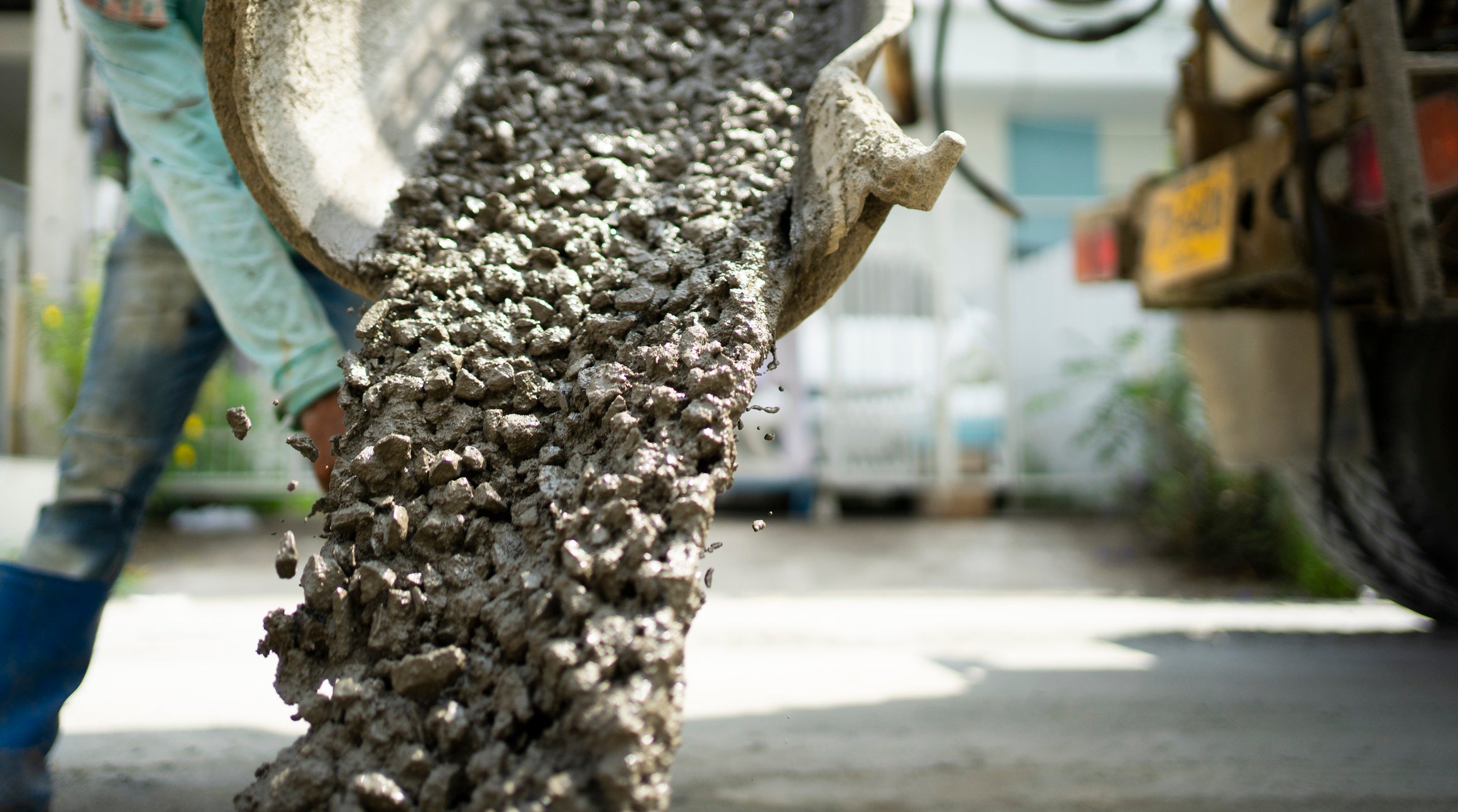
Cement being poured with a worker blurry in the background
TL;DR
Researchers have produced Portland cement from basalt without using limestone, eliminating the CO₂ released during calcination. This lab‑scale approach could cut the process‑related emissions that account for slightly more than half of concrete’s 8% share of global CO₂ output.
Context Cement manufacturing contributes roughly 8% of worldwide carbon dioxide emissions. The majority of those emissions come from two sources: burning fuel to heat kilns and the chemical breakdown of limestone (calcination), which releases CO₂ as a by‑product. Direct process emissions from calcination are slightly larger than those from fuel combustion.
Key Facts A study published in *Communications Sustainability* describes how a team that includes a company CEO and an engineer produced Portland cement from basalt at laboratory scale. Basalt contains calcium, aluminum, iron, magnesium, sodium, silicon and oxygen but no carbon, so its processing does not generate CO₂ from carbonate decomposition. The method uses acid to leach calcium from the basalt, precipitates it as calcium hydroxide, then heats the material with customary additives in a kiln. Because the calcium is already liberated, the kiln can run at lower temperatures than needed for limestone, and the only gaseous by‑product is water vapor.
What It Means If the basalt route can be scaled, it would remove the direct process emissions that make up just over half of cement’s carbon footprint, potentially reducing concrete‑related CO₂ by several percentage points. Real‑world impact will depend on energy use for the leaching and precipitation steps, material costs, and the durability of the resulting cement. Researchers note that lifecycle analysis and pilot‑plant testing are the next steps to evaluate overall emissions and economic viability.
What to watch next Watch for pilot‑scale trials that measure energy consumption, cost, and performance of basalt‑derived cement in concrete mixes, as well as any regulatory assessments that could pave the way for broader adoption. These steps will determine whether the lab promise translates into a viable low‑carbon alternative for the construction industry.
Continue reading
More in this thread
Mae Jemison Challenges Howard Students to Leap Beyond Safe Steps for Interstellar Travel
Dr. Leo Tanaka
Canada and Alberta Set $140/tonne Carbon Price for 2040 with 75‑Million‑Tonne CFD Plan
Dr. Leo Tanaka
Personal Solar Shift Shows High Costs, Highlighting Barriers to Nationwide Renewable Transition
Dr. Leo Tanaka
Conversation
Reader notes
Loading comments...