Italian Artist Deploys Underwater Speakers to Revive Jamaica’s Coral Reefs with Sound
Italian artist Marco Barotti uses underwater speakers to restore Jamaica's coral reefs. Learn how acoustic enrichment doubles fish populations in degraded areas.
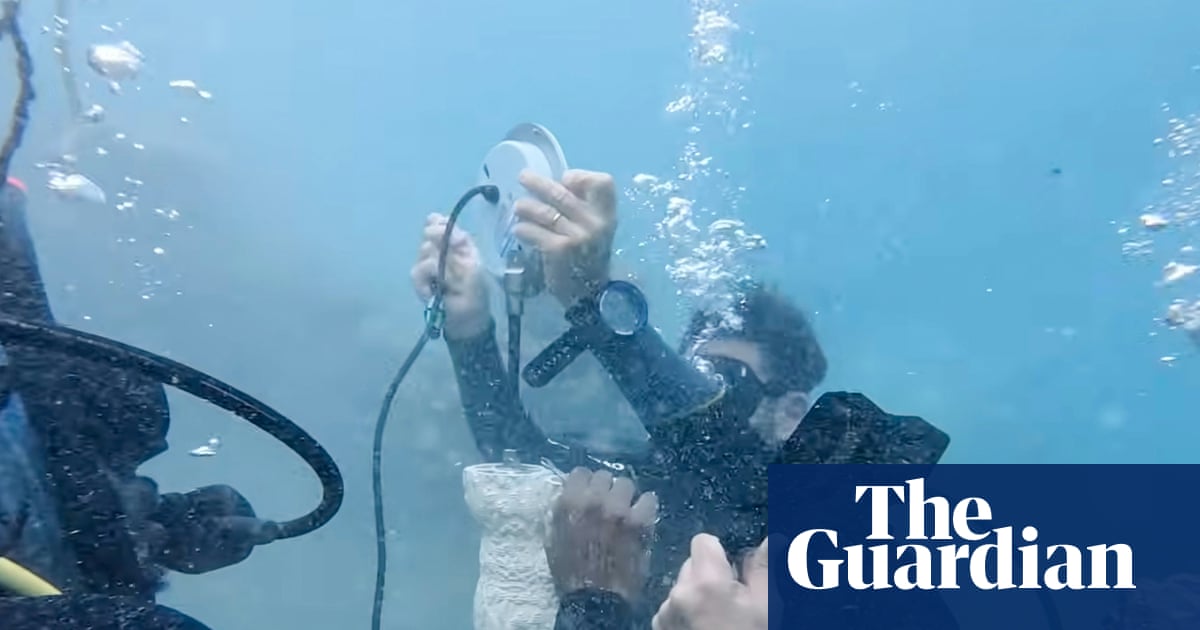
Italian artist Marco Barotti employs underwater speakers in Jamaica to revitalize degraded coral reefs. Playing recordings of healthy reef sounds has doubled fish populations in damaged areas within six weeks.
Italian artist Marco Barotti leads an unusual marine conservation effort in Jamaica. He describes this new work as "very different from everything I did before." His project aims to restore silent, dying reefs by reintroducing the vibrant sounds of a thriving ecosystem.
Coral reefs cover only 1% of the ocean floor but support 25% of all marine life, forming crucial ecosystems. Globally, approximately 50% of these vital reefs have disappeared since 1950, primarily due to overfishing, pollution, and climate change. Healthy coral reefs teem with noise from snapping shrimp and grunting fish, a stark contrast to the eerie silence of degraded areas. Fish and coral organisms use these sounds for navigation and to locate suitable habitats.
Barotti’s project deploys "underwater boomboxes" powered by solar panels that play recordings of healthy reefs for 14 hours daily. This method, termed "acoustic enrichment," draws on research published in the journal *Nature*. A study conducted at the Great Barrier Reef demonstrated the approach's effectiveness, showing that playing healthy reef sounds doubled the total fish population in degraded zones within a six-week period. The diversity of species also increased by 50%. The Alligator Head Foundation in Jamaica supports this initiative, integrating acoustic methods with lab-based coral restoration efforts like growing coral fragments and assisted breeding to aid reproduction.
This innovative blend of art and science offers a promising strategy for coral reef recovery. Continued monitoring will determine the long-term impact of acoustic enrichment and its potential for broader application in marine conservation efforts worldwide.
Continue reading
More in this thread
Artemis II Crew Traveled 252,756 Miles, Setting New Distance Record
Dr. Leo Tanaka
Temporary LNG Bridges Hawaiʻi's Renewable Transition, Aila Jr. Argues
Dr. Leo Tanaka
Record‑Setting Astronaut Christina Koch Highlights Space Debris Threat That Could Cost Nearly 2% of Global GDP
Dr. Leo Tanaka
Conversation
Reader notes
Loading comments...