Fujitsu’s Policy Twin Uses Digital Simulation to Cut Diabetes Care Costs in Japanese Municipalities
Fujitsu's Policy Twin uses digital simulations to optimize diabetes care policies in Japanese municipalities, aiming to reduce costs and improve health.
TL;DR
Fujitsu introduces Policy Twin, a digital simulation technology, to optimize public health interventions. This tool helps Japanese municipalities identify policies that can reduce diabetes care expenditures and improve patient health outcomes.
Policymakers often face challenges in predicting the precise impact of new initiatives before their implementation. Complex social issues like public health demand sophisticated evaluation methods, yet resources for detailed analysis are often limited. Fujitsu addresses this with its Policy Twin technology, a digital simulation tool designed to model policy outcomes effectively. This system creates a "digital twin" of policies, converting complex societal rules and actions into machine-readable formats for objective analysis within a digital space. Its initial application focuses on managing diabetes care costs within Japanese municipalities, a significant national health concern.
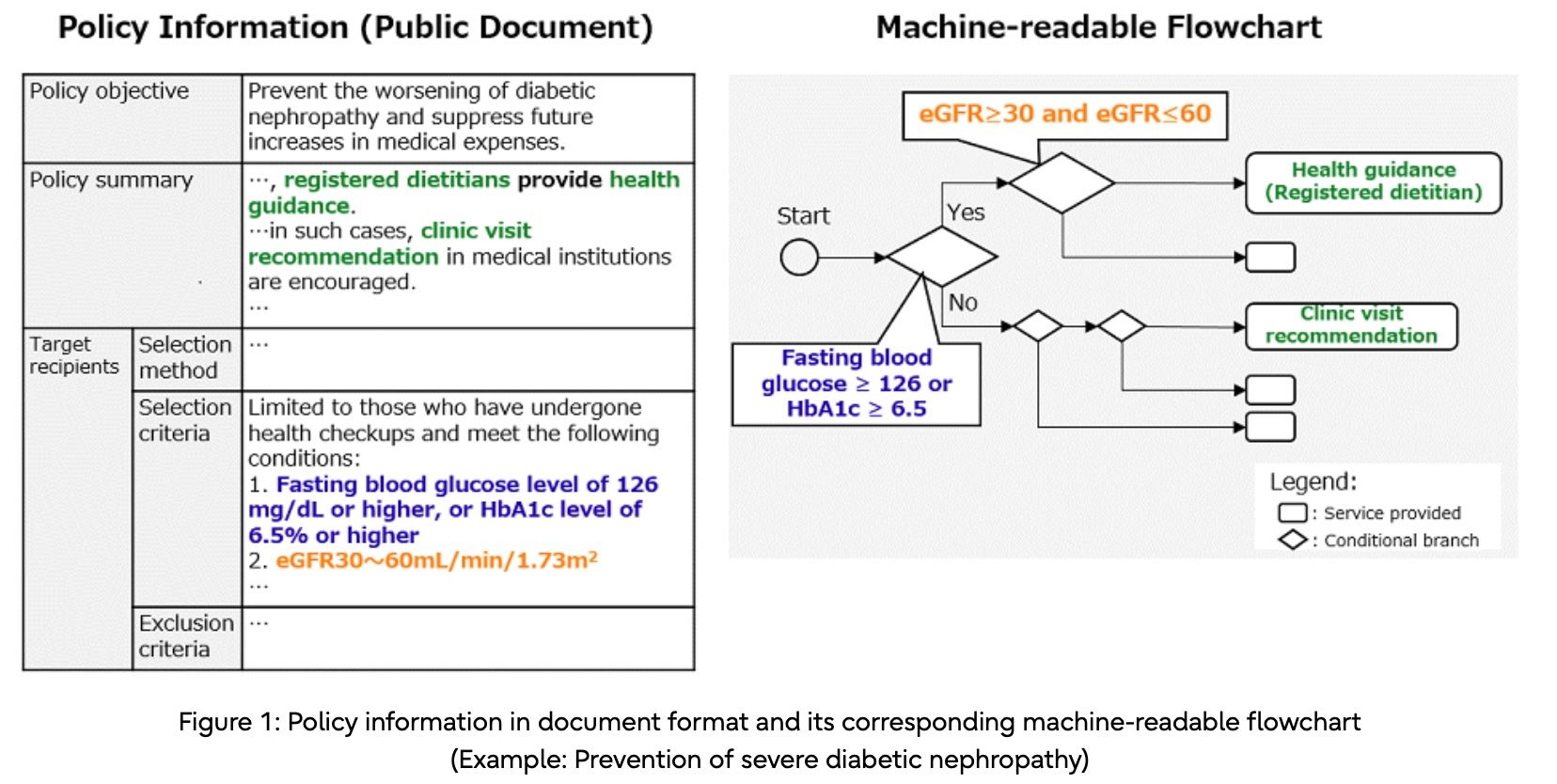
Policy Twin digitizes policies into structured flows, moving beyond understanding individual documents to enable comprehensive mathematical and structural analysis of their potential impact. This capability allows for objective comparison and verification of a policy's effectiveness and its expected real-world impact. In Japanese municipalities, Policy Twin has already identified policy candidates expected to lower medical costs and improve health outcomes through targeted health guidance programs. These data-driven insights aim to prevent the progression of conditions like diabetic nephropathy, a significant contributor to rising national medical expenses and reduced patient quality of life.
This approach offers government bodies a method to evaluate policy interventions quantitatively before committing substantial resources. It shifts policy development from relying on past outcomes or individual experience to a predictive, data-driven process. The technology supports optimizing public health spending and enhancing resident well-being through more effective program design. Policy Twin provides a framework for identifying the most impactful strategies with a higher degree of confidence. Future applications may extend this simulation method to other complex social issues, allowing for predictive policy evaluation across various sectors globally.
Continue reading
More in this thread
Sereact Raises $110M to Develop Cortex 2.0 AI That Lets Robots Predict Consequences
Alex Mercer
Taylor Swift Seeks Trademark Shield Against AI Deepfakes with Photo and Voice Filings
Alex Mercer
Musk Seeks $134B in Damages as OpenAI Trial Kicks Off in Oakland
Alex Mercer
Conversation
Reader notes
Loading comments...