Sereact Raises $110M to Develop Cortex 2.0 AI That Lets Robots Predict Consequences
Sereact raises $110 million to build Cortex 2.0, an AI model empowering robots to predict outcomes and choose actions, pushing the boundaries of autonomous robotics.
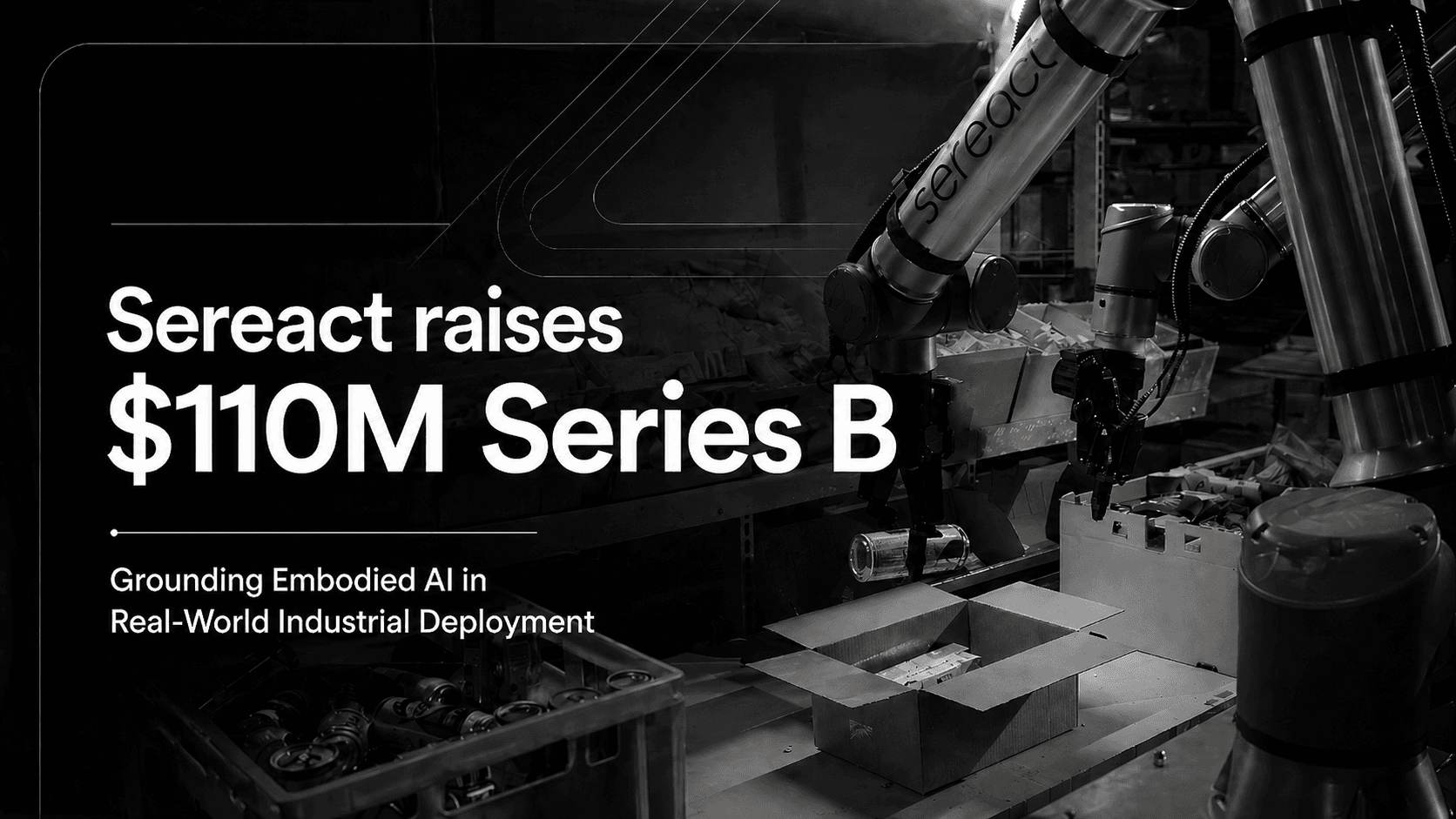
Sereact Raises $110M Series B
Sereact secured $110 million in funding to advance its AI model, Cortex 2.0, enabling robots to predict and react to outcomes proactively. This investment aims to significantly enhance robot adaptability and decision-making in real-world scenarios, addressing a key limitation in current automation.
The field of robotics is rapidly moving past systems designed solely for repetitive, pre-programmed tasks. Modern applications demand machines that can navigate and adapt to unforeseen challenges in dynamic environments. Many traditional industrial robots struggle with unexpected variables or errors outside their explicit programming. Sereact, a German robotics software company, develops solutions for this challenge, with its technology already powering machines that handle component picking and delivery for automakers such as BMW and Daimler Truck, allowing them to perform tasks without prior explicit training.
Sereact recently concluded a Series B funding round, raising $110 million. This capital infusion is earmarked primarily for the development of Cortex 2.0, an advanced artificial intelligence model. CEO Ralf Gulde stated that most of the new funding will build Cortex 2.0, an AI model specifically designed to let robots simulate different outcomes and choose the most effective actions. This capability moves robots beyond merely reacting to immediate stimuli, allowing for more strategic and proactive operation.
A significant bottleneck in wider robot adoption has been their reactive nature; errors, such as dropping an item, often occur and are difficult for the robot to undo or avoid. Cortex 2.0 directly addresses this by enabling robots to anticipate potential errors before they happen. This predictive capacity allows machines to adjust their actions, similar to how a human might subtly alter their grip on a cup to prevent a spill, thereby enhancing their performance and reliability in complex, unstructured environments.
This development by Sereact aligns with a substantial surge in the broader robotics sector. Global investment in robotics reached $27.6 billion in 2025, according to data from financial database PitchBook, representing a more than three-fold increase year-on-year. Sereact plans to apply its advanced technology to complex logistical challenges, such as processing returned goods. This area requires adaptable robots capable of unpacking, restocking, and accurately assessing item conditions, and the company is reportedly in discussions with retailers like H&M. Concurrently, Sereact intends to expand its operational footprint, including new initiatives in the United States. The continued evolution of predictive AI models like Cortex 2.0 will be a crucial factor to watch as they redefine industrial automation and global logistics.
Continue reading
More in this thread
Edge AI Chip Market to Reach $18.3B by 2033 Amid IoT Growth and Autonomous Vehicle Investment
Alex Mercer
Valve’s $99 Steam Controller Promises 8 ms Latency and 35‑Hour Battery Life
Alex Mercer
Taylor Swift Seeks Trademark Shield Against AI Deepfakes with Photo and Voice Filings
Alex Mercer
Conversation
Reader notes
Loading comments...