FBI Returns 1,900‑Year‑Old Roman Sailor’s Gravestone to Italy
FBI hands over a 1,900‑year‑old Roman sailor’s gravestone found in a New Orleans backyard to Italian officials in Rome.
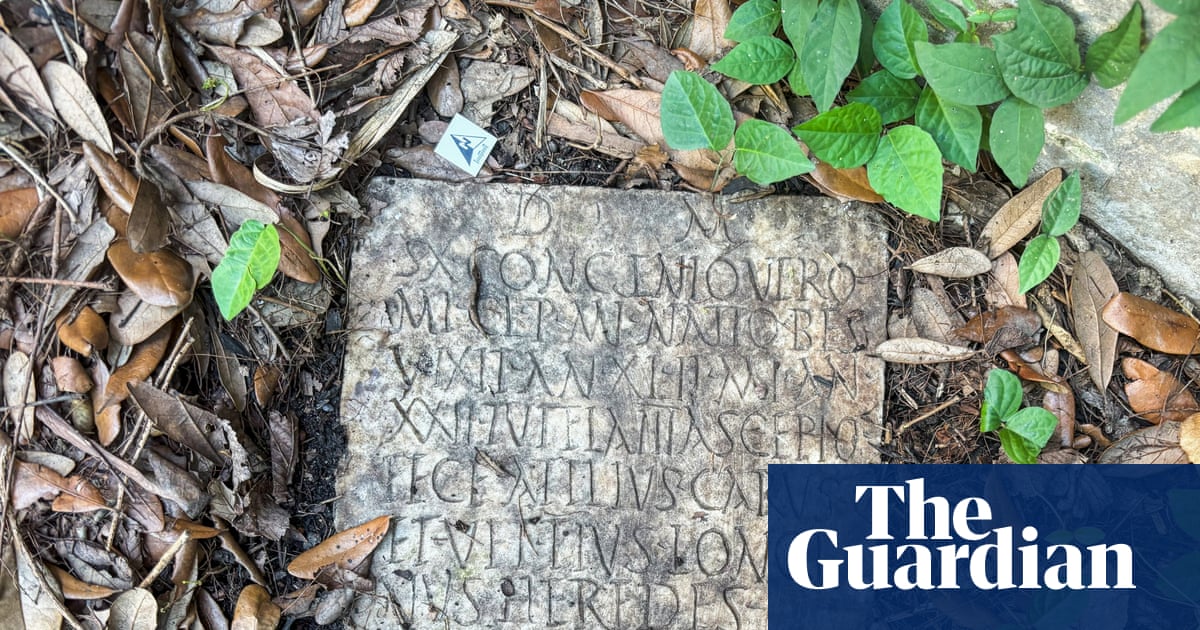
The FBI returned a 1,900‑year‑old marble grave marker honoring Roman sailor Sextus Congenius Verus to Italian officials in Rome on Wednesday.
The stone, found in a New Orleans backyard, matches a missing piece from the Civitavecchia museum and was handed over after months of coordination.
Context
Tulane University anthropologist Danielle Santoro and her husband Aaron Lorenz discovered the slab while clearing undergrowth in their yard last year. They noticed its smooth surface and a Latin inscription, prompting them to contact experts. University of New Orleans archaeologist Ryan Gray and Tulane classical studies professor Susann Lusnia examined the lettering and weathering patterns to date the artifact to the second century CE. Their analysis, which compared the inscription to known epitaphs in the Journal of Roman Archaeology, confirmed the stone marked the grave of Sextus Congenius Verus, a Roman sailor and military figure.
Key Facts
- The FBI’s New Orleans office relinquished the relic to a member of the FBI Art Crime Team in November 2025. - Daily communication between the FBI Law Enforcement Attaché Office in Rome and Italian officials facilitated the return. - The repatriation occurred under the US‑Italy Cultural Property Agreement, the nation’s oldest bilateral accord with a European country. - The ceremony also included the return of another antiquity recovered in the United States.
What It Means
The return reinforces efforts to combat illicit trafficking of cultural property and restores a piece of Italy’s archaeological heritage that was lost during World War II. It demonstrates how international cooperation, guided by formal agreements, can resolve provenance disputes and support educational access to ancient objects. Scholars note that restoring such items helps communities reconnect with histories disrupted by conflict and displacement.
Watch for further returns under the US‑Italy Cultural Property Agreement as authorities continue to identify and repatriate looted antiquities circulating in the U.S. market.
Continue reading
More in this thread
Simons Foundation Announces 2026 Pivot Fellowship with Full Salary and $10K Research Stipend
Dr. Leo Tanaka
FBI Returns 1,900‑Year‑Old Roman Gravestone to Italy After New Orleans Discovery
Dr. Leo Tanaka
Photreon’s Photocatalytic Panels Make Green Hydrogen Directly from Sunlight
Dr. Leo Tanaka
Conversation
Reader notes
Loading comments...