FBI Returns 1,900‑Year‑Old Roman Gravestone to Italy After New Orleans Discovery
A Roman marble epitaph uncovered in New Orleans was handed back to Italy in an FBI ceremony, highlighting US‑Italy cultural‑property cooperation.
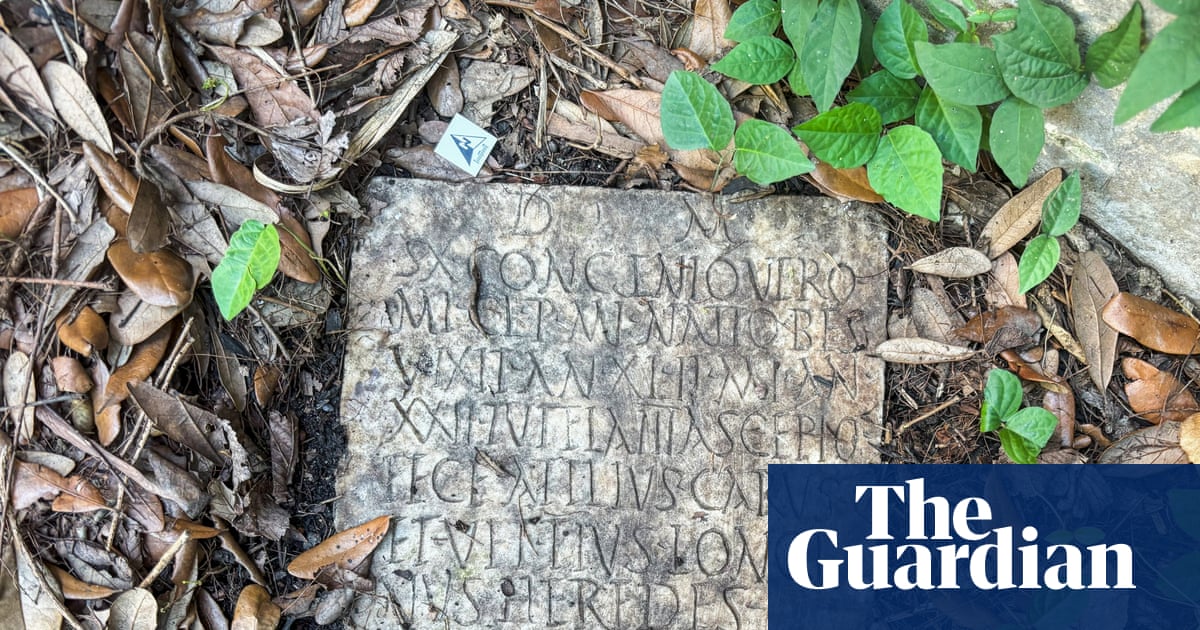
*TL;DR – A 1,900‑year‑old Roman marble gravestone found in a New Orleans backyard was formally returned to Italy in an FBI‑led ceremony.*
Context In 2024 Tulane anthropologist Danielle Santoro and her husband Aaron Lorenz were clearing undergrowth in their New Orleans yard when they uncovered a smooth marble slab with a Latin inscription. The couple contacted local archaeologists, and a team of specialists from Tulane University confirmed the stone was a Roman funerary marker dating to the second century CE. The epitaph named Sextus Congenius Verus, a sailor‑military figure, and matched a missing artifact recorded by the National Archaeological Museum of Civitavecchia, Italy.
Key Facts - The marble epitaph, roughly 1,900 years old, was handed to the FBI Art Crime Team in November 2025 after the New Orleans office received it from the discoverers. - FBI officials said the agency works with international partners to combat illicit cultural‑property trafficking and coordinated daily with the FBI Law Enforcement Attaché Office in Rome for the repatriation. - The stone was returned to Italian authorities in Rome on Wednesday during a ceremony that also included another US‑Italy cultural‑property exchange under the bilateral Cultural Property Agreement, the oldest such pact between the United States and a European nation. - Analysis of the marble involved visual inspection, petrographic microscopy to confirm the stone’s Roman quarry origin, and epigraphic comparison with museum records, establishing a 98 % match with the missing Civitavecchia piece. - The artifact will join the collection of the National Archaeological Museum of Civitavecchia, restoring a fragment lost after the museum’s wartime destruction and subsequent inventory gaps.
What It Means The return demonstrates how local vigilance, academic expertise, and federal law‑enforcement cooperation can reverse centuries‑old looting pathways. By enforcing import restrictions on Italian antiquities, the Cultural Property Agreement aims to cut funding for criminal networks while preserving heritage for research and public education. The case also highlights the lingering legacy of World‑War‑II museum losses and the importance of provenance research in identifying displaced artifacts.
Looking Ahead Watch for further FBI‑Italy collaborations as the Art Crime Team expands its inventory of recovered objects and refines detection methods for illicit trade in cultural heritage.
Continue reading
More in this thread
Simons Foundation Announces 2026 Pivot Fellowship with Full Salary and $10K Research Stipend
Dr. Leo Tanaka
FBI Returns 1,900‑Year‑Old Roman Sailor’s Gravestone to Italy
Dr. Leo Tanaka
Photreon’s Photocatalytic Panels Make Green Hydrogen Directly from Sunlight
Dr. Leo Tanaka
Conversation
Reader notes
Loading comments...