EPA Warns Overheated MMA Tank Near Disneyland May Fail
Officials say an overheated chemical tank holding 6,000–7,000 gallons of methyl methacrylate near Disneyland may fail, prompting evacuation of about 50,000 residents while cooling efforts continue.
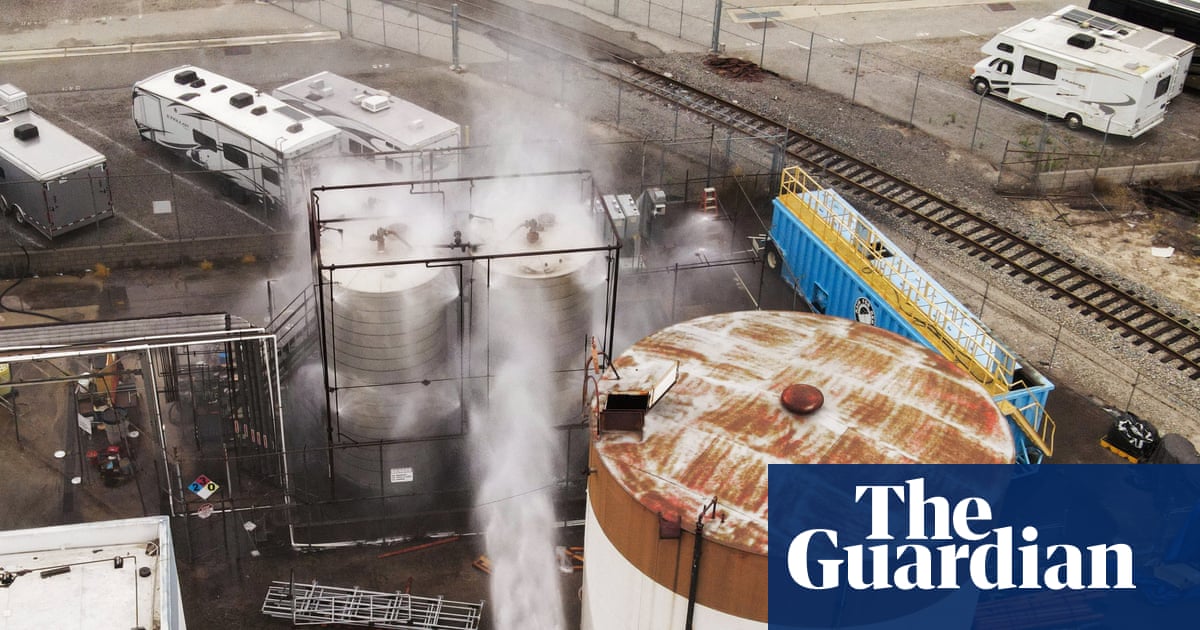
TL;DR: An overheated tank holding 6,000–7,000 gallons of methyl methacrylate near Disneyland may fail, prompting the evacuation of about 50,000 residents. Officials warn of possible explosion but note ongoing cooling efforts have reduced immediate risk.
Context Government officials in Orange County, California, reported the tank at GKN Aerospace began overheating after a leak on Thursday afternoon. The tank stores methyl methacrylate, a flammable chemical used to produce plastics and resins. EPA Administrator Lee Zeldin said officials believe the tank will fail, though the exact outcome remains uncertain.
Key Facts The tank contains between 6,000 and 7,000 gallons of methyl methacrylate. Approximately 50,000 residents have been evacuated from surrounding areas. Firefighters have sprayed water on the tank to keep its temperature below 85 °F and added a neutralizing agent to a nearby tank. Air‑quality monitors have detected no pollutants so far. A crack observed in the tank may relieve pressure, lowering explosion odds, but experts note a runaway reaction could still occur deep inside.
What It Means Short‑term exposure to methyl methacrylate can irritate eyes, skin, and respiratory tract; high concentrations may cause dizziness or unconsciousness. Occupational cohort studies of workers (e.g., a 2019 study of 1,200 MMA‑handling employees) found higher rates of cough and throat irritation, showing correlation, not proven causation. For residents, the main practical takeaway is to follow evacuation orders, avoid low‑lying areas where vapors could collect, and seek medical attention if breathing difficulty develops. Officials continue to monitor temperature, pressure, and air quality; the next steps to watch are whether the crack allows controlled drainage and whether any chemical release is detected in nearby neighborhoods.
Continue reading
More in this thread
DRC Ebola Outbreak Strains Hospitals as Suspected Cases Approach 750
Dr. Priya Sharma
EU Allocates €14 Million to Rebuild Syrian Hospital Amid Widespread Care Gaps
Dr. Priya Sharma
Fond du Lac Police and Social Worker Defuse Armed Mental Health Crisis at Motel 6
Dr. Priya Sharma
Conversation
Reader notes
Loading comments...