Cornell Students Secure Policy Wins in Albany: Naloxone Resolution, Domestic Violence Screening, and 20 Clinic Projects
Cornell Brooks School State Policy Advocacy Clinic students helped pass a unanimous naloxone resolution, advocated a domestic‑violence screening tool that cut homicides by 59%, and advanced roughly 20 active policy projects in Albany.
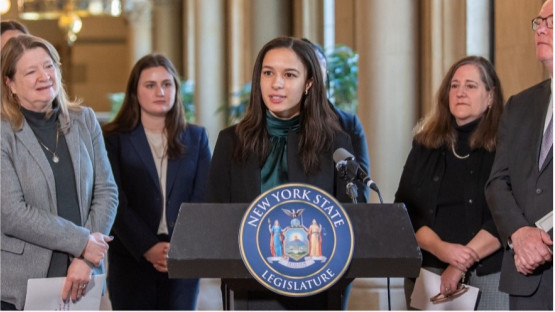
Sunni Horton speaking delivering a speech at a NYS Legislature podium, with supporters standing around her
TL;DR: Cornell Brooks School State Policy Advocacy Clinic students helped pass a unanimous naloxone resolution in Tompkins County, advocated for a domestic‑violence screening tool that cut homicides by 59%, and advanced roughly 20 active policy projects in Albany this spring.
The clinic, part of the Brooks School of Public Policy, sends undergraduate and MPA students to Albany each semester to research, draft, and lobby for evidence‑based state policies. They work with legislators, nonprofits, and community groups to turn academic findings into legislative proposals.
Director Alexandra Dufresne said the clinic’s success relies on stakeholder support and student dedication, noting that students often work late nights and weekends to tailor proposals to local needs and are motivated by real‑world impact.
Students spend weeks drafting bill language, preparing testimony, and meeting with officials in Albany’s Capitol. Their work blends classroom learning with hands‑on advocacy, aiming to produce policies that address pressing New York issues.
In Tompkins County, the legislature unanimously approved a resolution allowing high schools to provide naloxone training and distribute the opioid‑overdose reversal medication after students testified in favor of the measure.
Separately, students highlighted a 12‑question domestic‑violence screening tool; in 2024 nearly 100,000 New Yorkers faced domestic violence, resulting in 107 fatalities, but jurisdictions like Dutchess County that adopted the tool saw homicide rates drop by 59%.
The clinic currently oversees about 20 active projects spanning good governance, healthcare, immigrant rights, criminal justice reform, consumer protection, the environment, and economic development.
Among the active projects, student teams have advocated for legislation to curb high‑interest earned‑wage‑access apps and to require livestreaming of public meetings for greater accessibility.
These outcomes show how student‑driven research can translate into concrete legislative action, from expanding overdose prevention to improving violence‑prevention screening.
Looking ahead, observers will watch whether the naloxone resolution spurs broader school‑based opioid education statewide and whether the screening tool gains traction in additional counties aiming to reduce domestic‑violence deaths.
Continue reading
More in this thread
UN Bosnia Envoy Warns of State Breakup After Forced Exit Over US‑Linked Pipeline Deal
Nadia Okafor
Nebraska Primary Sets Pillen, Walz, Ricketts, Backemeyer for November Contests
Nadia Okafor
Holocaust Survivor Albrecht Weinberg Returns German Honor Over Far-Right Migrant Vote, Dies at 101
Nadia Okafor
Conversation
Reader notes
Loading comments...