UN Bosnia Envoy Warns of State Breakup After Forced Exit Over US‑Linked Pipeline Deal
UN high representative Christian Schmidt quit after a clash with the US, warning of systematic exclusion in Bosnia, as a Trump‑linked firm won a $1.5 bn LNG pipeline deal.
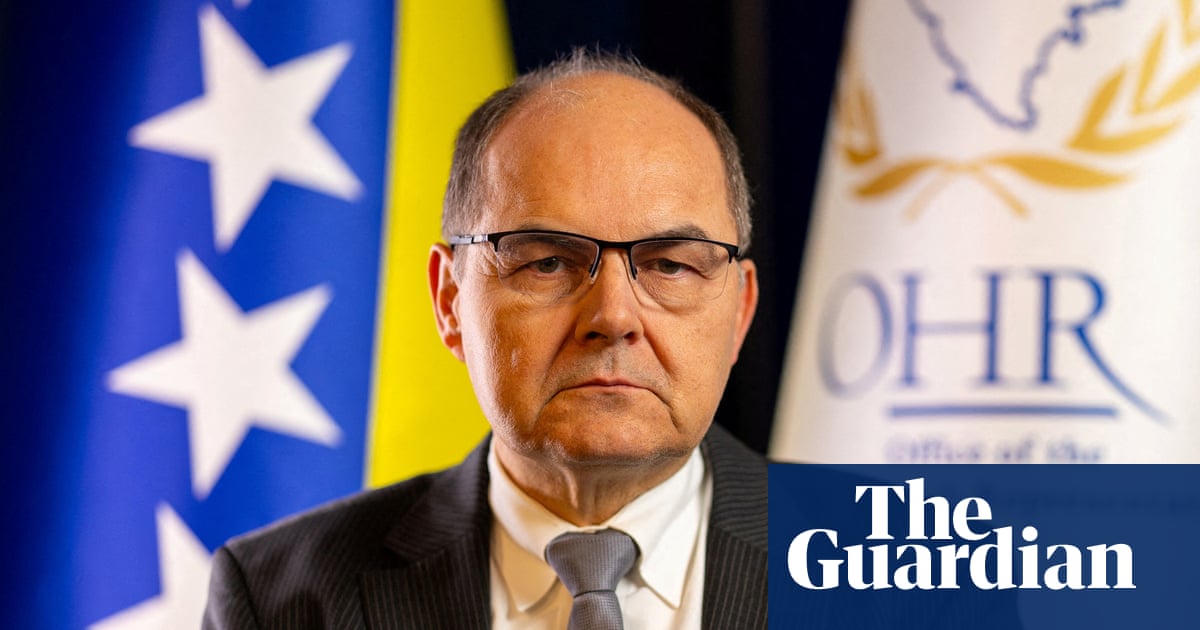
TL;DR: Christian Schmidt resigned as UN high representative for Bosnia after a clash with the United States, warning that denial of the country’s multi‑ethnic character has turned into systematic exclusion, while a Trump‑linked firm won a $1.5 bn contract to pipe US LNG into the region.
Context Bosnia and Herzegovina’s fragile peace, forged in the 1995 Dayton agreement, rests on a UN office that can override local laws to preserve the state’s multi‑ethnic character. Christian Schmidt, a German Christian Democrat, held that post for five years, but his repeated efforts to curb separatist moves in Republika Srpska drew opposition from both Moscow and the entity’s leadership. His resignation followed a policy disagreement with the United States, which has been pressing for a different approach to the western Balkans. The UN high representative was created to interpret the Dayton peace accord and can amend laws, yet remains subject to a 55‑nation steering board. Schmidt’s tenure saw repeated confrontations with Republika Srpska leader Milorad Dodik, who has long advocated for secession and was once sanctioned by Washington before those penalties were lifted. The role has been criticized by Russia and Republika Srpska as an infringement on sovereignty, yet supporters argue it is essential to prevent a return to ethnic violence.
Key Facts Schmidt told the UN Security Council that the persistent denial of Bosnia’s multi‑ethnic nature, especially in Republika Srpska, has evolved into systematic exclusion. His departure came after a direct clash with Washington over how to handle the entity’s defiance of constitutional court rulings. At the same time, AAFS Infrastructure and Energy, a firm linked to Donald Trump Jr.’s circle, secured a $1.5 billion contract to lay a pipeline that would carry US liquefied natural gas from Croatia into Bosnia. The deal was approved by Bosnia’s parliament without a public tender and has drawn criticism from the EU, which fears it could undermine Sarajevo’s bid to join the bloc. AAFS is fronted by Jesse Binnall, Trump’s personal lawyer, and Joe Flynn, brother of former national security adviser Michael Flynn, whose consultancy has announced plans to host a European economic summit in Banja Luka.
What It Means The EU insists the high representative post must remain empowered, calling it the cornerstone of civilian implementation of Dayton, while the UK reiterated its support for a fully empowered office. Diplomats warn the US may push to abolish the role or install a preferred successor, a move that could weaken Bosnia’s central institutions. Observers will watch whether the UN Security Council names a replacement quickly and whether the US advances any formal proposal to change or eliminate the high representative mandate. They will also monitor the pipeline’s construction timeline, any legal challenges from Brussels, and whether the project influences Bosnia’s energy diversification goals. Analysts warn that any perceived erosion of the UN’s oversight could embolden separatist rhetoric and complicate efforts to sustain a shared state.
Continue reading
More in this thread
Vélez Ousts Melham in Belleville as Baraka Wins Fourth Newark Term
Nadia Okafor
Labour MPs Split as Over 80 Call for Starmer’s Exit While 111 Reject Contest
Nadia Okafor
UN Bosnia Envoy Warns State Collapse After US‑Backed Pipeline Deal Triggers Resignation
Nadia Okafor
Conversation
Reader notes
Loading comments...