CO2 Sensor Market Set to Top $2 B by 2033, Driven by Auto Demand and North American Lead
Global CO2 sensor market projected to reach $2 billion by 2033, driven by automotive growth and North America's leading share.
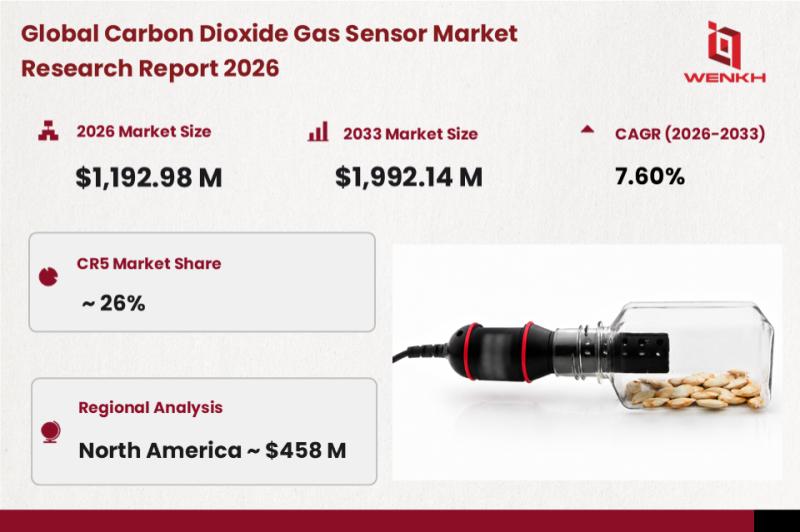
TL;DR: The CO2 sensor market will exceed $2 billion by 2033, propelled by rapid automotive adoption and North America’s 38% share.
The market for carbon‑dioxide (CO2) gas sensors—devices that measure air CO2 levels for ventilation, safety and emissions control—is entering a decade of strong growth. Global sales are projected to rise from $1.19 billion in 2026 to $1.99 billion in 2033, a compound annual growth rate of roughly 7.6%.
North America accounts for the largest slice of the market, contributing $458 million in 2026, or about 38.4% of worldwide revenue. The region’s mature industrial base, stringent emissions regulations and advanced sensor R&D create a fertile environment for high‑end applications.
Automotive manufacturers are the fastest‑growing user segment. Vehicles increasingly integrate CO2 sensors to monitor cabin air quality, optimize HVAC performance and meet low‑emission standards. This trend outpaces growth in building automation, industrial monitoring and other traditional sectors.
The market’s expansion reflects broader low‑carbon policies and rising public awareness of indoor air quality. As governments tighten carbon‑neutral targets, demand for real‑time CO2 monitoring spreads across HVAC systems, smart homes and industrial safety networks. Tier‑1 sensor makers such as Amphenol, Sensirion and Murata dominate the space, holding about a quarter of global sales, while Tier‑2 and Tier‑3 firms chase niche and cost‑sensitive opportunities.
What it means: Investors and suppliers should watch automotive OEMs’ sensor specifications and North American regulatory updates, as both will shape product development and market share shifts through the next decade.
Continue reading
More in this thread
Conversation
Reader notes
Loading comments...