Campaigners Fight Solar Farm Appeal Over Flood Risk and Farmland Loss
A 70-acre solar farm appeal faces public objection over flood risk and agricultural land loss. Developer promises renewable energy for 5,500 homes.
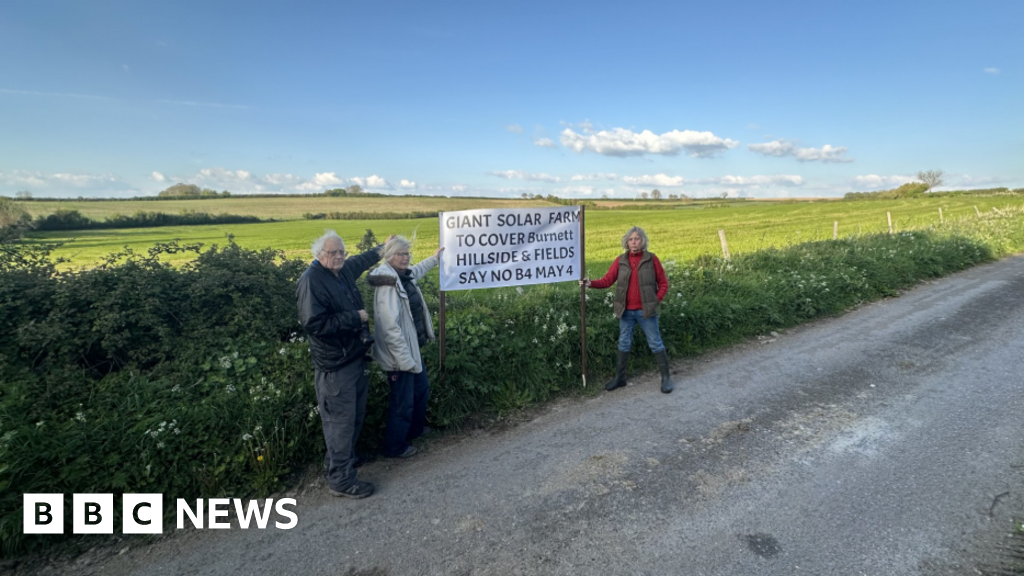
Two women holding a sign saying 'giant solar farm to cover Burnett hillside and fields, say no b4 May 4'. An elderly man is stood close to the sign, which is being held up by an empty field. There are other fields in the background and blue sky.
TL;DR
Campaigners are actively fighting a solar farm appeal, citing flood risks and the permanent loss of agricultural land. The developer asserts the project offers significant renewable energy capacity for thousands of homes while maintaining agricultural use.
Context A proposed 28.2-hectare (70-acre) solar farm is at the center of a contentious appeal after local authorities initially refused its development. This case underscores a national dialogue concerning renewable energy expansion and its potential impacts on local environments and land use. The site, near Keynsham, was deemed unsuitable due to concerns about its scale and location.
Key Facts The developer, Conrad Energy II Ltd, is challenging the council's refusal, presenting the solar farm as a vital step towards clean energy goals. The company projects the installation would generate enough electricity to power 5,500 homes annually. They also highlight a dual-use design, claiming the panels are spaced to allow for continued sheep grazing on the fields below.
Despite these claims, the proposal has met strong local opposition. Local authorities previously documented 41 public objections to the solar farm’s chosen location on Burnett Hill and Middlepiece Lane. These objections often centered on concerns regarding the loss of viable agricultural land, visual impact on the landscape, and potential harm to local ecology.
A significant point of contention involves flood risk. Resident Richard Arthur specifically warned about potential hydrological impacts from the development. He cautioned that during heavy storms, rain would saturate the ground immediately beneath the solar panels, leading to an increased volume of surface water runoff. This runoff, he argued, would then flow into surrounding hills, potentially worsening local flooding issues. The open nature of the fields and lack of natural screening further amplify visual impact concerns, with panels running along a prominent hill scarp.
What It Means The ongoing appeal process offers a critical look at how local environmental protection and community opposition are weighed against the national imperative for renewable energy generation. The final decision in this case will likely influence future planning applications for solar developments across the country. Observers will closely monitor the balance struck between energy targets and localized land-use impacts.
Continue reading
More in this thread
Merz Links Climate Policy to Global Security, Pledges Finance Ahead of COP31 in Turkey
Nadia Okafor
Michigan's Renewable Energy Mandates Linked to 70% of Electricity Price Hikes, Study Reports
Nadia Okafor
West Bank Voters Skeptical as Local Elections See Record Independent Candidates and Stalled PA Pay
Nadia Okafor
Conversation
Reader notes
Loading comments...