ASA bans Eucerin serum ad over unverified ‘five years younger’ claim
UK watchdog blocks Eucerin billboard after finding the 'five years younger' claim lacked scientific support and proper study design.
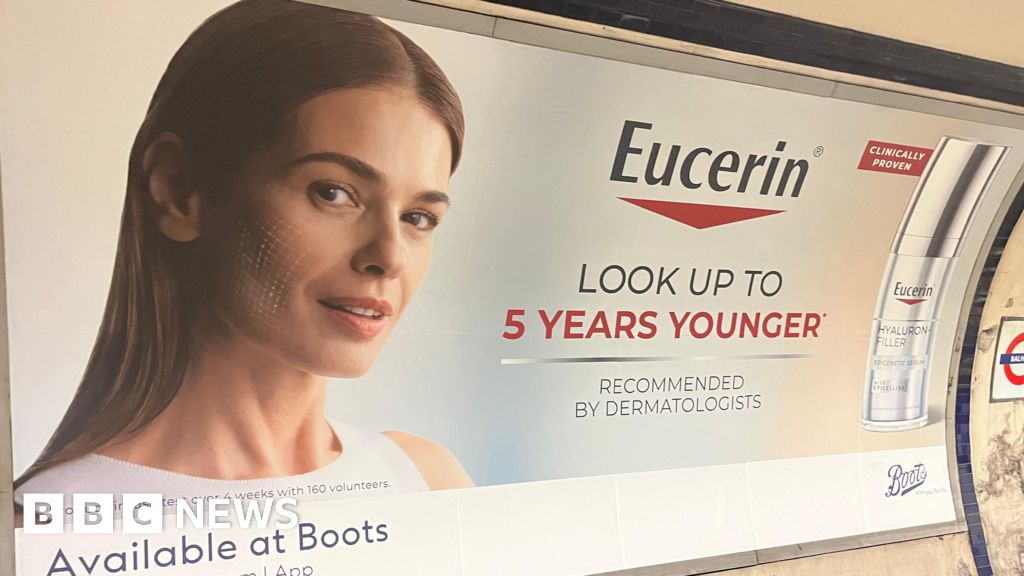
Eucerin's billboard advert showing a woman with dots highlighting her cheek, with the words 'look up to 5 years younger' and 'recommended by dermatologists', with an image of the silver and transparent bottle, next to the words 'clinically proven' in a red box.
*TL;DR: The ASA has prohibited a £49 Eucerin serum billboard that claimed users could look up to five years younger, citing a flawed study with no control group and subjective self‑reporting.
Context A billboard for Eucerin Hyaluron‑Filler Epigenetic Serum appeared at Balham tube station, stating the product was “clinically proven” to make users look up to five years younger. The ad prompted a single formal complaint, leading the Advertising Standards Authority (ASA) to investigate.
Key Facts - The ASA found the supporting study involved 160 participants who used the serum for four weeks and then answered how much younger they thought they looked. No control group was used, and the recruitment process was not disclosed. - The ASA highlighted that the results were based on self‑assessment, making the outcome subjective rather than objectively measured. - Additional evidence supplied by Beiersdorf, the parent company, consisted of unpublished research and a peer‑reviewed paper that examined only the active ingredient, not the serum itself. - The study was conducted in a climate different from the UK, raising doubts about its relevance to British consumers. - Lianne Sykes, an aesthetics‑marketing consultant, warned that firms must conduct proper skin analysis over time to substantiate any advertising claims. She urged consumers to ask how skin quality was measured, whether all age groups were tested, and what metrics defined success.
What It Means The ban underscores that cosmetic claims must be backed by robust evidence, typically a randomized controlled trial (RCT) where participants are randomly assigned to treatment or placebo groups. Without a control group, any observed improvement could stem from placebo effects or natural skin variation. Self‑reported outcomes cannot establish causation; they only indicate perceived change. For shoppers, the ruling signals that “clinically proven” labels may not always reflect rigorous testing. Consumers should scrutinize the methodology behind any claim, looking for details such as sample size, study design, and objective measurements like skin elasticity or wrinkle depth. Brands planning similar campaigns should invest in longitudinal studies with clear recruitment criteria, control groups, and objective skin‑analysis tools (e.g., high‑resolution imaging). Transparent reporting will reduce regulatory risk and build consumer trust. What to watch next: The ASA’s decision may prompt other beauty companies to revisit their evidence base, potentially leading to stricter industry standards for skin‑care advertising in the UK.
Continue reading
More in this thread
Benue State Boosts COVID-19 Vigilance, Marks Lassa Fever Milestone, and Overhauls Primary Care
Dr. Priya Sharma
Ondo Police Confirm Suicide of 20‑Year‑Old Rufus Giwa Polytechnic Student
Dr. Priya Sharma
Sudan’s Displacement Tops 12 Million as Famine Spreads
Dr. Priya Sharma
Conversation
Reader notes
Loading comments...