AI‑Augmented Software Engineering Market Projected at $25 B by 2030 After JFrog‑Qwak Deal and Cognition’s Devin Launch
AI‑augmented software engineering is set for $25 billion revenue by 2030, fueled by JFrog's Qwak AI acquisition and Cognition's autonomous engineer Devin.
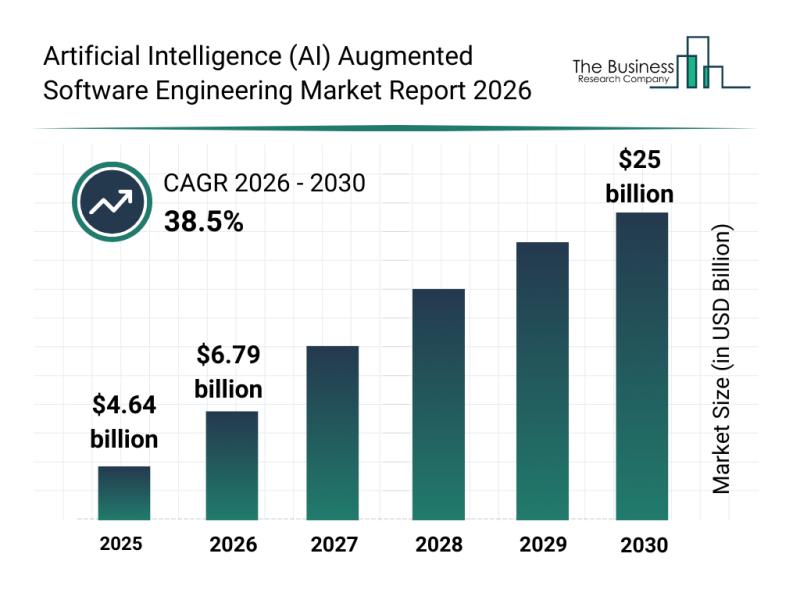
*TL;DR: The AI‑augmented software engineering market will reach $25 billion by 2030, driven by a 38.5% CAGR and recent moves such as JFrog’s purchase of Qwak AI and Cognition’s release of the autonomous engineer Devin.
The market for AI‑enhanced development tools is expanding faster than any other software segment. Analysts forecast a compound annual growth rate of 38.5%, pushing total revenue to $25 billion by the end of the decade. Growth stems from generative AI code generators, autonomous testing suites, and natural‑language interfaces that turn spoken instructions into executable code.
In June 2024, JFrog, a leading software‑supply‑chain platform, bought Qwak AI. Qwak AI supplies a platform for building, deploying, and monitoring AI and machine‑learning workflows. The acquisition bolsters JFrog’s ability to embed AI and MLOps (machine‑learning operations) capabilities directly into its delivery pipeline, promising tighter integration between code artifacts and AI models.
Earlier, in March 2024, Cognition Corporation unveiled Devin, an autonomous AI software engineer. Devin can plan, code, debug, and deploy entire projects without human supervision. Equipped with its own shell, editor, and web browser, the system learns new technologies on the fly and even trains AI models as part of its workflow. Devin exemplifies the shift toward fully autonomous development agents.
These developments illustrate a broader industry trend: companies are moving from AI‑assisted coding toward AI‑driven engineering. Enterprises that adopt such tools expect faster release cycles, fewer bugs, and lower staffing costs. For vendors, the race is now to deliver end‑to‑end platforms that combine code generation, testing, and deployment under a single AI‑powered umbrella.
What it means for the market is a rapid consolidation of AI capabilities into existing DevOps (development‑operations) ecosystems. Firms that can seamlessly integrate AI workflow management with code supply chains will likely capture the lion’s share of the projected $25 billion market. Watch for further acquisitions and product launches that aim to close the loop between AI model lifecycle and software delivery.
Continue reading
More in this thread
AI Systems Spending Set to Hit $1.79 Trillion by 2030 as Banks and Consultancies Scale Up
Alex Mercer
AI in Video Games Set to Reach $10.7 B by 2030, Fueled by Microsoft Deal
Alex Mercer
AI in Video Games Set to Reach $10.7 B by 2030, Boosted by Microsoft’s $69 B Activision Deal
Alex Mercer
Conversation
Reader notes
Loading comments...