Advocates Flood Capitol Hill as Congress Rejects NASA Budget Cuts, Calls for $9B Science Funding
Over 130 advocates met lawmakers after House and Senate rejected OMB NASA cuts, urging a $9B science budget restoration.
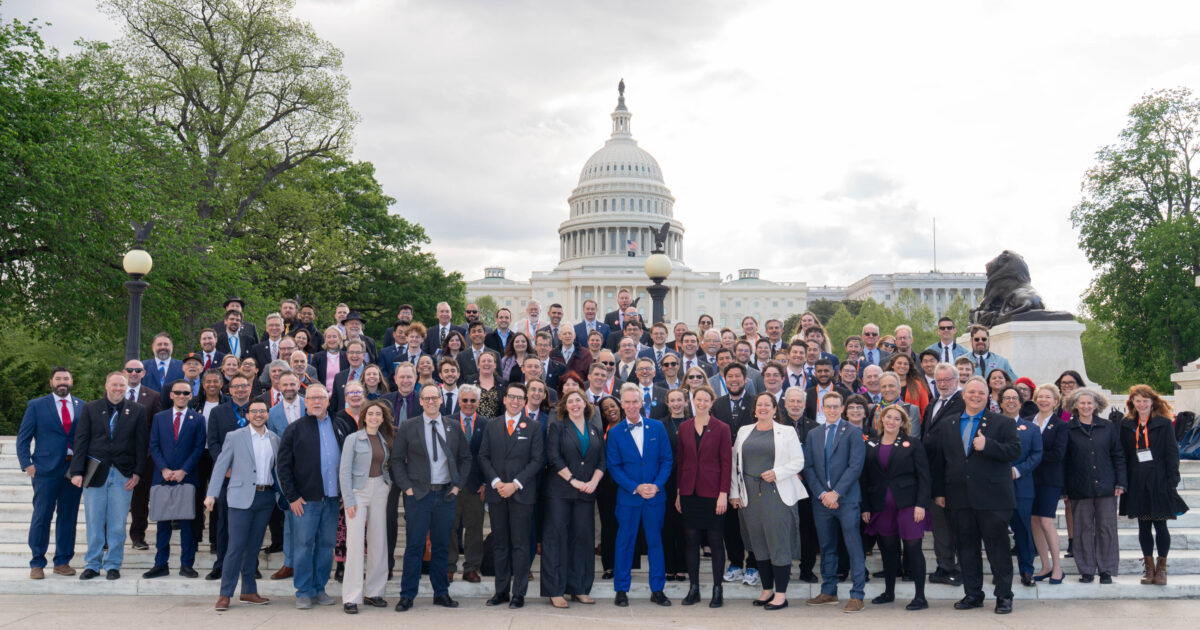
Participants in The Planetary Society's 2026 Day of Action
TL;DR: More than 130 advocates from 34 states and DC visited Capitol Hill on April 20 2026 to thank lawmakers for rejecting NASA budget cuts and to push for restoring the Science Mission Directorate to $9 billion. The House voted 397‑28 and the Senate 82‑15 against the OMB proposal, with Chairman Brian Babin expressing confidence the cuts would be defeated again.
Context The Planetary Society’s annual Day of Action brought volunteers—students, teachers, engineers, retirees—to Washington to discuss how NASA benefits local economies, education, and national security. Their visits followed a strong bipartisan rebuke of the administration’s FY2026 budget request, which sought to trim NASA’s Science Mission Directorate.
Key Facts Over 130 advocates representing 34 states and the District of Columbia held 280 meetings with congressional offices. According to the Congressional Record, the House rejected the OMB cuts by a vote of 397‑28 (93.4 % in favor of keeping funding) and the Senate did so 82‑15 (84.5 % in favor). Chairman Brian Babin (R‑TX) stated that many of the proposed cuts had already been turned down by Congress and he was confident they would be rejected again.
What It Means The vote margins show broad, cross‑party support for maintaining NASA’s science programs. Advocates say the momentum from the successful Artemis II mission and public enthusiasm helped shift conversations from defensive pleas to confident requests for increased funding. Their topline ask now is to restore the Science Mission Directorate to the inflation‑adjusted $9 billion level seen during the first Trump administration, a figure that would counteract rising costs and sustain ongoing missions.
What to watch next Monitor the Senate Appropriations Committee’s upcoming markup to see whether it adopts the $9 billion science target in the final FY2026 appropriations bill.
Continue reading
More in this thread
South Dakota Report Details 2°F Temperature Increase, Urges Climate Action
Dr. Leo Tanaka
NOAA Scientists Identify Golden Orb as Deep-Sea Anemone Remnant
Dr. Leo Tanaka
White Sands Missile Range: A Key Site for Space Shuttle Landings and Deep Space Mission Testing
Dr. Leo Tanaka
Conversation
Reader notes
Loading comments...