500‑Meter Tsunami Rises in Alaska’s Tracy Arm Fjord After Massive Rockslide
A massive rockslide in Alaska generated a 481‑meter tsunami, the second‑largest ever recorded, highlighting rising glacier‑related hazards.
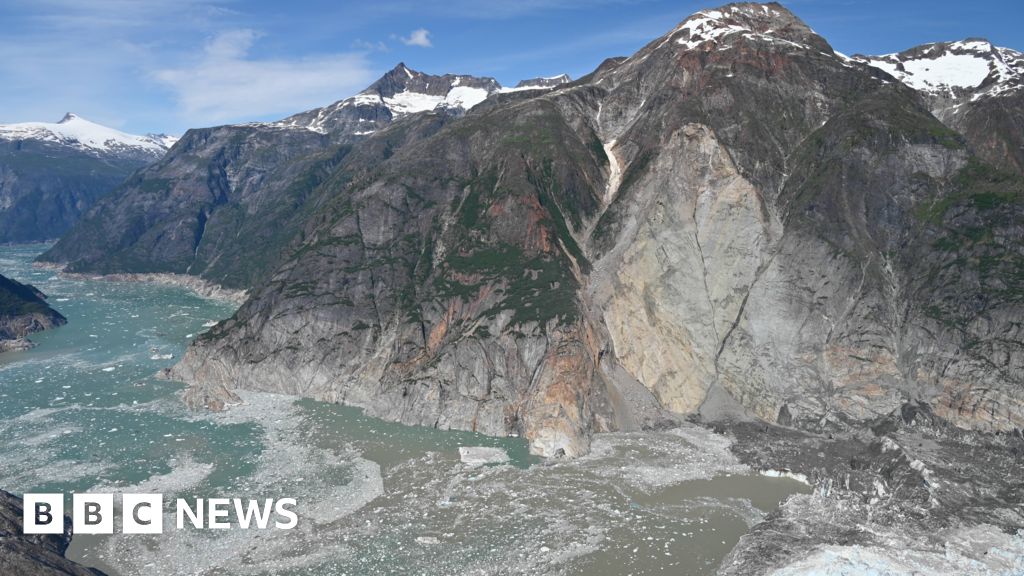
An icy expanse of sea runs through a narrow passage between mountains. Much of the steep sides of the mountains are stripped of green vegetation revealing grey scarred rock. The tops of the mountains are scattered with snow and ice glitters in the fjord below.
TL;DR
A 63.5 million m³ rockslide plunged into Alaska’s Tracy Arm fjord on Aug 10 2025, generating a 481‑meter‑high tsunami – the second‑largest ever measured.
Context At 5:26 am local time on August 10 2025, a steep rock wedge detached from a mountain above Tracy Arm fjord. The wedge, estimated at 63.5 million cubic meters, fell into the deep water at the terminus of the South Sawyer Glacier. The impact produced an initial 100‑meter breaking wave that raced across the fjord at over 70 m s⁻¹.
Key Facts - The wave slammed into the opposite shoreline and climbed the sheer rock face to a run‑up height of 481 meters above sea level. - Aram Fathian of the University of Calgary, co‑author of a *Science* paper that reconstructed the event, called it the second‑highest tsunami ever recorded on Earth. - Since 1925, researchers have documented 27 landslide‑generated tsunamis with run‑up heights exceeding 50 meters; the only larger event was the 1958 Lituya Bay megatsunami, which reached 530 meters. - No injuries or fatalities were reported, largely because the event occurred before sunrise and the fjord is sparsely populated. - The rock wedge’s headscarp sat about 1,025 meters above sea level. For centuries, the South Sawyer Glacier’s ice wall buttressed the slope, but ongoing glacier retreat—linked to regional warming—likely reduced that support.
What It Means Landslide‑driven megatsunamis are rare but far more violent than typical earthquake‑generated waves, which usually top a few tens of meters. The Tracy Arm event demonstrates how rapid glacier loss can destabilize steep slopes, increasing the risk of sudden, high‑energy water displacement in narrow fjords. While this incident caused no loss of life, similar failures in more populated coastal zones could be catastrophic.
Monitoring of glacier margins and slope stability in glaciated fjord regions is now a higher priority for hazard assessment agencies. Future research will focus on integrating satellite‑based ice‑change data with real‑time slope‑movement sensors to provide earlier warnings of potential rockslide‑induced tsunamis.
What to watch next: Watch for new early‑warning initiatives targeting glacier‑adjacent slopes in Alaska and other high‑latitude fjord systems.
Continue reading
More in this thread
Conversation
Reader notes
Loading comments...