Welsh First Minister Eluned Morgan Faces 'Knife Edge' Seat Loss as Labour Trails Third in Polls
Welsh First Minister Eluned Morgan fears losing her seat as Labour trails third in recent polls, threatening the party's control of the Welsh government.
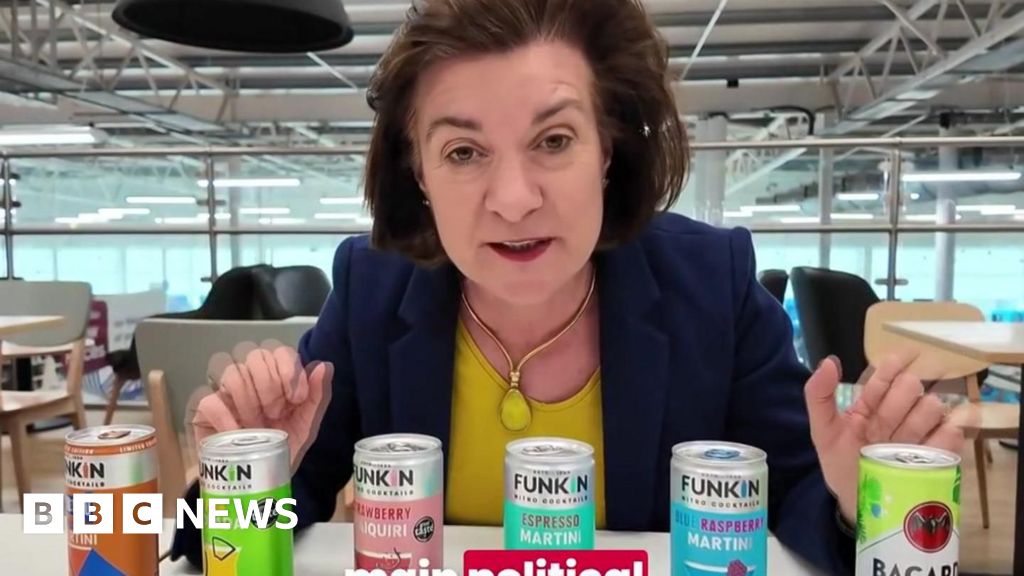
Eluned Morgan looking into the camera, smiling, with six cocktail cans in front of her
Eluned Morgan, Wales' First Minister, stated she might lose her closely contested seat in the upcoming Welsh election. Recent polls position Labour third, behind Plaid Cymru and Reform UK, indicating a potential shift in government control.
The political landscape in Wales faces significant shifts as the nation prepares for its next Senedd election. This election will implement a new system, expanding the Welsh Parliament (Senedd) from 60 to 96 members. Each of the 16 new constituencies will elect six members.
Eluned Morgan, the current First Minister of Wales, has publicly acknowledged the vulnerability of her own seat. She indicated that her closely contested constituency is on a 'knife edge' in the upcoming vote.
Morgan also referenced a recent poll suggesting she could secure one of the six available seats in her constituency. She cautioned this outcome depends heavily on voter turnout for Labour.
Broader polling data supports these concerns for Labour's position. Recent surveys show the party in third place across Wales, trailing behind Plaid Cymru and Reform UK. This electoral positioning suggests a risk not only for Morgan's seat but also for Labour's continued control of the Welsh government.
This electoral scenario introduces uncertainty for Labour's long-standing dominance in Welsh politics. The party has led the Welsh government since the Senedd's establishment in 1999. A loss of control would mark a significant shift, potentially leading to a coalition government or a different ruling party for the first time in over two decades.
The new electoral system, which increased the Senedd from 60 to 96 members and introduced 16 new constituencies each electing six members, complicates predictions. It allows for greater proportional representation, potentially benefiting smaller parties and making outright majorities more challenging to achieve.
Such a change in leadership would reshape policy direction across devolved responsibilities, including health, education, and the economy in Wales. The outcomes will establish the Senedd's composition and the Welsh government's leadership for the next term.
All attention now turns to the final campaign phase, as parties aim to consolidate support and secure crucial votes for the Senedd.
Continue reading
More in this thread
Lummis Announces Bipartisan Crypto Bill Ready for Vote, Cites Trump Backing
Nadia Okafor
UK Links £662m France Deal to Migration Stop Targets, Threatening Funding Withdrawal
Nadia Okafor
Starmer’s Sacking of Top Civil Servant Ignites New Crisis Over Mandelson Clearance
Nadia Okafor
Conversation
Reader notes
Loading comments...