Virginia Voters Approve Congressional Redistricting, But Legal Battles Loom
Virginia voters approved a constitutional amendment for congressional redistricting, but its implementation now faces a critical review by the state Supreme Court.
TL;DR
Virginia voters approved a constitutional amendment to redraw congressional districts, but this decision immediately faces a significant legal challenge before the state's highest court.
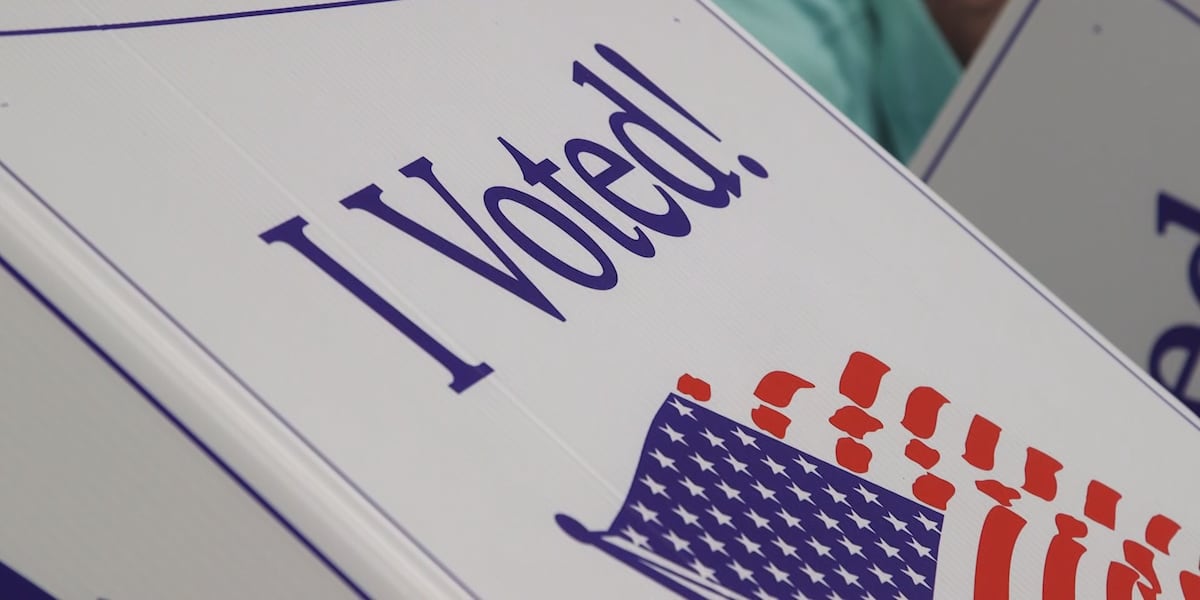
Virginia voters approved a ballot measure to redraw congressional districts, a decision set to influence the state's political landscape. This vote affects how new boundaries will be drawn for the state's 11 congressional districts, a process known as redistricting. Redistricting involves redrawing electoral district boundaries, typically after a census, to ensure equal population distribution and fair representation.
The approved constitutional amendment now empowers the Democratic-led General Assembly to draw new congressional districts. This process directly bypasses a bipartisan commission, which would typically play a significant role in such boundary determinations. Democrats currently control six of Virginia's 11 congressional seats, while Republicans hold five.
However, the state Supreme Court is actively reviewing a legal challenge against the amendment. This challenge seeks to invalidate the referendum results, potentially overriding the voters' decision. Republican groups initiated these legal challenges, citing multiple procedural irregularities in how the amendment reached the ballot.
A lower court judge previously ruled the redistricting push illegal based on several specific grounds. The ruling cited that lawmakers failed to follow their own rules for adding the redistricting amendment to a special session. It also stated that the initial legislative vote on the amendment did not occur before the public began casting ballots in the previous year’s general election, failing a two-step process requirement. Furthermore, the state reportedly failed to publish the amendment three months before that election, a step mandated by law.
Should the state Supreme Court agree with the lower court's assessment, these referendum results could be rendered meaningless. Such an outcome would prevent the General Assembly from implementing new district maps based on the recently approved measure. All eyes now turn to the state's highest court, whose decision will ultimately determine the future of Virginia's congressional boundaries.
Continue reading
More in this thread
14‑Year‑Old Palestinian Boy Killed as Israeli Settlers Open Fire on West Bank School
Nadia Okafor
Fact Check: Sheila Cherfilus-McCormick’s Resignation, Ethics Findings, and Claims About Swalwell and Gonzales
Nadia Okafor
Starmer Admits Considering Aide for Diplomatic Role Without Foreign Secretary's Knowledge
Nadia Okafor
Conversation
Reader notes
Loading comments...